Guides · Gift Guides
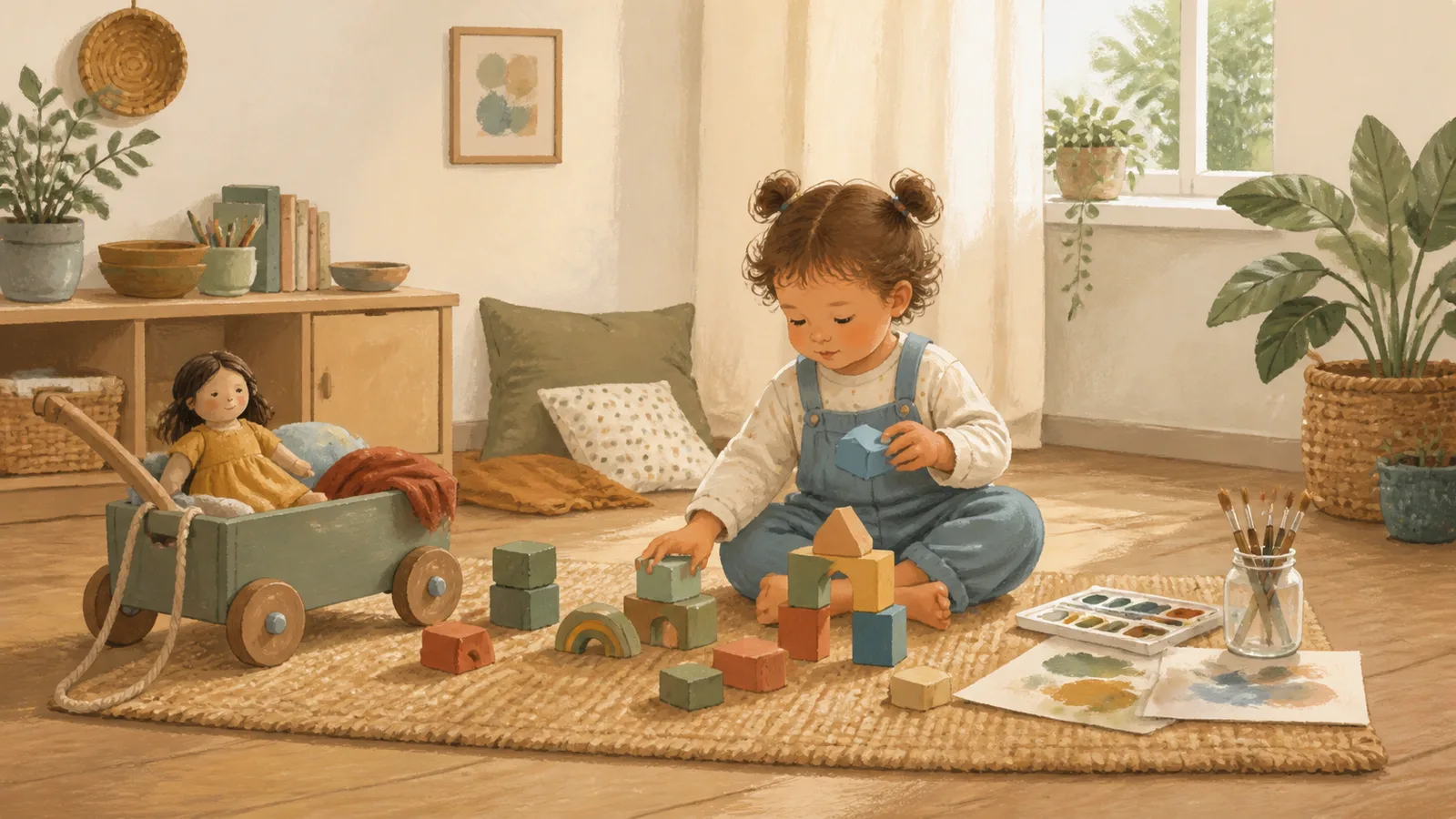
Best Gifts for a Two-Year-Old: Match the Play, Not the Hype
Choose gifts for a two-year-old by repeated play actions, challenge, space, sound, storage, adult help, and safety—with useful categories instead of a shopping dump.
By Topic
Make-believe worlds, role play, storytelling, and simple props that invite imagination.
Pretend play helps children test ideas, practice language, revisit experiences, and see a situation from another point of view. Start with familiar objects and an open invitation; children usually provide the most interesting plot.
Start here
Choose gifts for a two-year-old by repeated play actions, challenge, space, sound, storage, adult help, and safety—with useful categories instead of a shopping dump.
Try something today
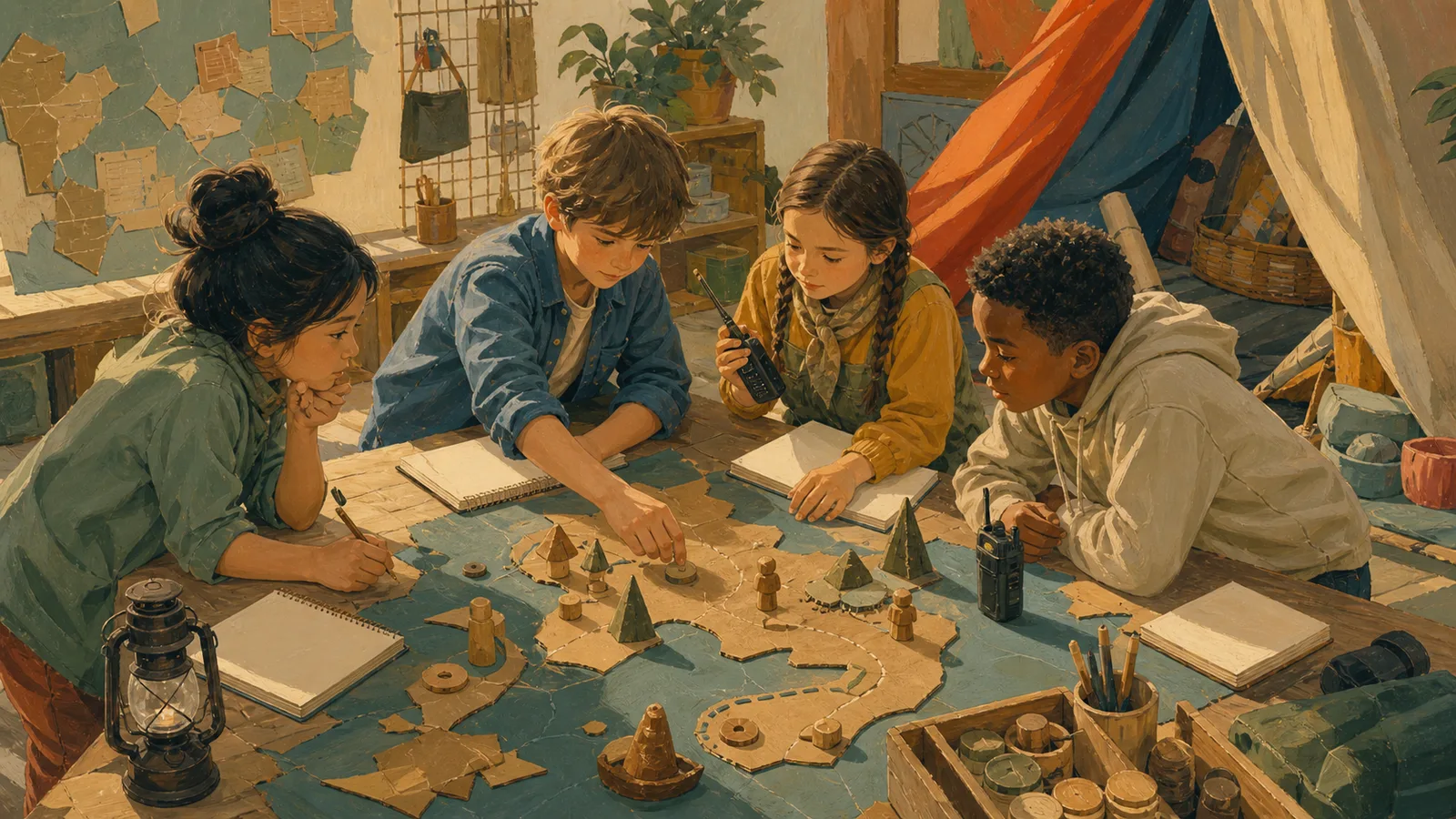
Offer age-respectful missions, roles, resources, and worlds for children 8+—including solo, quiet, mixed-age, and low-prop options.
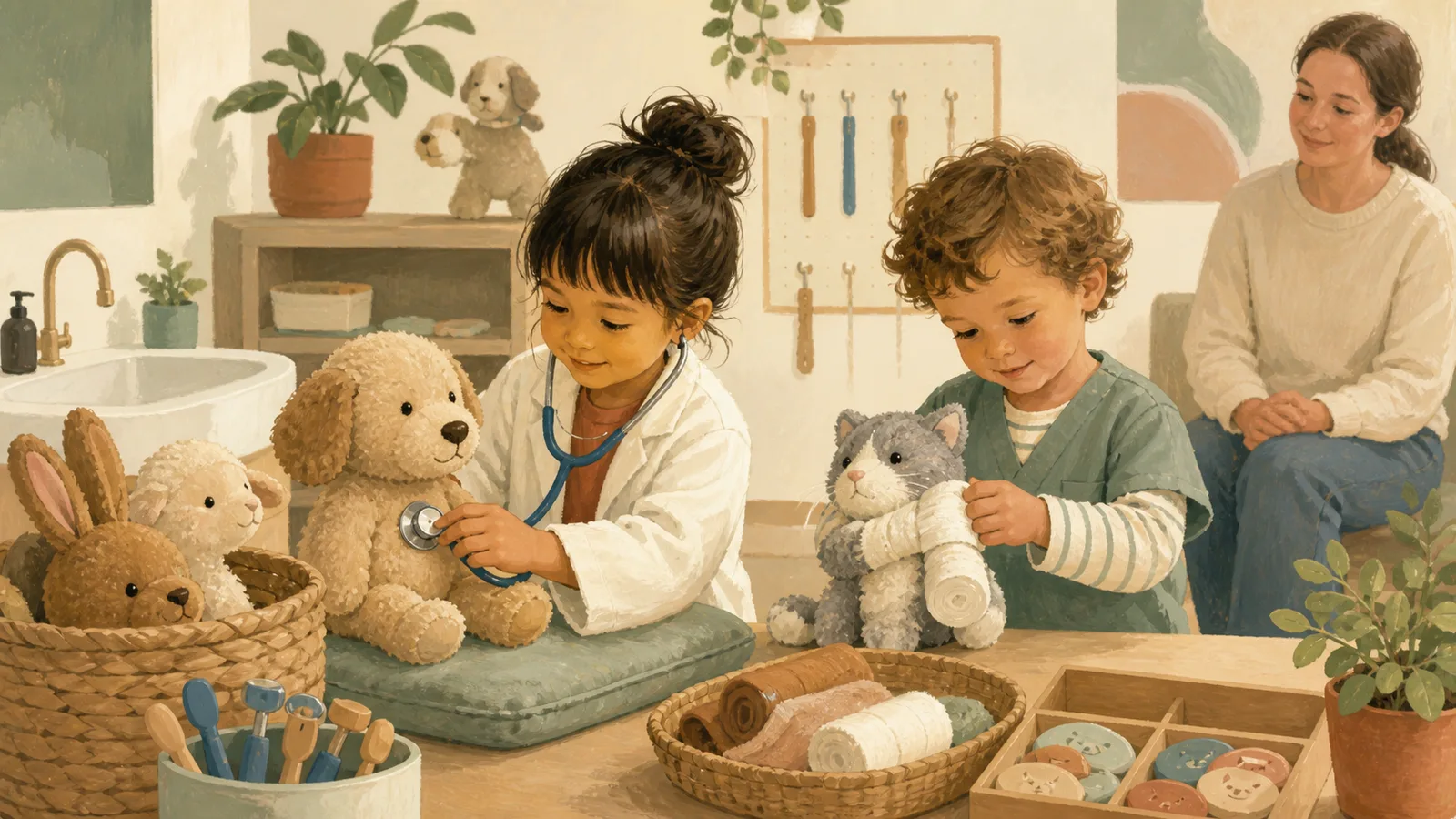
Set up a flexible toy clinic with animal patients, several meaningful roles, honest medical language, and clear boundaries around real supplies.
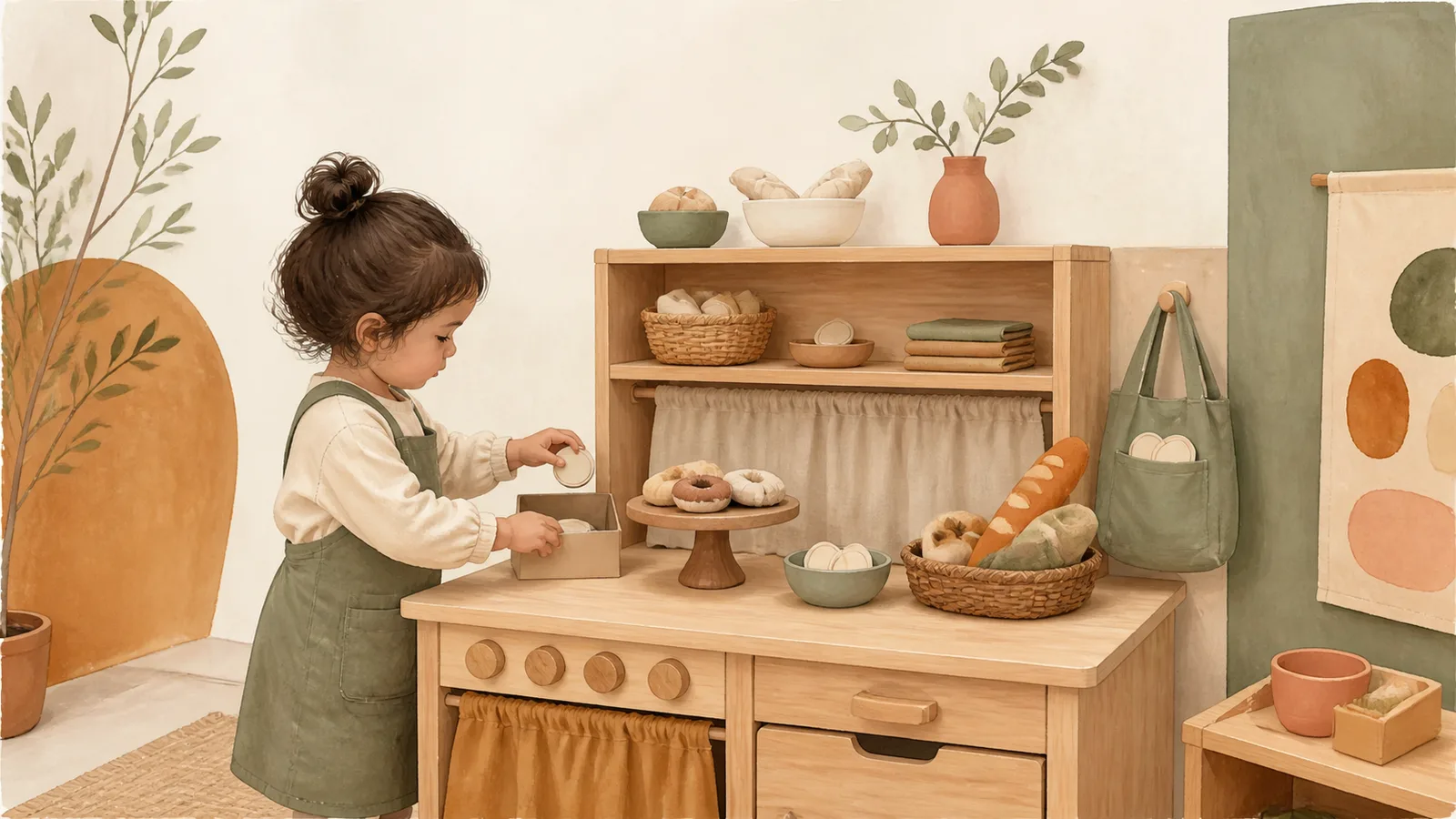
Refresh a play kitchen with low-prep jobs, small problems, and adaptable stories—without buying another bin of pretend food.
Growing through play
Keep exploring
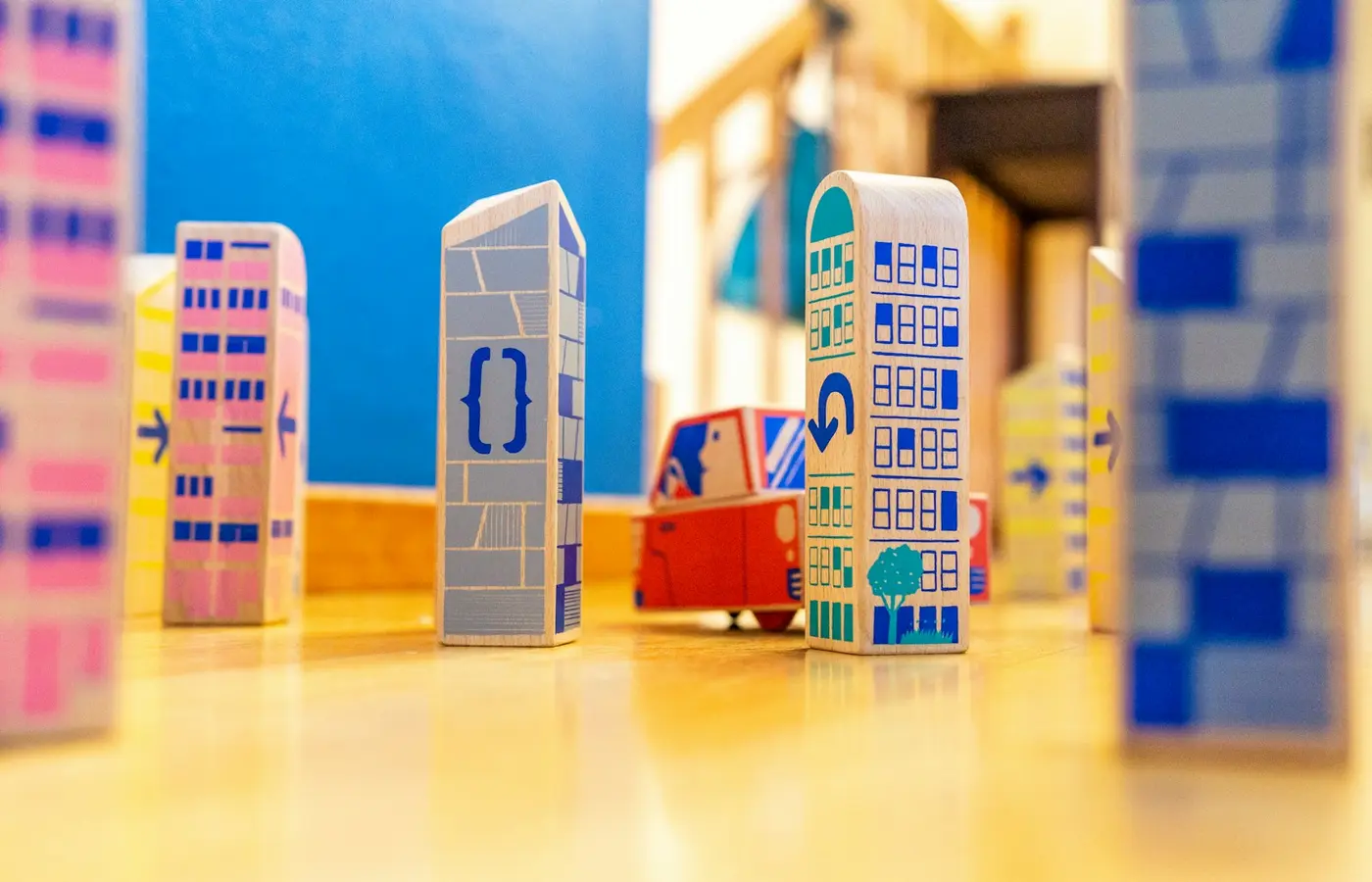
Choose flexible imaginative play props for ages 5–7 that leave room for changing roles, shared stories, and real-life limits.
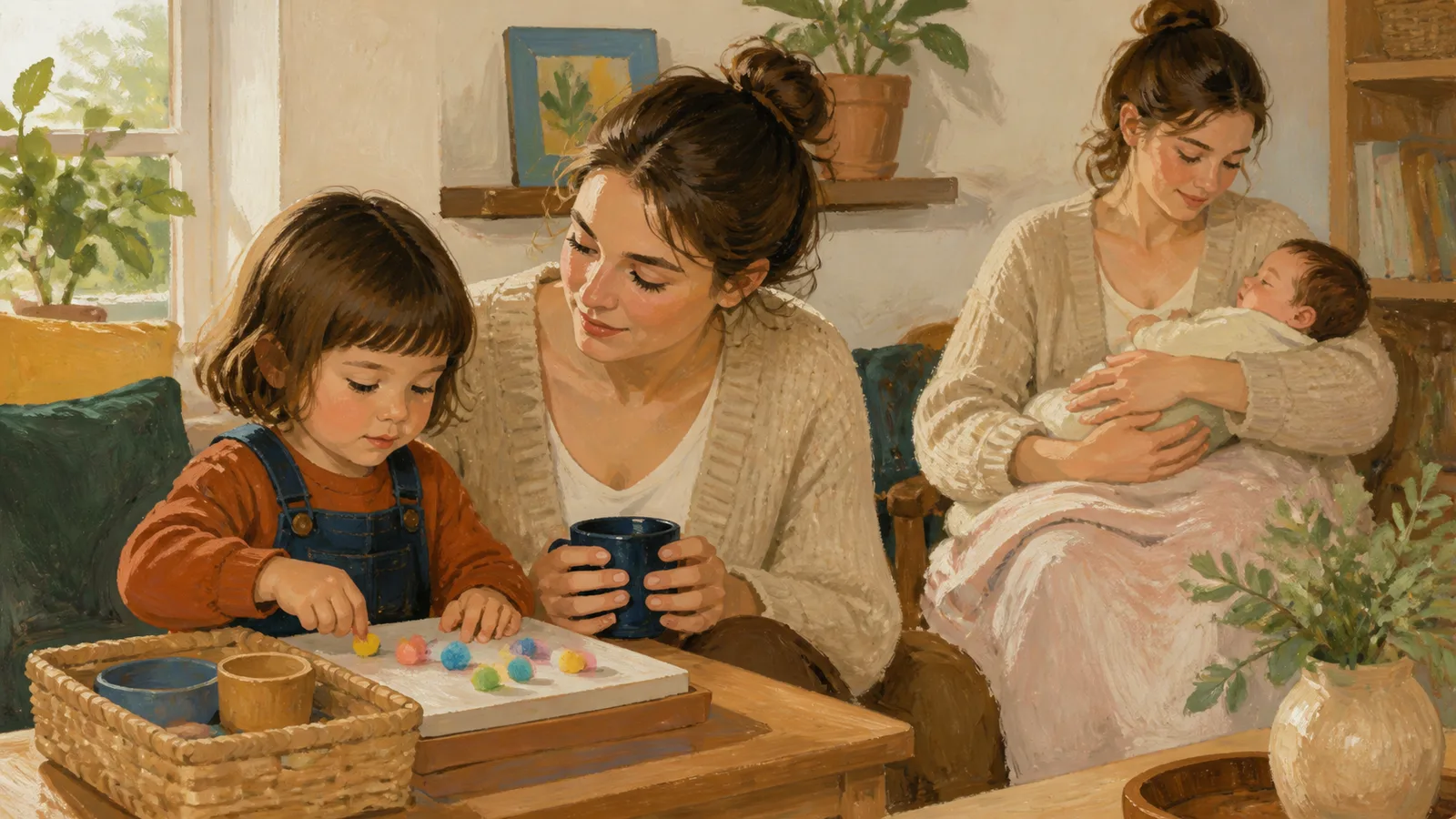
Choose a new-big-sibling gift that respects the older child's interests, creates realistic connection, and does not demand caregiving play or cheerful feelings.
Offer age-respectful missions, roles, resources, and worlds for children 8+—including solo, quiet, mixed-age, and low-prop options.
Set up a flexible toy clinic with animal patients, several meaningful roles, honest medical language, and clear boundaries around real supplies.
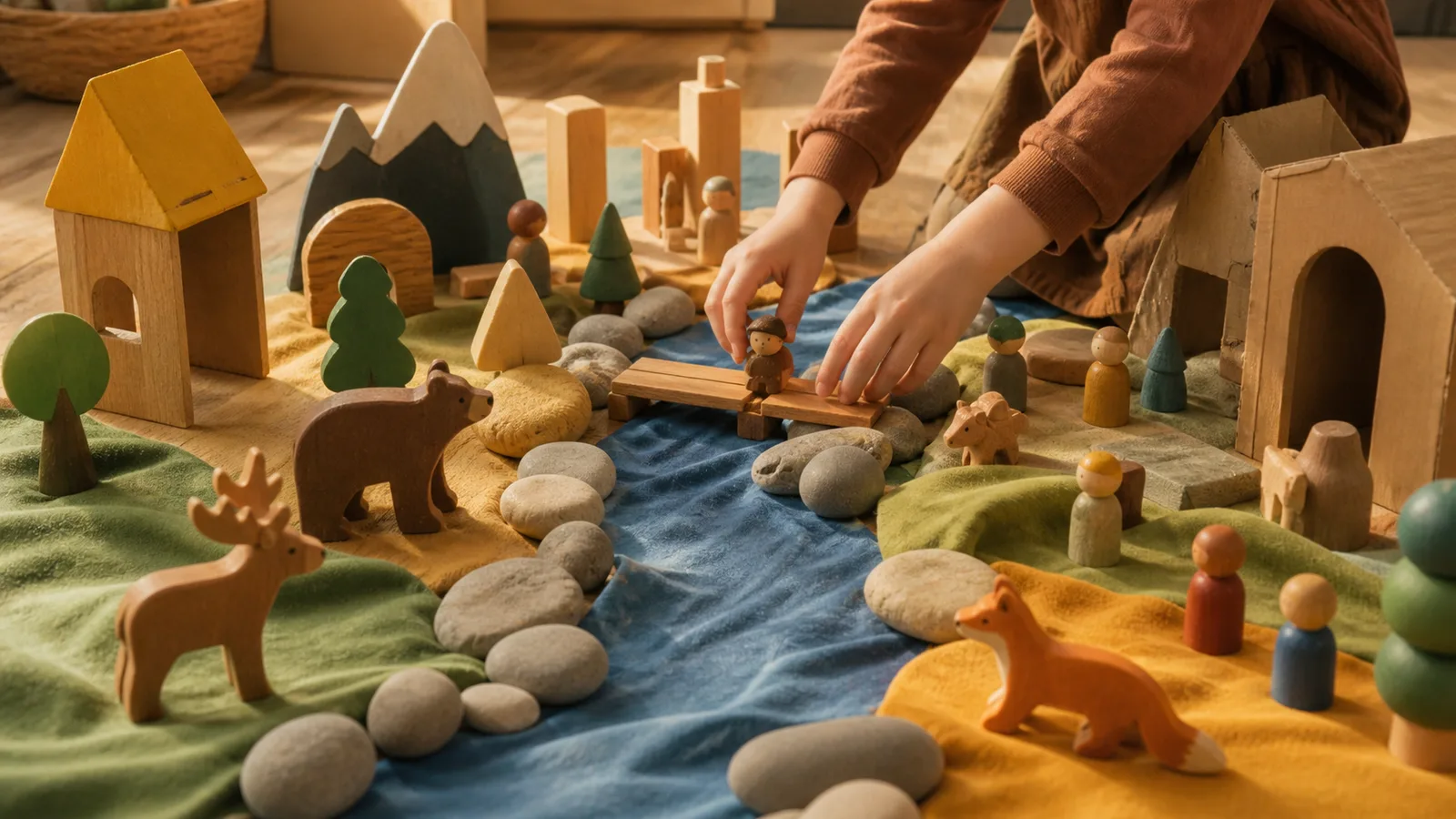
Build small worlds from a manageable cast, flexible terrain, and one story problem—with practical guidance on scale, storage, fillers, and safety.
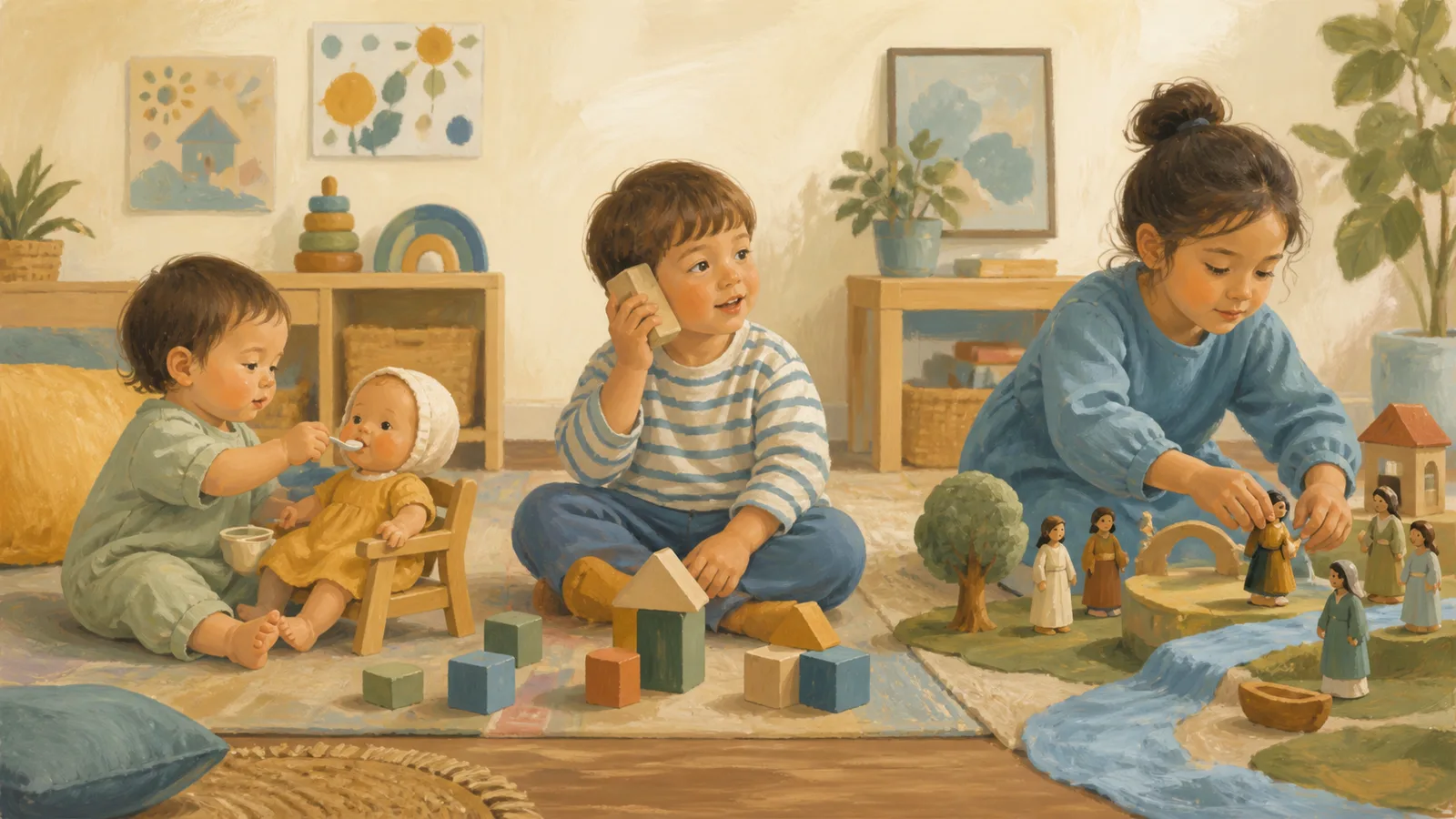
Recognize how pretend play changes through actions, object substitution, sequences, roles, planning, and shared stories—without a rigid age checklist.
The complete collection
10 research-informed guides and play ideas
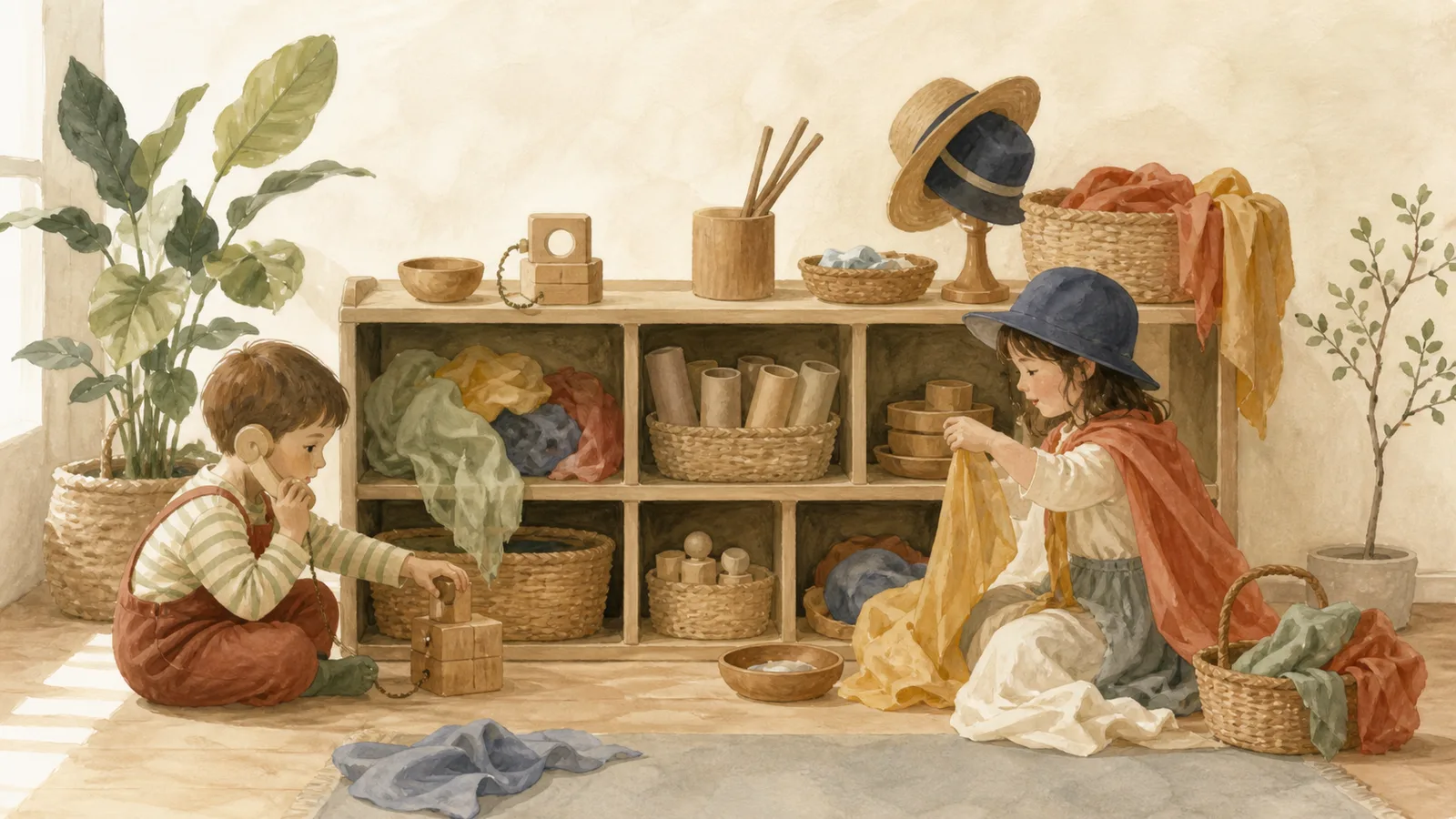
Build a compact, safer pretend-play collection with fabrics, containers, role markers, and simple objects that can change jobs as stories change.
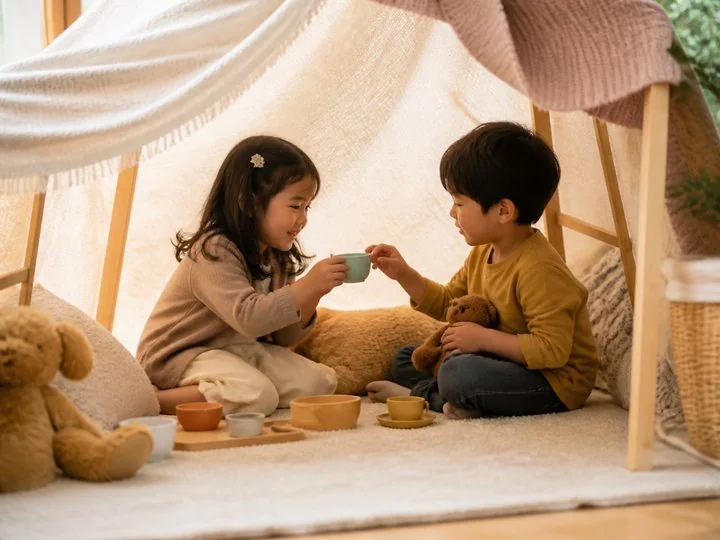
Flexible indoor pretend play ideas for toddlers through early school age, with simple setups, age adaptations, reluctant-player help, and realistic evidence notes.
Helpful context
Pretend play happens when a child uses objects, actions, or roles to represent something beyond the immediate situation.
Follow the child’s lead, accept the imagined premise, and contribute without controlling the story.