If your child is setting up a café from sofa cushions, treating stuffed animals, packing for an imaginary trip, or assigning everyone a job, you do not necessarily need a large play set to keep that story moving. For imaginative play for ages 5–7, a small group of flexible props is often a useful starting point: something that changes a role, something that can become several things, and a place to put it all away.
Before choosing any prop, check the exact item’s manufacturer age grade, warnings, instructions, and loose parts. A child who is ready to create a complicated story may still share space with a younger sibling who can reach small accessories. Interest in a prop does not override its safety information.
The aim is not to build a picture-perfect play corner or make play look educational. It is to give the child materials that fit the stories they already want to tell—and that fit your home well enough to use.
Start with the story your child is already building
The most helpful clue is usually not a product label. It is what your child does when there is time, a few ordinary objects, and room for an idea to develop.
You might notice that they are:
- acting out familiar routines, such as cooking, going to the doctor, taking a bus, or caring for a baby
- retelling a book, film, song, or family story
- running a shop, restaurant, school, rescue center, or repair station
- inventing a fantasy world with rules, maps, creatures, or special jobs
- giving toys voices and assigning characters to family members
- collecting objects before play begins, then announcing what they have become
These observations can point you toward a next prop without requiring you to buy a whole theme. A child who repeatedly makes tickets and asks people to board a train may use a small bag, paper, a stamp-like object, and a few seats more than an elaborate transportation set. A child who keeps examining stuffed animals may be more interested in a simple animal-care scenario than in a full costume collection.
Head Start’s guidance on make-believe play notes that clothes, costumes, and tools can encourage different scenarios and roles. The point is not that a certain prop produces a particular outcome. It is that recognizable materials can give a child something to act on when they already have an idea in motion.
Stories can also come from books, songs, films, or family routines. PBS KIDS for Parents suggests dramatizing books, stories, movies, and songs, which can be a simple way to notice what themes your child returns to. You do not need to turn every favorite story into a shopping list. One open-ended addition may be enough.
A quick observation before you buy
Watch for one or two play sessions, if you can, and ask:
- What role does my child return to?
- What object are they repeatedly pretending to need?
- Do they want to be the person in charge, the helper, the customer, the narrator, or the creature?
- Are they more interested in dressing up, arranging a scene, making signs, carrying supplies, or talking through a story?
- Does the play usually happen alone, with siblings, or with an adult nearby?
You are not trying to diagnose a developmental need. You are simply looking for a useful next material.
Choose flexible props before building a full theme
A flexible prop can move between stories. A bag might hold travel supplies one day and restaurant orders the next. A scarf might be a cape, river, blanket, uniform, or market stall canopy. A cardboard box can be a delivery vehicle, animal home, cash register, control panel, or treasure chest.
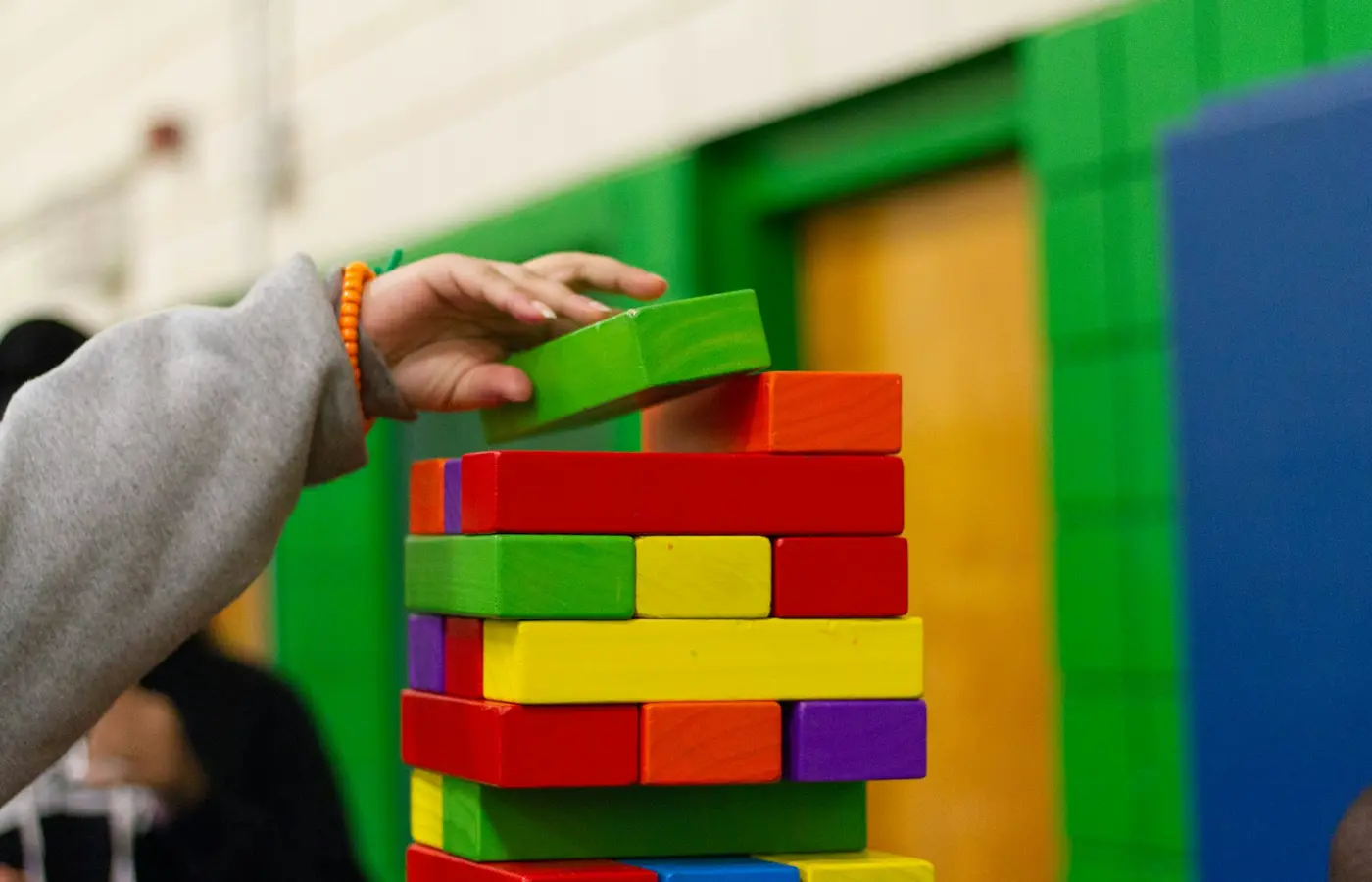
Head Start specifically includes open-ended materials such as scarves, boxes of different sizes, and blocks among materials children can use in varied ways across ages and developmental levels. These kinds of objects do not arrive with one fixed plot. They leave room for the child to decide what is happening.
That does not mean every prop must be plain or abstract. Role-specific pieces can be satisfying, especially when they help a child enter a story quickly. The useful question is whether the item can continue to serve the child after the first obvious scenario has passed.
The Penn State Better Kid Care pretend-play guide gives examples of role-play materials such as hats, scarves, bags, wallets, keys, and play money. These are not universal recommendations for every household or child. They are examples of objects that may be combined in different ways when their manufacturer guidance and household safety conditions fit.
Flexible prop categories to consider
Rather than choosing by a broad marketing category, think in terms of what a prop does in play.
| What the prop does | Possible examples | How it may travel between stories |
|---|---|---|
| Changes a role | Hat, apron, scarf, bag, vest | Cook, traveler, builder, explorer, shopkeeper, superhero, helper |
| Carries or organizes supplies | Tote, suitcase, basket, container | Delivery route, vet visit, picnic, expedition, moving day |
| Marks a place or task | Paper signs, blank cards, clipboard, notepad | Menu, map, appointment list, ticket desk, mission board |
| Builds a setting | Blocks, boxes, fabric pieces | House, bridge, counter, cave, stage, vehicle, animal shelter |
| Gives a story a transaction | Play money or tickets, if appropriate for the household | Shop, café, station, museum, repair desk, invented currency |
The exact item matters more than the category. A set of accessories may contain small pieces, require adult assembly, or have warnings that make it unsuitable for the people sharing the space. Check those details before treating an idea as a fit.
When a themed set may be the better starting point
A themed set can be a reasonable choice when a child returns to the same setting again and again and seems to want recognizable objects to make that setting feel real. A child who has spent weeks arranging stuffed animals into a clinic may welcome a few animal-care props. A child who constantly runs a café may enjoy a small collection of food, menus, or carrying supplies.
A theme can offer an easy entry point. It can also give visiting children a shared premise: one person is the customer, another takes an order, and someone else delivers the meal. Familiar stories and media can work as prompts for dramatization, too, as PBS KIDS notes. But a themed set does not need to dictate every action.
One way to keep a theme from becoming a script is to add one or two materials that are not tied to it. A restaurant setup might gain a blank notebook for reservations, blocks for a dining room, or a bag for food delivery. An animal clinic might become a rescue station, hotel, grooming salon, or wildlife research camp when the child has a few adaptable materials nearby.
Questions to ask before choosing a theme
A themed set may fit when the answer to several of these questions is yes:
- Does the child return to this role or setting without being prompted?
- Will the set give them objects they have been trying to substitute with household items?
- Is there space to set it up without blocking a walkway or requiring a permanent play area?
- Can the household manage its piece count and reset routine?
- Can some or all of its pieces join other stories later?
Pause before buying if the set depends on a large footprint, lengthy assembly, many tiny accessories, or adult-led setup each time it is used. Those features are not automatically a problem, but they can turn an appealing idea into a cupboard that rarely opens.
Check safety, age fit, and shared-home conditions first
Pretend-play materials range from soft wearable items to sets with small accessories, hard pieces, cords, closures, or assembly steps. There is no universal age rule for costumes, play money, keys, tools, food, or accessory sets. Safety depends on the exact product and the people who can access it.
Before bringing home an item, review:
- the manufacturer’s age grade and all warnings
- whether it includes small, loose, detachable, or easily scattered pieces
- assembly instructions and whether it remains stable after assembly
- wearable fit, including whether it restricts movement or creates a tripping problem in your space
- care instructions, especially if the item will be shared or frequently handled
- where it will live when not in use
- whether a younger child may reach it
If you are considering a prop because it resembles a real-world tool, do not assume that resemblance makes it suitable. Follow the exact product documentation. The same applies to materials described in marketing as sensory, educational, sustainable, or non-toxic: those labels do not replace checking the item’s actual warnings and instructions.
For a broader starting point on choosing imaginative materials, see Life With Toys’ guide to imaginative play materials for ages 5–7. It emphasizes checking the exact product’s age grade, warnings, assembly information, and access by younger children.
Plan for inviting others in—without requiring group play
Some children want an audience for every story. Others prefer to build a scene, speak for every character, and stay in charge of the plot themselves. Both are valid ways to use pretend-play materials.
If siblings or friends often join in, look for props that create optional roles rather than requiring children to compete for one prized item. A play area can have room for a customer, patient, traveler, helper, delivery person, narrator, or builder. A child does not need a matching costume collection for everyone; a few role markers may be enough.
Practical ways to reduce friction include:
- choosing two or more general accessories instead of one highly sought-after costume
- offering paper badges, signs, or name cards that children can make or change
- keeping a few neutral materials, such as boxes, fabric, and blocks, alongside role-specific props
- letting a child reserve a special item for a current story when sharing is becoming difficult
- putting away a prop that repeatedly creates more conflict than play, then trying it again later
Avoid treating solo pretend play as a problem to solve. A child may be deeply engaged while quietly arranging objects, repeating a story, or narrating under their breath. Shared play can be invited, but it does not need to be the measure of whether the prop was worthwhile.
Make setup, storage, and reset part of the choice
A prop that is easy to see, carry, and return may get more use than a larger set that is difficult to retrieve. Storage is not an afterthought; it is part of whether the materials work in daily life.
Start with a defined home for the first group of props. Depending on the item, that might be a basket, lidded container stored out of reach of younger children, low shelf, drawer, or a few hooks for wearable pieces. The right arrangement depends on the product warnings and who has access, not on a rule that everything should be child-accessible.
A low-work starting setup
Try a small setup rather than filling a whole corner at once:
- Choose one role-changing prop, such as a scarf, bag, or hat, if appropriate for the exact item and household.
- Add one material that can become several things, such as blocks, fabric, or a sturdy box.
- Keep paper, crayons, and a few blank cards nearby if signs, menus, maps, or tickets appeal to your child.
- Give the materials one clear storage place.
- Watch what gets carried into play and what stays untouched.
If cleanup is becoming the main event, reduce the number of pieces rather than adding more organizers. If a prop needs adult help to assemble or safely access, store it separately and bring it out when that support is realistic. If a themed set has many accessories, you might offer only part of it at a time instead of emptying every piece onto the floor.
Rotation can also be simple. Put away materials that are creating clutter without being used, and return them later when a new story appears. This is not a test of whether a child has “outgrown” something. It is a way to keep the available choices manageable.
A simple rule for choosing the next prop
Before adding another pretend-play item, look for three things:
- One prop that names or changes a role. This might signal traveler, cook, helper, explorer, customer, or an invented character.
- One material that can become several things. Think fabric, blocks, boxes, containers, paper, or another adaptable item that suits your home and the exact product guidance.
- One storage solution your household can maintain. If there is no safe, workable place for it, it may not be the right next addition.
Then wait and see what your child actually uses. If the bag becomes essential to every expedition, add a notebook for maps. If the scarves stay in the basket while the cardboard boxes become spaceships, follow the spaceships. The child’s play can be the guide; you do not need to complete a theme in advance.
Sources and research note
This guide separates play ideas from product safety and age grading. Flexible materials, costumes, and role-related objects may offer children ways to build on their own stories, but the sources below do not establish that pretend-play props cause improvements in language, social skills, creativity, school readiness, or other developmental outcomes.
For any specific item, check current manufacturer documentation for its age grade, warnings, included pieces, assembly requirements, materials, care instructions, and storage needs. Consider whether younger children can access the materials in your home.