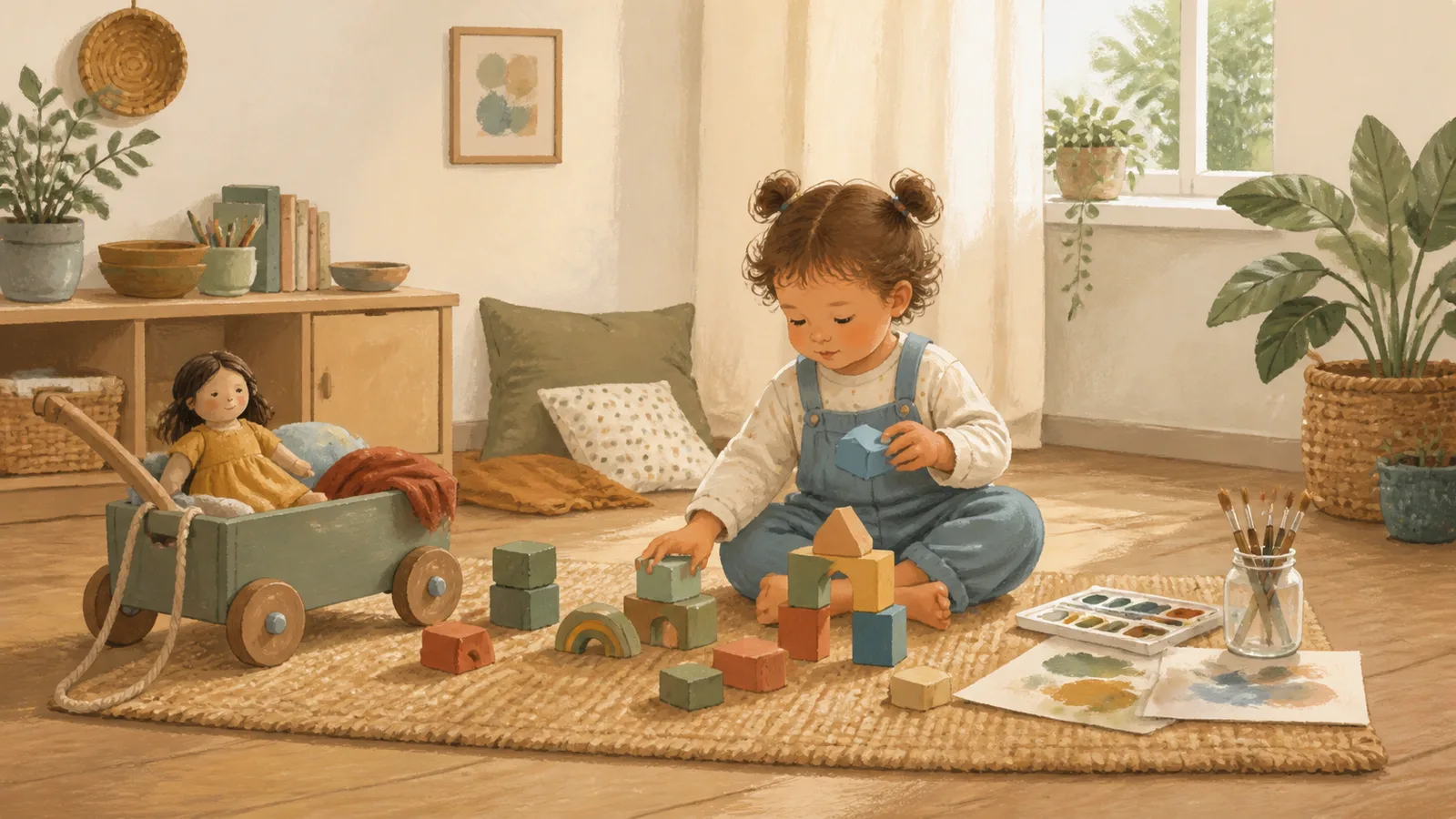
At two, the most useful clue is repetition. A child who carries everything needs a different gift from one who builds enclosures or rehearses feeding every stuffed animal.
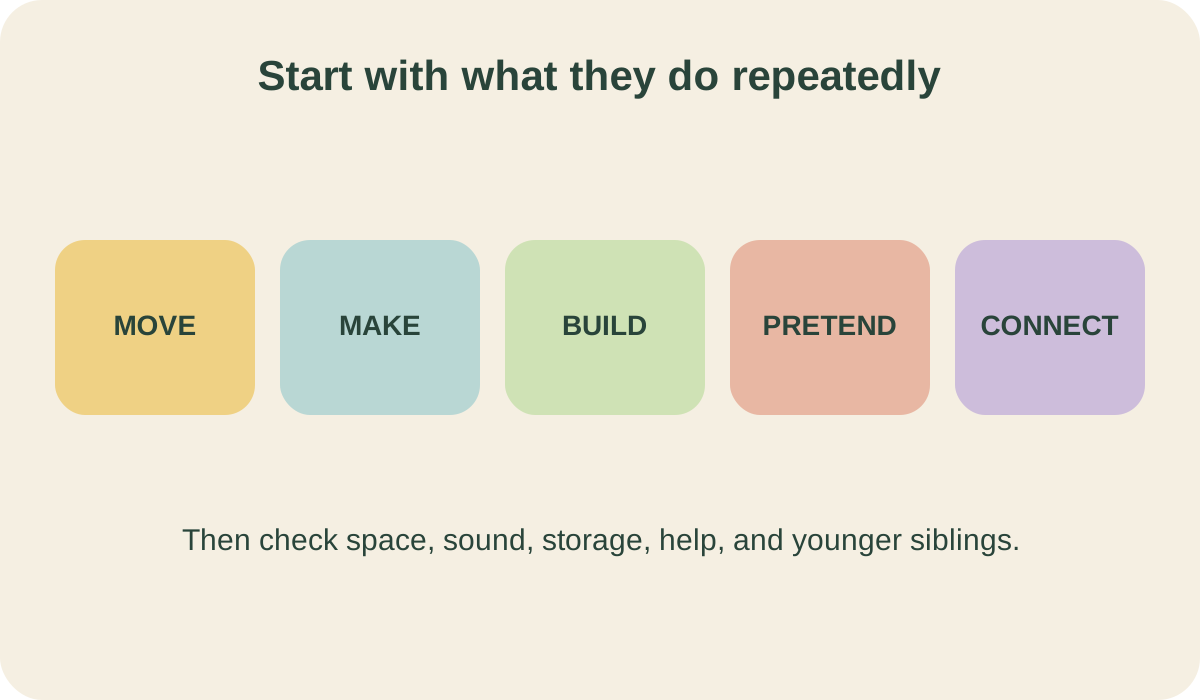
Start with a play pattern
Move
Consider a lightweight ball, pull toy or ride-on designed for the child’s age and the exact surface. Measure the active zone, not the product. Near stairs, traffic, rails or crowded rooms, choose floor markers, beanbags too large to choke on, or a music-and-movement ritual instead.
Make
Washable chunky crayons, a large drawing pad, reusable water drawing or age-suitable dough can be satisfying. “Washable” is not “no cleanup”; confirm surfaces, clothing and supervision. Our no-mess toddler ideas offer lower-spread alternatives.
Build
Large blocks, stacking forms and simple construction parts can move from carrying to towers to pretend objects. Check size, weight and compatibility with pieces already at home. The first-block guide helps choose material and scale.
Pretend
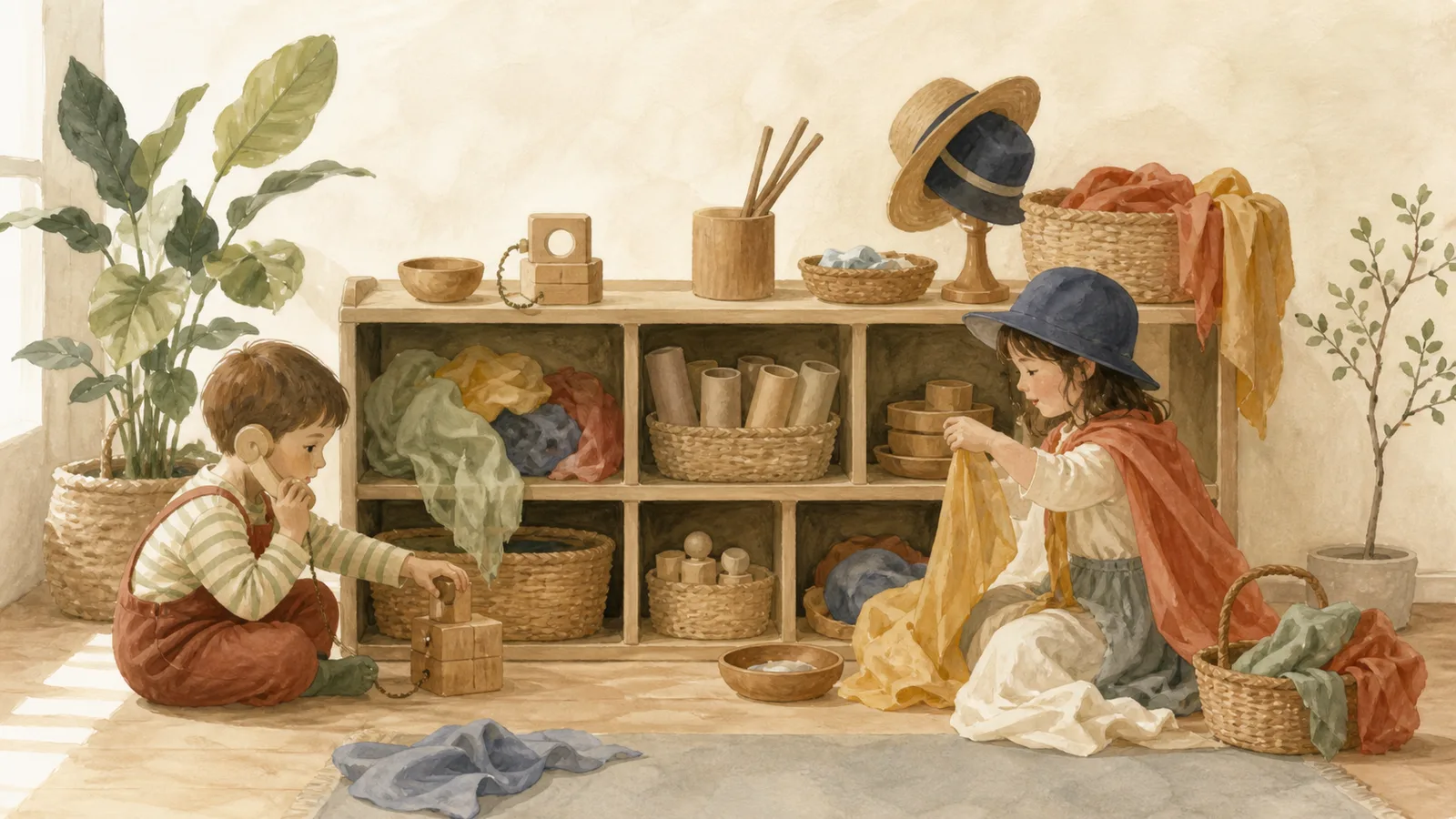
At around two, many children increasingly use one object to represent another, though timing and form vary. A few neutral props—a cloth, bowl, figure and box—may support more ideas than a 30-piece themed set. Explore the open-ended pretend-prop guide.
Connect
Books, song props, a simple turn-taking game or an outing can be the best gift when the child primarily wants another person. Do not market this as failure to play independently.
Rate the household fit
| Question | Better fit | Warning sign |
|---|---|---|
| Can play begin? | Child can recognize an action | Adult must assemble an elaborate scene |
| Can it reset? | One basket or obvious piece count | Many tiny categories and missing-part frustration |
| Does sound fit? | Controllable or acoustic | Constant electronic audio with no volume control |
| Does it fit the room? | Clear active zone and storage | Blocks exits or creates a collision lane |
| Can siblings coexist? | Pieces safe for youngest reachable child | Small components migrate across rooms |
| Can play change? | Several actions emerge naturally | One button/result is the entire experience |
Avoid developmental shopping pressure
Toys can provide opportunities for language, movement, imagination and problem-solving in the context of play and interaction. They do not cause a child to reach milestones. If there is a developmental concern, discuss it with the child’s healthcare professional rather than shopping for a cure.
The CPSC age-determination guidelines describe broad patterns manufacturers and regulators consider; they do not assess an individual child. Follow the label and use closer judgment for children who mouth, throw, climb or have specific access needs.
Five strong gift formats
- a set of large construction pieces that complements rather than duplicates the shelf;
- a simple doll or figures plus two neutral props, if pretend play already interests the child;
- washable art consumables with a defined work surface;
- a sturdy book collection chosen for repeated shared reading;
- a movement object that fits the home’s boundaries and can be stored safely.
One category is enough. If the home already has abundant toys, the better answer may be an upgrade, consumable or shared experience from our low-clutter preschool gift guide.
Safety and setup
Read age grading and warnings, secure battery compartments, reject accessible magnets, inspect cords and projectiles, and remove packaging immediately. Keep older siblings’ small pieces in controlled storage. Register the product and retain model information for recall checks.
Avoid real household tools disguised as “Montessori” activity unless they are appropriate for the child, task and close adult control. A label used in marketing does not establish safety.
Frequently asked questions
Are puzzles a good gift at two?
They can be, when pieces are large, handles are secure and the image/fit offers an achievable challenge. A child who dislikes fixed-answer tasks may prefer construction.
Is a balance bike appropriate?
Use the manufacturer’s age, fit, helmet and site instructions. It also needs a safe riding area and adult supervision; product compactness does not equal household fit.
Should I buy ahead for age three?
Do not make an age-inappropriate toy accessible now. If buying ahead, store it unopened and revisit the label and child’s behavior later.
Sources and research note
Development and selection framing comes from the AAP clinical report on selecting toys, its toy-buying guidance, CPSC Age Determination Guidelines, and Penn State Extension on pretend play. Safety checks use the CPSC Toy Safety FAQ. No products were hands-on tested for this article.