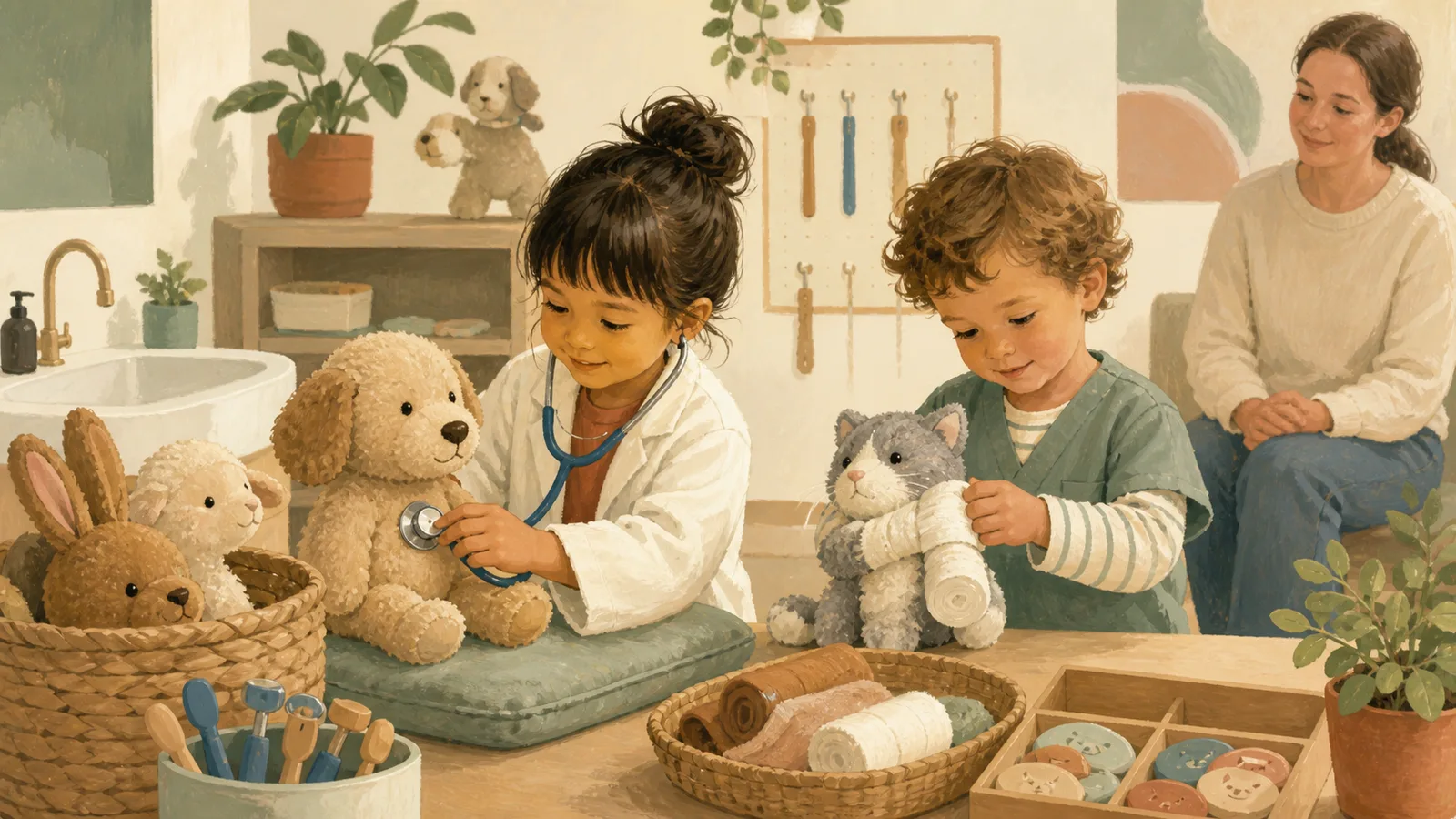
The easiest way to stop being examined for an hour is to make the clinic depend on toy patients and more than one job. A stuffed animal can be checked, transported, comforted, discharged, and return tomorrow without requiring an adult body.
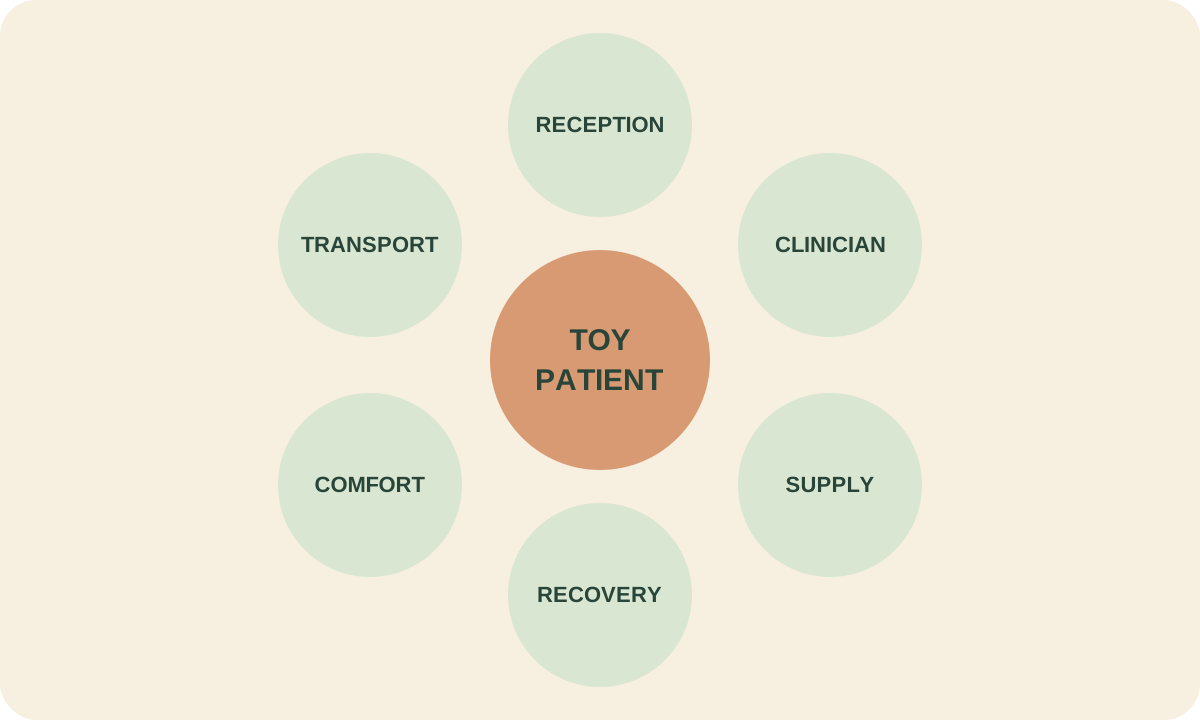
Set up in one basket
Use three stuffed animals, a cloth, two bowls, a small basket, paper, crayons, and a toy medical tool or plain block. Add only items appropriate for every child with access.
Place one animal beside the basket and say, “This patient arrived, but we do not know which room it needs.” That provides a problem without scripting a diagnosis.
No toy kit is required. A block can be a scanner, a fabric strip can mark a resting place, and a cardboard panel can become reception. Our pretend-play prop guide explains how to choose flexible materials rather than collect one object for each scene.
Six jobs that are not “the patient”
- Reception: welcomes patients and decides an order.
- Transport: carries an animal safely between areas.
- Clinician: asks what happened and chooses pretend tools.
- Supply keeper: finds blankets, bowls, or bandages.
- Comforter: explains the next step to a worried toy.
- Recovery lead: prepares a bed and gives home instructions.
Children can switch whenever the story changes. For siblings, use two equally important jobs rather than asking the younger child to wait indefinitely for the stethoscope.
Three stories that can grow
The animal with the difficult journey
The patient cannot cross the rug, climb the cardboard ramp, or fit through the clinic door. Build transport before treatment. This connects naturally to construction without making illness the only plot.
The clinic with mixed-up supplies
Put a bowl, cloth, block, and basket in the wrong places. The children decide what each item is for and prepare rooms. Sorting serves the story; there is no requirement to identify colors or count correctly.
Recovery hotel
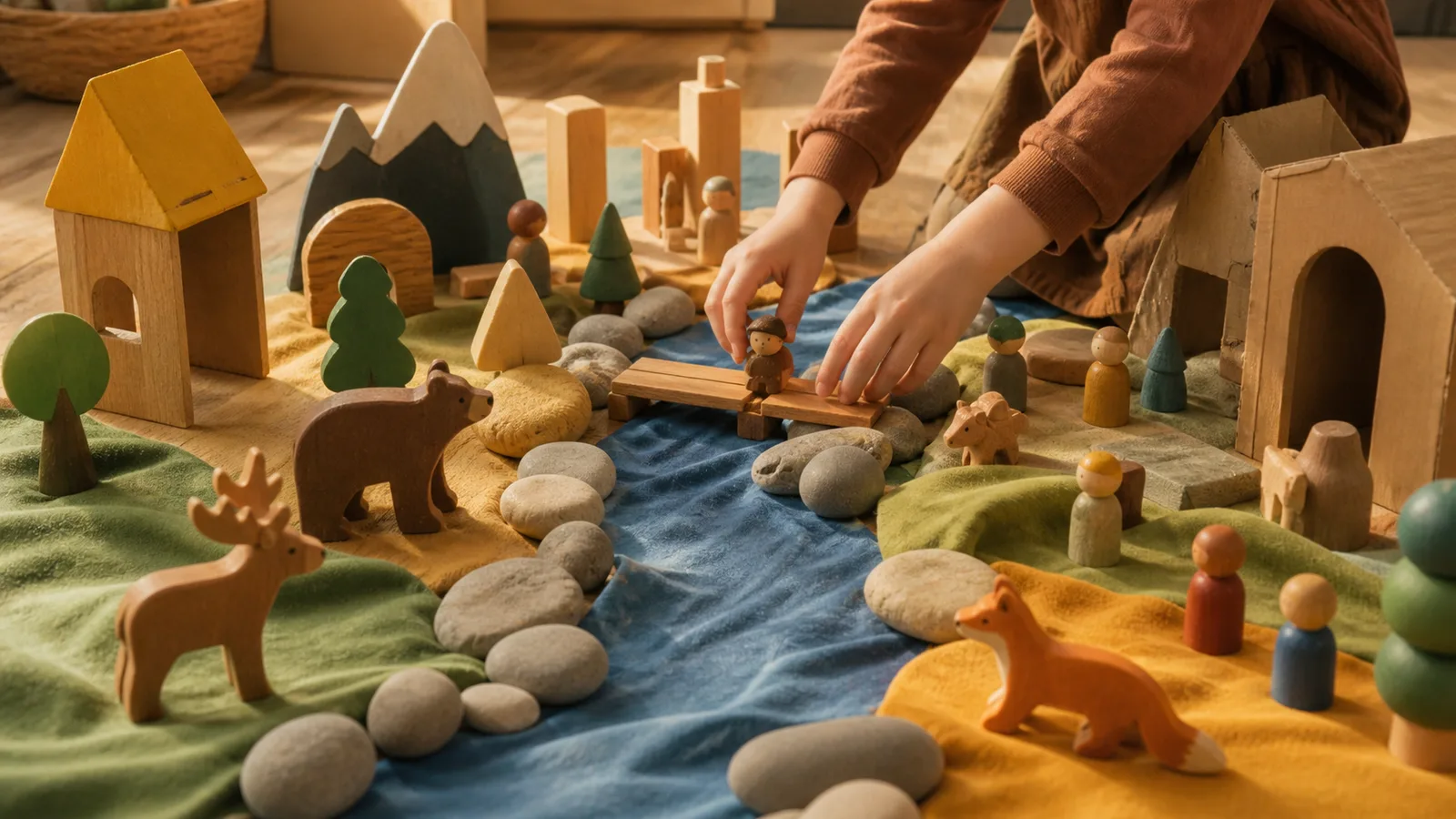
Several toys need quiet beds, water bowls, entertainment, and a way to call reception. A small-world setup can turn this into a longer scene with rooms and routes.
An honest way to rehearse a real appointment
Children may use play to revisit familiar events. Before an appointment, use accurate, simple information about what is known: where you are going, who may be there, and which steps are likely. Do not promise, “It will not hurt,” if you cannot know that. Say what you will do: stay nearby, listen, and tell the child what comes next.
Let the child control the toy scene. If the stuffed bear refuses the examination, that may be the story the child needs. Do not force the bear—or the child—to perform a cheerful ending.
Professional medical play delivered by a certified child life specialist is a clinical support, not the same as ordinary home doctor play. For a difficult procedure, serious illness, or intense anxiety, ask the healthcare team what preparation support is available.
How to leave the game respectfully
Give your adult role a limited task: deliver one animal, answer reception’s questions, then leave. Try: “I brought Fox to the door. You can decide who helps next.” If the child requests another patient, hand over a stuffed animal rather than your arm.
If co-play is important that day, set a visible boundary: two appointments, then the clinic continues with toys. The goal is not to trick the child into independence but to make your availability predictable.
Real medical supplies are not toys
Keep medicines, vitamins, syringes, needles, lancets, glass thermometers, adhesive removers, gloves, masks with long ties, batteries, magnets, and small caps inaccessible. Empty medicine containers can normalize access and may retain residue; do not use them as props.
Use only intact, age-graded toy tools. Inspect toy stethoscope tubing and straps for entanglement and supervise according to the product guidance. Never wrap fabric tightly around a body part. A loose cloth placed on a stuffed animal conveys the idea without practicing restraints.
Poison Help advises keeping medicines safely stored; if a possible poisoning occurs in the United States, contact Poison Help at 1-800-222-1222 rather than waiting for symptoms.
Cleanup that belongs to the story
Close the clinic by returning patients to one “recovery” shelf, putting all tools in the basket, and removing paper records. Do not keep invented medical notes about real people. If a child wants the world preserved, save one bed and photograph the rest before resetting the floor.
Frequently asked questions
Can doctor play make a child less afraid?
Familiar, honest preparation may help some children, but ordinary play cannot guarantee lower anxiety. Follow the child’s cues and use professional support when needed.
What if the child always plays an emergency?
Repetition can be a way to explore a compelling event. Stay calm, keep the scene physically safe, and avoid interpreting it aloud. If the play accompanies distress or a real experience you are concerned about, seek appropriate professional guidance.
Is a real bandage safe as a prop?
Use caution. Adhesives can irritate skin and small wrappers create litter. A wide fabric strip loosely placed on a toy is often simpler. Never bind a child’s body or neck.
How can a two-year-old join an older sibling?
Offer a large stuffed animal and a simple carry-or-comfort job with materials safe for the younger child. Keep miniature tools and writing accessories in a separate older-child zone.
Sources and research note
For a wider setting, try the small-world play guide, select flexible objects from the open-ended pretend-prop guide, or adapt the low-cost setup ideas in our play-kitchen guide.
Preparation guidance comes from the Association of Child Life Professionals on preparing children for healthcare experiences and AAP information about child life services. Pretend-play claims are bounded by the peer-reviewed evidence review. Safety references include CPSC small-parts guidance and the federal Poison Help resource. This article does not substitute for medical advice or professional therapeutic play.