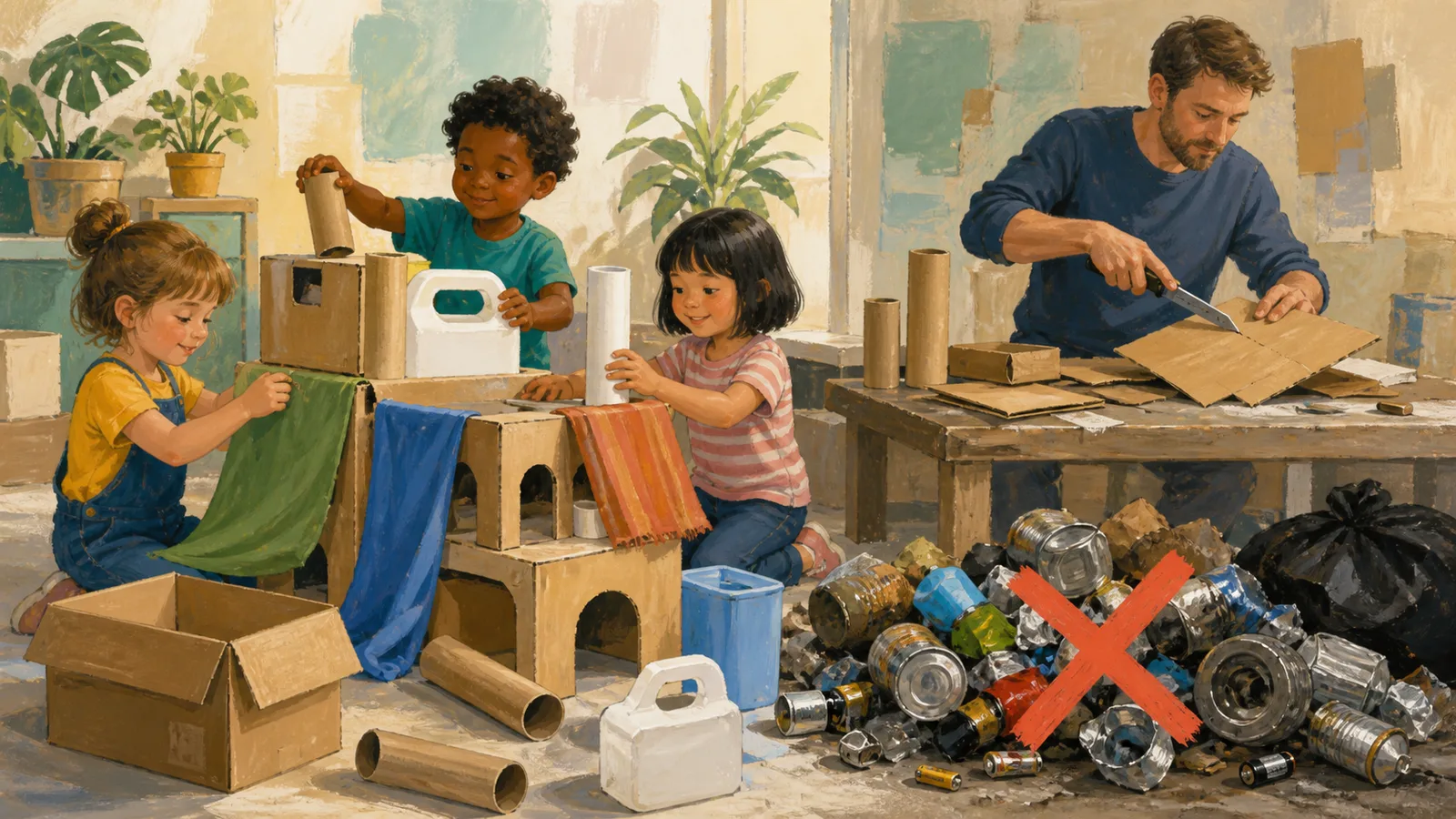
A cereal box can be excellent construction material. A detergent bottle is not “free craft plastic.” Sort for residue, shape, breakage and child behavior before a discarded object becomes play material.
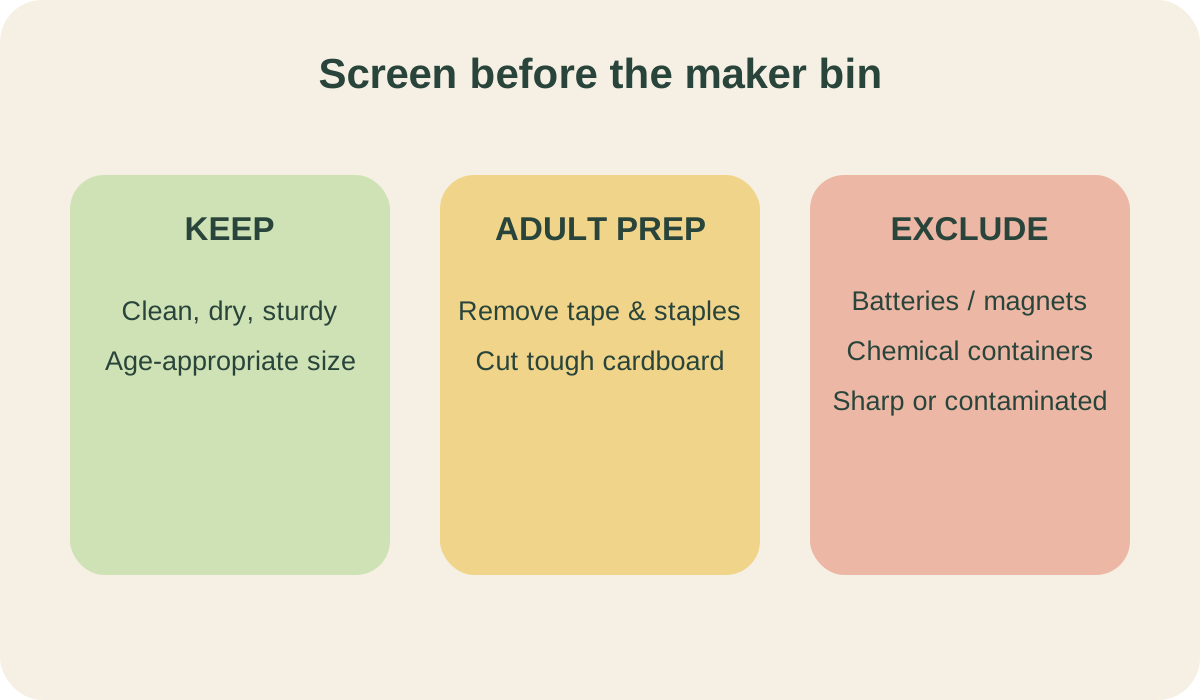
Build three sorting zones
Keep
Clean, dry, sturdy cardboard, plain paper, paper tubes that are too large to present a small-parts hazard for the children present, fabric offcuts with no loose embellishments, and clean wide containers with no sharp edges can enter the maker shelf.
Adult preparation
Adults remove staples, plastic windows, dangling tape and sharp torn edges; flatten boxes; make difficult cuts; and check every seam. Keep utility knives, hot glue, strong adhesives and hardware out of the child work zone.
Exclude
Do not use battery compartments or loose batteries, magnets, medicine or chemical containers, aerosol cans, sharp metal, broken glass, moldy material, long cords, unknown powders, food-contaminated packaging that cannot be cleaned, or items with misleading hazardous labels still attached.
“We will supervise” is not a reason to include an ingestion or chemical hazard.
Size changes with the youngest child
Bottle caps and tabs are popular wheels and buttons, but may be choking hazards for young children. In a mixed-age home, design the storage around the youngest person who can reach it—not the intended builder. Keep small-component projects at a controlled table and store finished models out of reach.
Our safe household objects guide uses the same reach-and-mouth logic for younger children.
A maker shelf that does not become a bin of trash
Limit the inventory:
- five flattened boxes;
- six tubes or structural shapes;
- one envelope of paper offcuts;
- masking tape and washable mark-making tools;
- one tray for work in progress.
Add material when a project needs it, not every time packaging appears. If an object has no likely use after two cycles, recycle it according to local rules. This keeps choice visible and reduces pest, dust and clutter problems.
Three engineering invitations
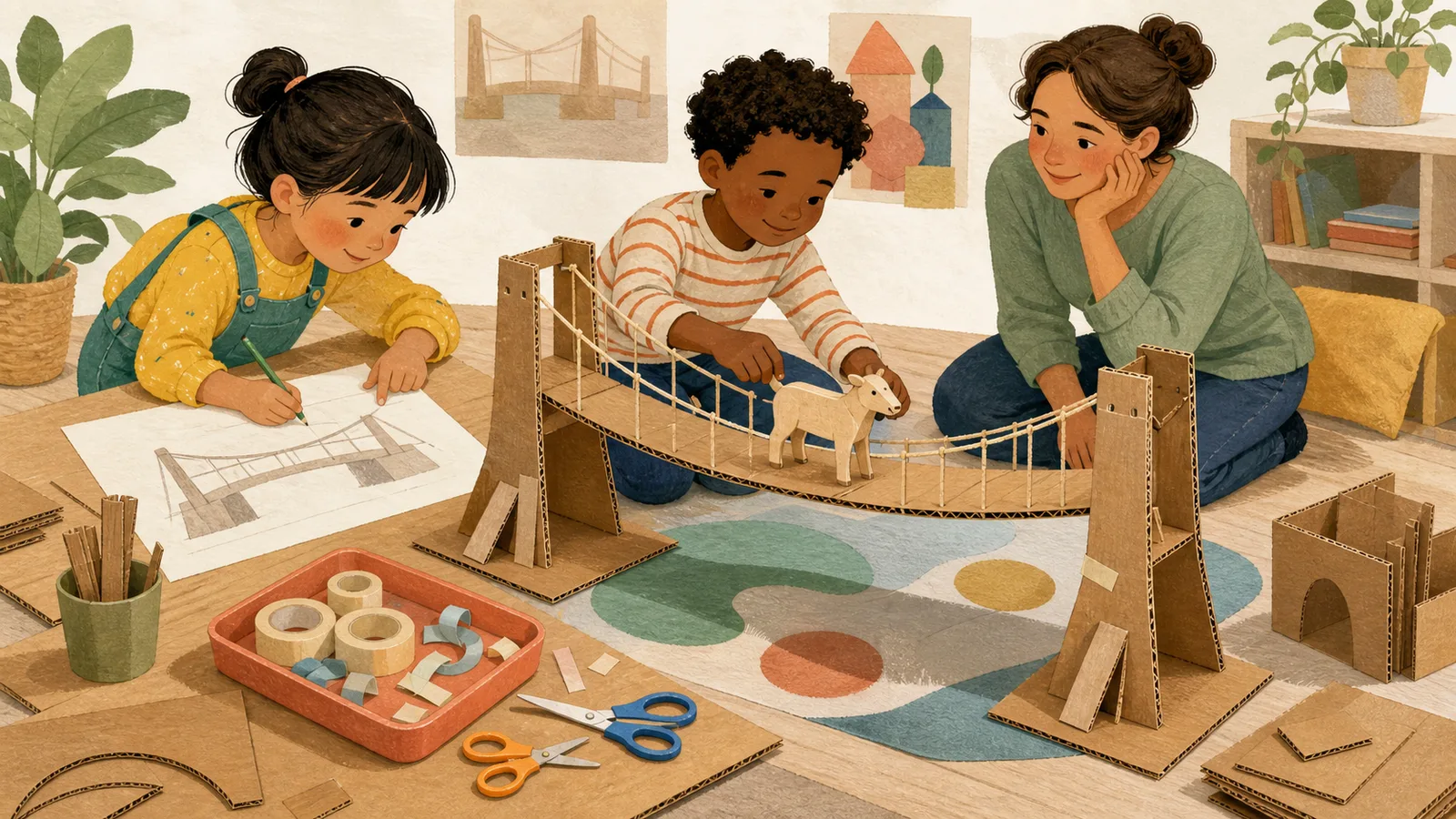
Bridge with a delivery test
Offer two boxes, tubes, cardboard strips and tape. The bridge must span two books and carry one familiar toy. Change one condition—span, load or material—between attempts.
Marble-free rolling course
For homes with younger children, use a large ball that cannot fit in a small-parts cylinder rather than marbles. Build slopes and gates, then observe where speed changes.
Package redesign
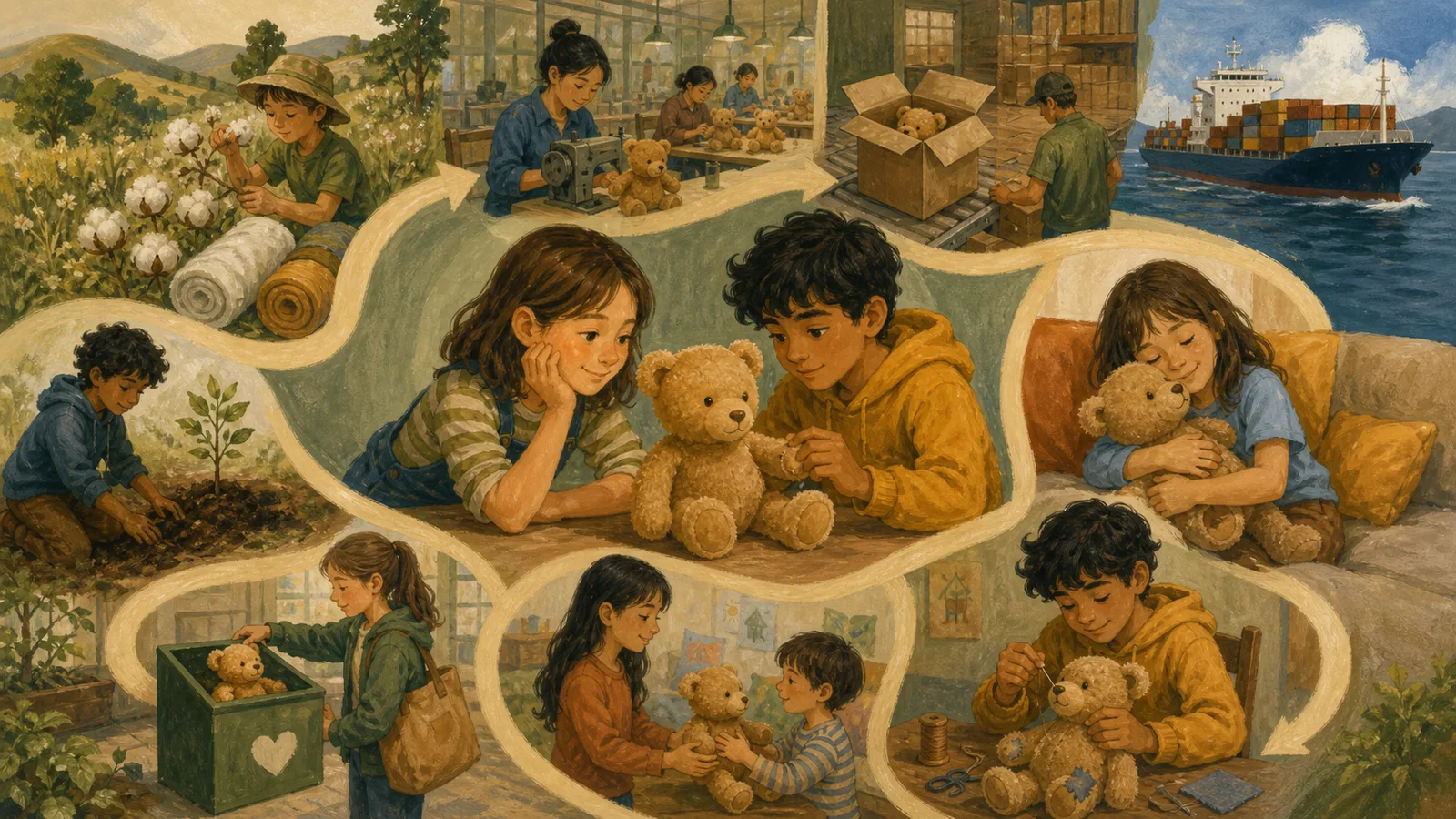
Ask an older child to redesign a toy package using less material, fewer mixed materials and a second use. Compare the original and prototype without claiming the handmade version has a verified lower footprint.
The cardboard engineering guide provides detailed challenge cards. Our at-home STEAM guide helps adults prompt testing without taking over.
Adhesives, paint and tools
Use age-appropriate products according to labels in a ventilated area. “Nontoxic” does not mean edible or suitable for every age. Keep adhesives away from eyes and mouths, wash hands, and let work cure fully outside play access.
Scissors, hole punches and hand tools should match motor control and adult support. A child can mark where a hole belongs while an adult makes it. Open-ended learning does not require open access to every tool.
Cleanup is part of the design
Before play, put a tray under small scraps and define one storage shelf. After play, count tools, sweep fragments and check the floor from a crawling child’s height. Photograph large creations before recycling if storage is unavailable. The idea can survive even when the structure does not.
Sources and research note
Screening boundaries use CPSC guidance on toy safety, small parts, button batteries, and magnets. Learning design draws on NAEYC resources for STEAM and building activities. Product labels and local waste rules remain authoritative for a specific material.