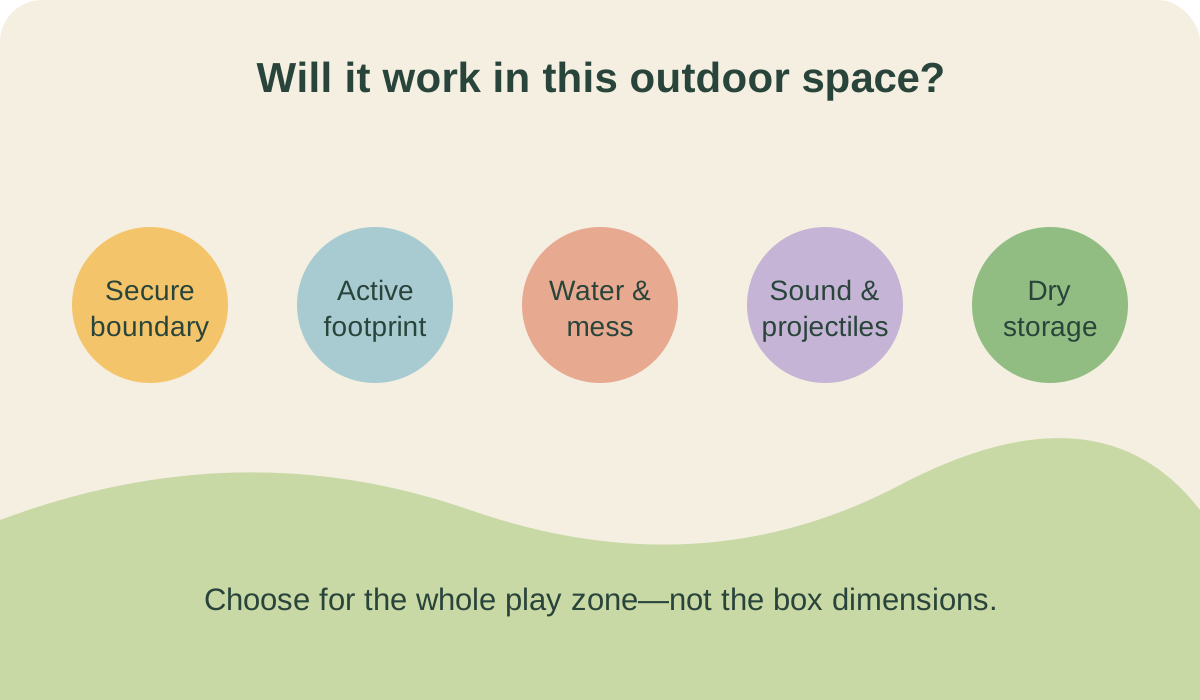
The best outdoor toy for a small space is the one the site can safely contain. Before shopping, measure where the child will stand, fall, carry, pour and retrieve—not just where the object sits.
Start with the boundary
A ground-level fenced patio, an open shared courtyard and an upper-floor balcony are not interchangeable. Check gates, stairs, traffic, windows, rail gaps, ledges and the route to the door. Balcony rails need an uncluttered zone: stools, crates, ride-ons and water tables can become climbing steps. A caregiver should remain close enough to intervene rather than supervising through glass.
If the space opens onto vehicles, water or a drop, solve that boundary before choosing equipment. The outdoor-play-by-season guide can help with weather planning, but it does not make an insecure site suitable.
Measure the toy in motion
Manufacturer dimensions describe the product, not play. Add room for the child and adult, access to the exit, moving parts and predictable scatter.
| Format | Hidden space demand | Small-space strength | Main trade-off |
|---|---|---|---|
| Chalk and a small board | Arm and walking reach | Stores flat; prompts change | Dust and surface rules |
| Low empty basin with cups | Adult kneeling space; splash zone | Flexible sensory play | Water supervision and drainage |
| Stepping markers | Landing and circulation lane | Movement without bulky frame | Slip and trip checks |
| Bubbles used by an adult | Drift beyond the play area | Minimal storage | Slippery residue; shared-space etiquette |
| Compact push toy | Turning and stopping distance | Useful on a level patio | Poor fit near stairs or rails |
| Ball | Chase and escape path | Familiar and versatile | Often unsuitable above ground or near traffic |
For movement, flat markers, chalk routes and stop-start games generally contain action better than wheeled toys or projectiles. Indoors, our small-space movement ideas use the same principle: define a lane and a stopping point.
Water play without a water table
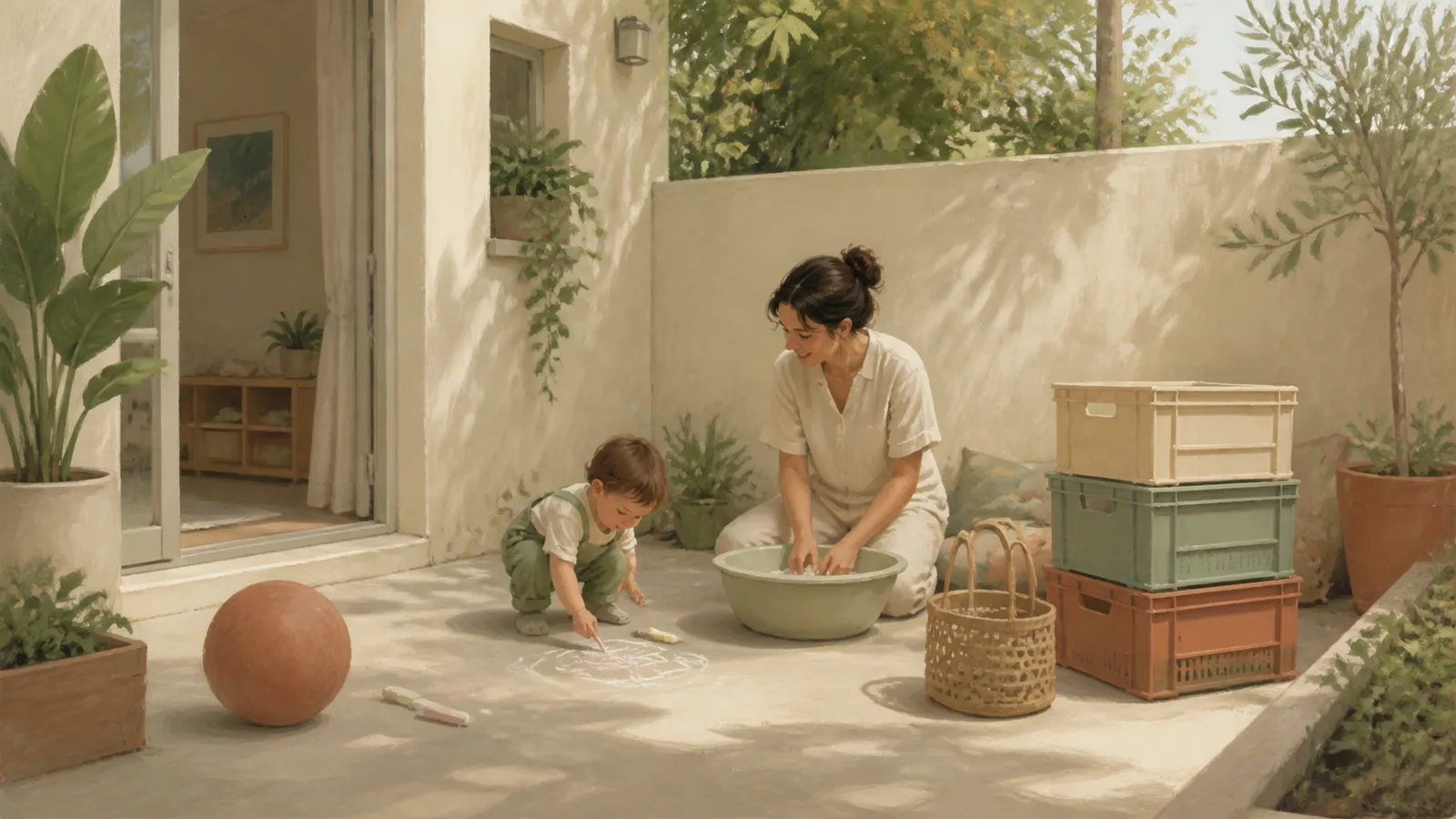
A shallow, stable basin on the ground can offer pouring and washing play without permanent equipment. Use only enough water for the activity, stay within arm’s reach of young children, and empty it completely when play ends. Do not leave buckets or bins where rain can collect.
On a balcony, water can run onto neighbors, make tile slippery or create a climbable setup. A dry alternative—large brushes, reusable chalk, fabric streamers or a toy wash with a damp cloth—may fit better. Outdoor water is not “safer because it is shallow”; drowning can happen quickly and quietly.
A realistic three-item kit
For a young toddler, try one packable movement material, one mark-making material and one observation object:
- four large nonslip floor markers;
- chunky washable chalk used according to its age label;
- a child-safe magnifier or an empty cardboard viewing frame.
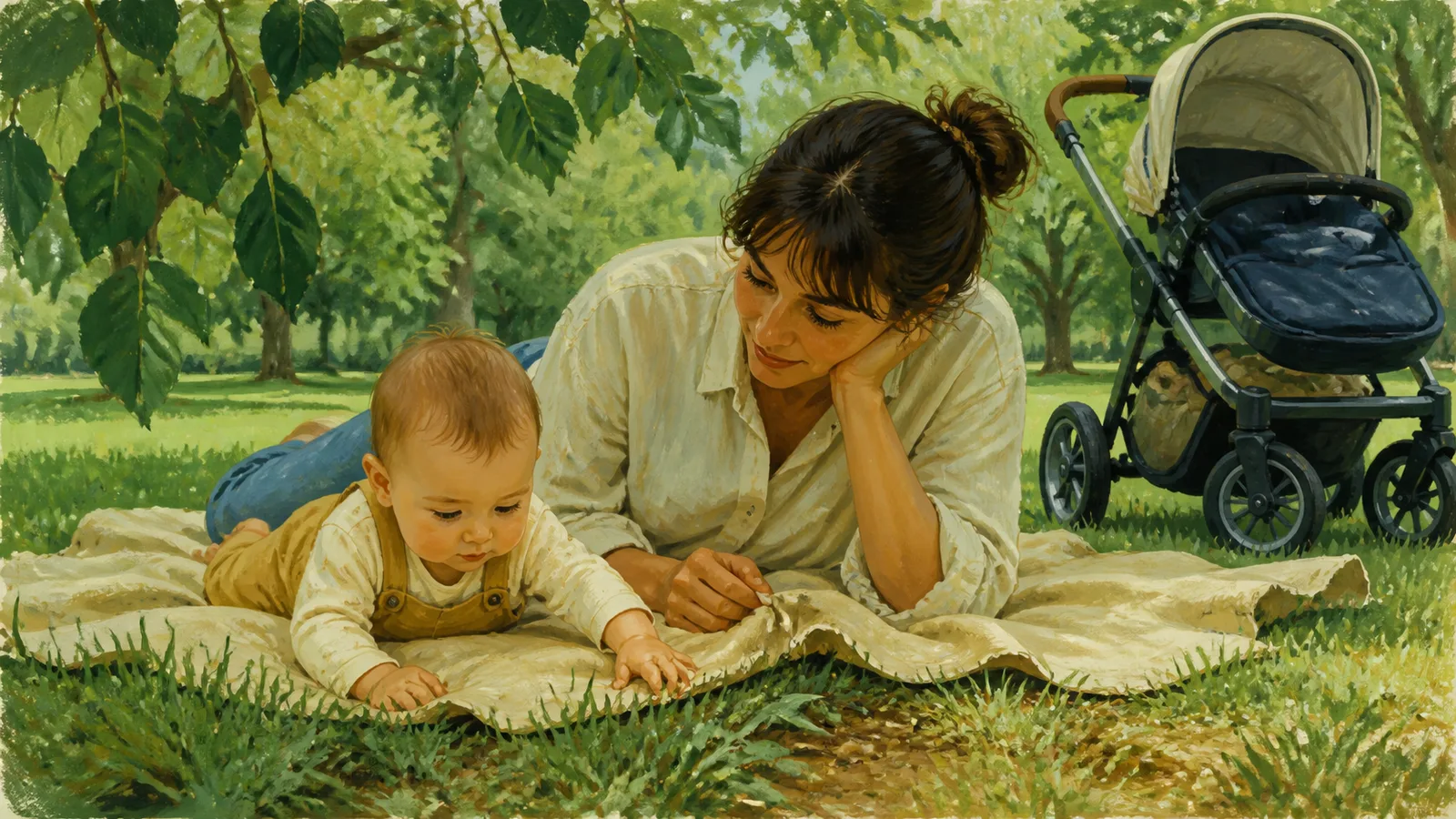
Store them in one ventilated tote that an adult can bring out. For babies, skip the kit and begin with the shaded, inspected setup in Outdoor Play for Babies.
Preschoolers can add a “find something moving / rough / round” walk from our no-collection nature hunt. Older children may prefer portable making tools, a jump rope where overhead and neighbor clearance permit, or a notebook for mapping the courtyard.
Storage is part of the product
Ask where a wet item will drip, how it dries and whether wind can move it. Outdoor boxes are not automatically watertight; trapped moisture encourages mildew and damages wood, fabric, paper and metal hardware. Clean and dry items according to their instructions before enclosed storage.
A foldable product is not necessarily convenient if folding exposes pinch points or requires daily disassembly. If every session needs a ten-minute setup, choose loose materials that live in one basket instead. The toy rotation guide offers broader containment ideas without requiring a large playroom.
What to skip
Skip equipment that depends on anchoring you cannot install, violates rental or shared-space rules, blocks an exit, creates a fall zone you cannot provide, or has no dry storage plan. On raised spaces, avoid launchers, balloons, rolling balls and objects a child could drop through or over a rail. Do not add artificial grass or foam flooring without confirming drainage, fire/building rules and cleaning reality.
Age labels still apply. Remove small loose pieces when younger siblings share the area, and check the CPSC recall database for used equipment. A beautiful “balcony playroom” is not the goal; ten contained minutes outdoors can be enough.
Sources and research note
Safety boundaries draw on the CPSC Public Playground Safety Handbook and Toy Safety FAQ, AAP guidance on fall prevention and water safety for young children, plus CDC outdoor play and safety. Product formats are editorial categories, not hands-on test results or endorsements.