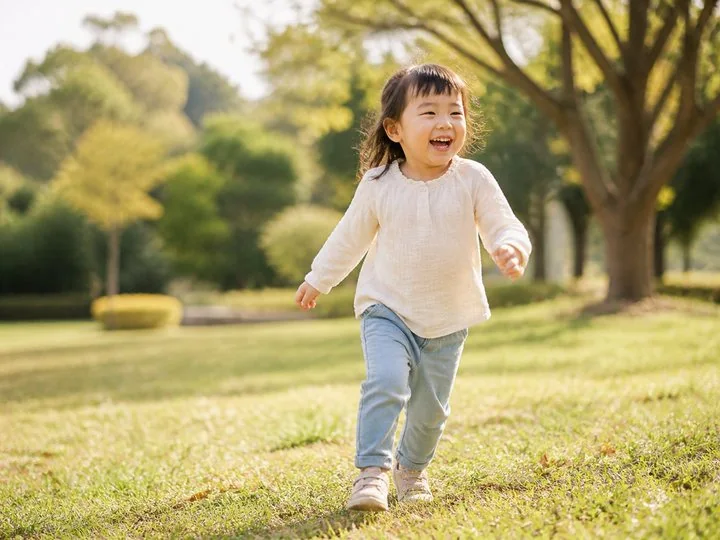
Playing outside all year is not a vow to endure every forecast. It means knowing which conditions can be managed with timing, clothing, shade, and a shorter route—and which call for changing the plan.
Outdoor time can support movement, social play, attention, and contact with nature. Systematic reviews report beneficial associations, but no universal daily minute target fits every climate, child, or family. Access, disability, air quality, neighborhood safety, and caregiver capacity all shape what is realistic.
Check conditions before choosing the activity
Use current local weather and public-health alerts. A cheerful seasonal list cannot assess conditions at your address.
| Condition | Adjust the plan | Move indoors or seek official guidance when… |
|---|---|---|
| Heat and strong sun | Go earlier, choose shade, offer water, reduce intensity | Heat warning, child appears ill, or safe shade/water is unavailable |
| Thunderstorms | Choose a sheltered indoor alternative | Thunder is heard or lightning is possible; a picnic shelter is not reliable lightning protection |
| Rain | Use waterproof outerwear, visible routes, good traction | Flooding, fast water, poor visibility, or high winds are present |
| Cold | Use dry layers, protect extremities, shorten outings | Local warning, unsafe wind chill, wet clothing, or signs of cold stress |
| Smoke or poor air | Check local air-quality advice and reduce exposure | Authorities advise sensitive groups or everyone to remain indoors |
| Snow and ice | Choose level ground and known surfaces | Hidden water, vehicle hazards, falling branches, or uncontrolled slopes |
CDC heat guidance emphasizes hydration, pacing, shade, and recognizing heat illness. AAP resources similarly recommend adapting outdoor activity to weather rather than using one rigid threshold.
24 low-prep outdoor play ideas
Mild days
- Follow-the-line walk: follow cracks, shadows, or a chalk route.
- Tiny map: draw three landmarks and use the map on the return trip.
- Color collection: photograph—not pick—five shades of one color.
- Build a resting place: use fallen sticks or blocks for a toy animal.
- Roll and race: compare balls on grass, pavement, and a safe slope.
- Sit spot: revisit one place and notice what changes.
Hot days
- Shade map: find and mark the coolest route.
- Water-painting: use a brush and water on pavement; observe evaporation.
- Sponge transfer: move water between containers in full shade with continuous supervision.
- Morning shadow trace: compare shapes before peak heat.
- Slow nature bingo: find broad categories such as something rough or moving.
- Spray-bottle target: spray a wall or chalk marks, not faces; follow local water rules.
Rainy or damp days
- Puddle perimeter: outline a safe shallow puddle with chalk and revisit it.
- Rain gauge: place a straight-sided container and measure later; do not use during lightning.
- Gutter route: guide rainwater with leaves or stones away from drains and roads.
- Surface detective: compare how wood, soil, stone, and leaves look when wet.
- Umbrella sound walk: listen to rain on different safe overhead surfaces.
- Mud kitchen: use dedicated containers and soil known to be free of animal waste and chemicals.
Cold or snowy days
- Track search: compare shoe, bird, wheel, or animal prints without approaching wildlife.
- Snow construction: build low walls, channels, or shapes away from roads and roofs.
- Frozen-bubble observation: try ordinary bubble solution in suitable cold and notice changes.
- Winter color hunt: find five colors that are not white or gray.
- Carry-and-build: move safe sticks or snow with child-sized tools for whole-body play.
- Warm-delivery mission: walk a short route to deliver a drawing to a neighbor or mailbox.
Match the outing to the child
| Need | Try | Adaptation |
|---|---|---|
| Big movement | Hills, carrying, obstacle route | Choose firm surfaces and stable supports |
| Quiet observation | Sit spot, shadow, photo hunt | Use ear protection only as appropriate and preserve communication |
| Predictable sequence | Same short loop with one changing question | Preview route with pictures |
| Wheels or mobility equipment | Smooth path, accessible playground, chalk route | Check gradient, curb cuts, surface, and restroom access |
| Limited outdoor space | Stoop, courtyard, balcony with safe barriers, sidewalk route | Focus on sound, light, wind, and observation rather than acreage |
| Mixed ages | Shared hunt with different jobs | Separate choking hazards and never assign supervision to a child |
A child who dislikes wet grass or wind is not failing at nature play. Offer control: watch rain from a doorway, use gloves, choose a paved route, or take a short listening walk. Our sensory play guide offers more low-pressure participation ideas.
A small gear system
You do not need a wardrobe for every season. Prioritize what prevents an outing from ending immediately.
- Heat: breathable clothing, sun protection appropriate to the child, water, shade plan.
- Rain: waterproof outer layer, boots or shoes with traction, dry layer for afterward.
- Cold: several dry layers, covered hands and head as conditions require, spare socks or mittens.
- Visibility: reflective or bright elements near traffic and in dim conditions.
- Access: any mobility, communication, medication, or sensory supports the child ordinarily needs.
Check fit and condition. Drawstrings, loose scarves, and poorly fitting helmets or equipment can introduce hazards. Product-specific protective gear should follow its manufacturer’s instructions.
Outdoor safety without draining the play
Set boundaries around the real hazard: “Stop at the red post” is clearer than “Be careful.” Scan for traffic, water, damaged equipment, sharp waste, unstable branches, toxic plants, animal feces, and pesticide-treated areas.
At playgrounds, choose equipment appropriate to the child’s abilities, stay positioned to supervise, and check surfaces and heat. Around any body of water—including buckets and shallow play—use continuous, close adult supervision. Drowning is fast and can be silent.
Teach children to observe living things without tasting plants or handling wildlife. Wash hands after soil, sand, and animal contact and before eating.
Make the habit smaller
If getting outside feels difficult, lower the setup cost:
- keep shoes and one weather layer together;
- choose a repeatable ten-minute route;
- attach outdoor time to an existing transition;
- let the child carry one simple tool such as chalk or a magnifier;
- stop while the experience is still manageable.
Long adventures can be wonderful, but consistency does not require them. The doorstep, sidewalk tree, bus stop, and courtyard can all become places to notice change.
Frequently asked questions
Should children play outside every day?
Regular outdoor play can be valuable, but no single schedule overrides unsafe conditions or family circumstances. Use local guidance and seek a pattern that is sustainable rather than treating a missed day as a developmental loss.
Is rain itself unsafe for children?
Ordinary rain is usually a clothing and comfort issue. Lightning, flooding, high wind, cold stress, poor visibility, and contaminated water are different hazards and may require staying inside.
How cold is too cold to play outside?
There is no universal number because wind, wetness, clothing, duration, activity, age, and health matter. Follow local warnings and pediatric guidance, shorten exposure, and return inside for wet clothes or signs of cold stress.
What are signs of heat illness?
Heavy sweating, weakness, dizziness, headache, nausea, confusion, fainting, or very hot skin require prompt action. Move to a cooler place and follow current emergency guidance; severe symptoms need urgent medical help.
What if we do not have a yard?
Use a sidewalk loop, accessible park, courtyard, public garden, library route, or safe balcony with adult supervision. Outdoor play depends on interaction with the environment, not private land.
Do children need special outdoor toys?
No. Movement, observation, chalk, containers, balls, and natural features offer many possibilities. For design challenges outdoors, see our STEAM activity guide.
Sources and evidence notes
- CDC, guidance on outdoor play, heat and heat-related illness.
- American Academy of Pediatrics / HealthyChildren.org, outdoor, winter, playground, sun, and water-safety guidance.
- Peer-reviewed systematic reviews of nature exposure and child health and development.
- Head Start, active-supervision and outdoor-safety resources.
Safety decisions should follow current local forecasts, alerts, and the child’s health professional when relevant.