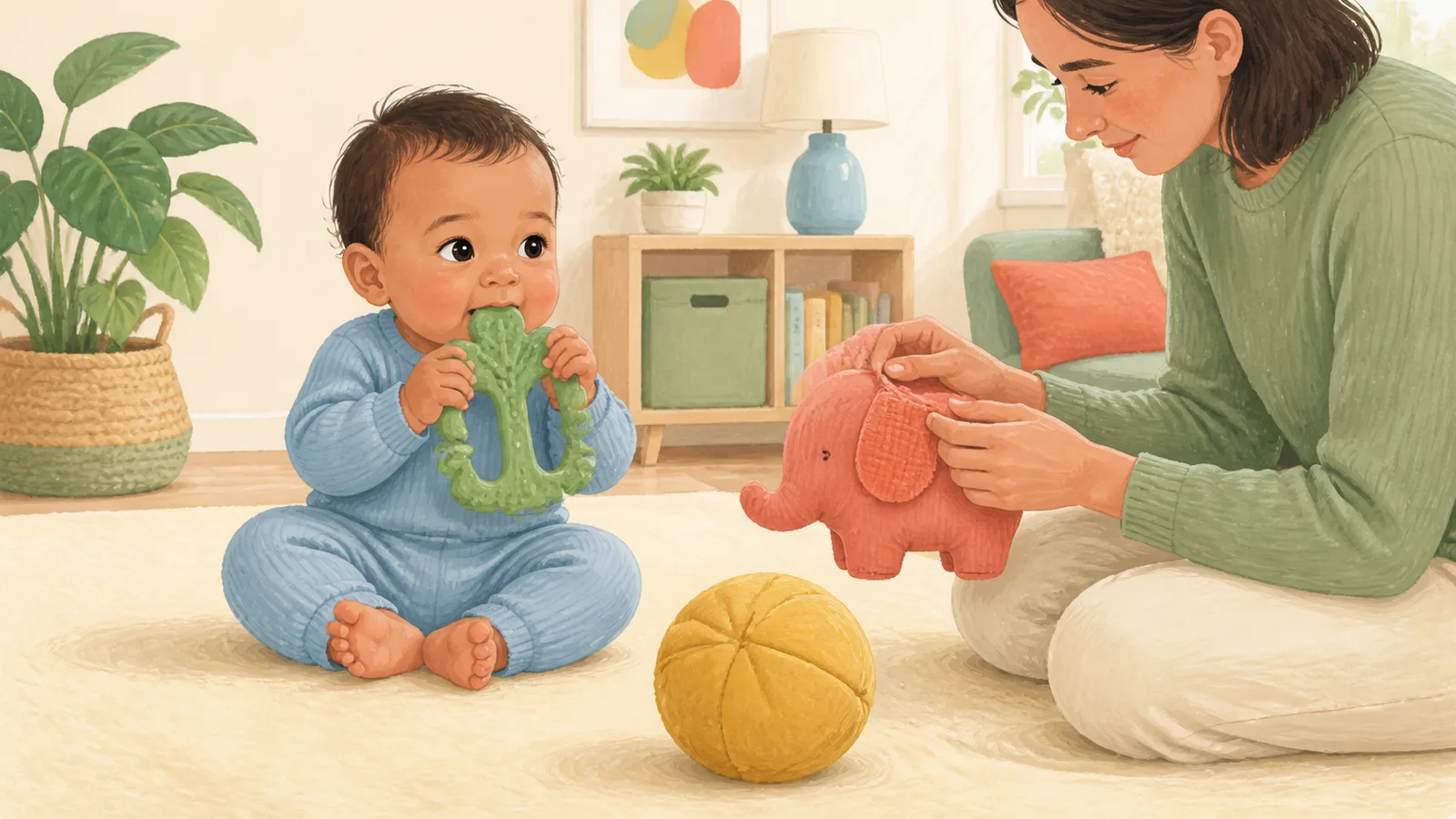
Babies put toys in their mouths because the mouth is one of several ways they investigate an object. Looking shows shape and movement; hands reveal weight and texture; the lips, tongue, and gums add another stream of information. Mouthing can also be soothing during teething, but it is not only a teething behavior.
The practical response is not to stop every safe mouthing attempt. It is to control what can enter the play area, inspect it repeatedly, and remove hazards that supervision cannot reliably neutralize.
What research can—and cannot—tell us
Researchers usually describe object exploration as a changing combination of looking, holding, fingering, rotating, banging, squeezing, and mouthing. In a small longitudinal study, 22 infants were observed in different positions from birth through the second year. Their exploratory behaviors changed rapidly during the first six months and were influenced by both body position and object properties.
An older observational study published in Pediatrics asked families to record the objects mouthed by children under three. It found that mouthing of non-pacifier objects varied widely between children and was more common in the younger group. Many mouthed items were not toys.
Those studies support two modest conclusions: mouthing is common and context matters. They do not establish an ideal number of minutes a baby should mouth objects, prove that more mouthing produces better development, or mean that every household object should be offered for oral exploration.
Mouthing, chewing, and teething are not the same question
A baby may bring an object to the mouth to inspect it, repeat an interesting sensation, practice coordinating hands and mouth, or soothe tender gums. From the outside, those motives can overlap.
Possible teething signs can include increased drooling, a desire to chew, and gum discomfort. Fever, significant diarrhea, unusual lethargy, poor feeding, or a very unwell baby should not automatically be attributed to teething. Ask a health professional about symptoms that concern you.
You do not need to identify the exact motive before responding. If the object is appropriate and intact, the baby can continue while you supervise. If it is unsafe, replace it with a suitable yes-object rather than trying to teach an infant not to explore orally.
Build a small “yes” zone
A yes zone is not a promise that every object is risk-free. It is a controlled area in which the adult has reduced foreseeable hazards before play begins.
Start with four steps:
- Separate older children’s materials. Beads, small construction pieces, marbles, doll accessories, loose magnets, craft components, and game pieces need a physical boundary—not a verbal reminder.
- Choose a few infant-labeled objects. A one-piece teething object, washable cloth, easy-grip rattle, and soft ball can provide different actions without a crowded pile.
- Clear non-toys. Remotes, earbuds, key fobs, pen caps, coins, jewelry, medication containers, and battery-powered cards are not infant toys even when fascinating.
- Inspect after ordinary wear. Drops, bites, washing, heat, sunlight, and storage can change a once-intact object.
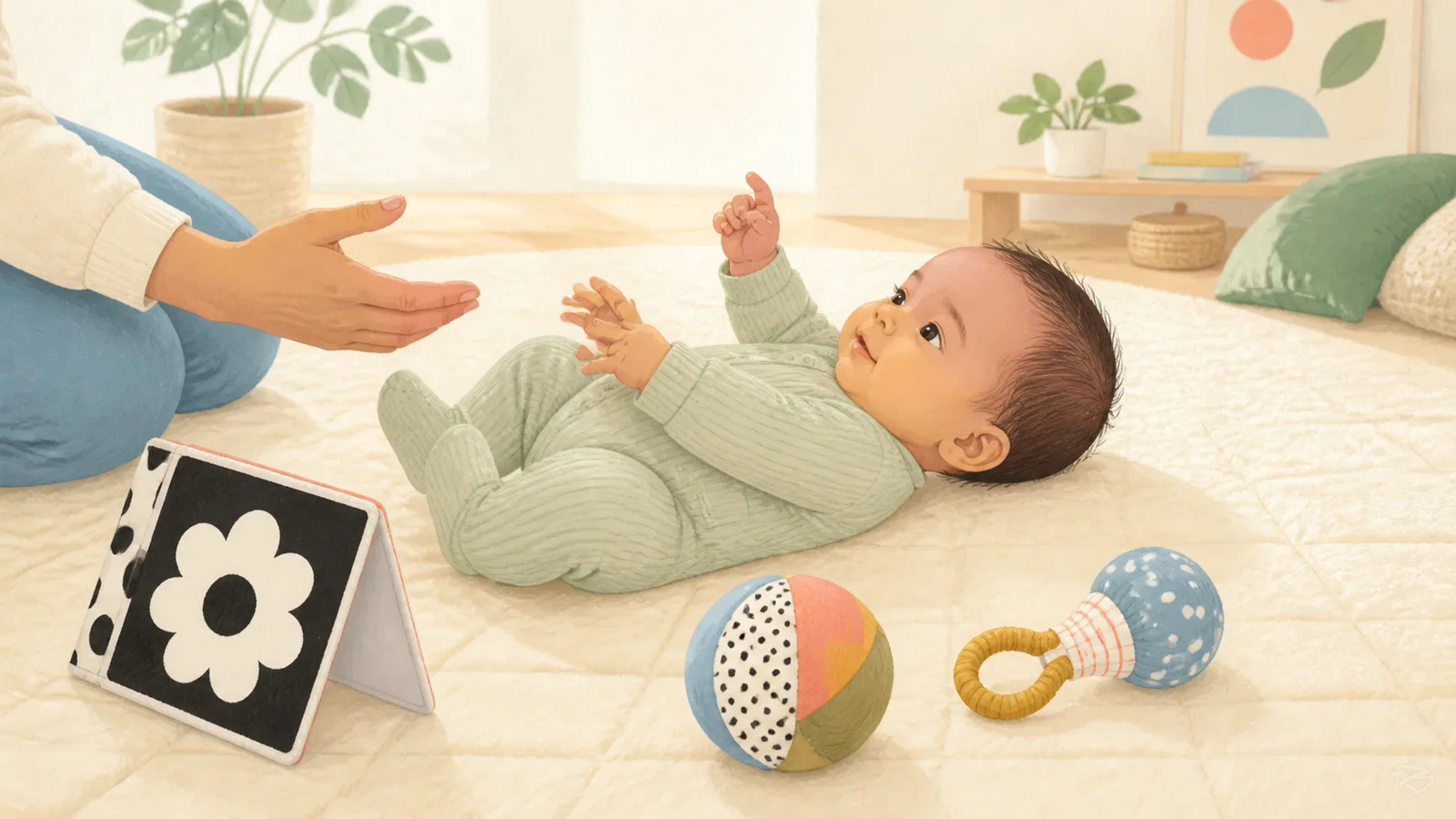
Our first-toy guide for birth to six months explains how one object can remain useful as looking becomes reaching, grasping, transferring, and rolling.
Safety is more than the choking cylinder
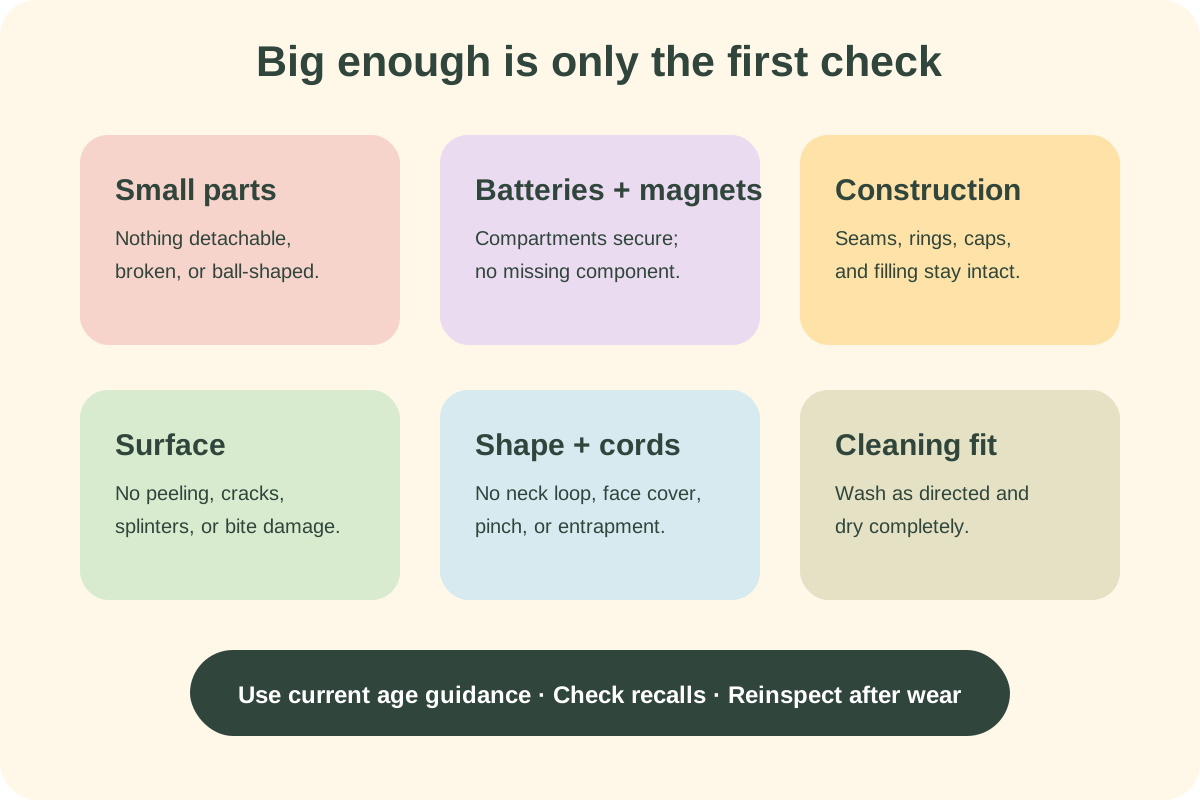
Small parts are a major concern, but they are not the only one.
Small parts and small balls
The CPSC bans small parts in products intended for children under three when those parts create choking, aspiration, or ingestion hazards. Manufacturers use a standardized small-parts cylinder during testing. A home toilet-paper-tube check is not an equivalent compliance test and can miss elongated, compressible, or breakable components.
Use the product’s age grading and instructions. Stop using a toy if a part loosens or a piece breaks off, even if the original product was labeled for infants.
Button batteries and magnets
A button or coin battery can cause devastating internal injury if swallowed. Battery compartments on toys should remain secured as designed. A cover held by tape after the screw or latch fails is not a durable repair for an object a baby mouths.
Loose high-powered magnets can attract across tissue when more than one is swallowed. Keep magnetic desk toys and older children’s magnetic components out of infant spaces. If a magnet is missing from a toy, treat that as a serious problem, not normal wear.
Cords, loops, and necklaces
Do not place teething necklaces, amber necklaces, pacifier cords that exceed product guidance, improvised ribbons, or lanyards around a baby’s neck. A chewable material does not make a cord safe. Keep window-blind cords and charging cables completely out of the play zone.
Surfaces and fillings
Check for peeling paint, splinters, sticky or degrading plastic, sharp bite marks, exposed foam, leaking gel, loose pellets, and open seams. “Natural” wood can splinter; “soft” fabric can release stuffing; silicone can tear. Material labels do not replace condition checks.
A realistic inspection routine
Inspect at four predictable moments rather than trying to remember constantly:
- when a toy first enters the home;
- after washing or sanitizing;
- after a hard drop, strong bite, or rough sibling play; and
- when the toy returns from storage, travel, childcare, or another home.
Turn it in your hands. Pull gently at attachments. Press around enclosed components. Confirm that a battery door sits flush and its fastener works. Smell can alert you to trapped moisture or material degradation, though absence of odor does not prove safety.
For secondhand items, identify the product and check CPSC recalls. If you cannot identify an electronic or multi-part infant product well enough to find instructions, age grading, and recall information, passing on it can be the more sensible choice.
How often should mouthed toys be cleaned?
Follow the maker’s care instructions first. Cleaning that damages a seam, coating, or internal sound mechanism can create a new problem.
For routine home use by one healthy child, wash visibly dirty washable items and use the normal care schedule that fits the material. Soap and water may be appropriate for many hard non-electronic toys; machine washing may suit some fabric items; surface washing may be the only approved method for a product with internal parts. Dry completely.
More specific cleaning or disinfection may be appropriate after illness, contamination with body fluids, use in group care, or advice from a health authority. Do not mix cleaning products, leave chemical residue on a mouth toy, boil items not designed for heat, or submerge electronics.
Keep a small clean basket and a wash basket if that reduces confusion. The system should make safe handling easier, not create anxiety about every contact with an ordinary floor.
Household objects: ask more than “Is it big?”
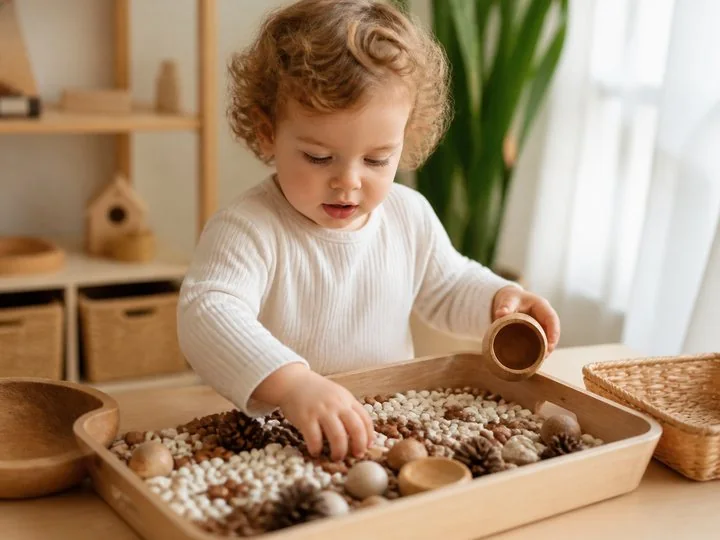
Babies inevitably notice non-toys. Some simple household objects can be used in closely supervised play, but only after checking their intended materials and construction.
Consider:
- Can anything detach after bending, biting, or dropping?
- Does it contain a battery, magnet, spring, gel, liquid, fragrance, or unknown coating?
- Was it designed to contact food or a child’s mouth?
- Can it trap a finger, cover the nose and mouth, or loop around the neck?
- Can you clean and dry it fully?
- Will an older sibling return it to a mixed container with small parts?
A large TV remote fails this test despite its size. So may a sealed food package, because caps, tear strips, foil, and printed film were not designed for repeated mouthing. Our household-object play guide separates useful containers and cloths from objects that only look harmless.
What parents often underestimate
The object changes
Safety is not permanent. Teeth emerge. Grip becomes stronger. A baby begins banging an object on hard flooring. A toddler steps on it. A washing cycle weakens an attachment. Reinspection is part of ownership.
The room changes
A visiting child brings a coin. A sibling opens a magnetic set. A caregiver puts a hearing-aid battery on a side table. A baby becomes mobile and reaches the charging area. The most important hazard may not be the toy currently in the baby’s hand.
“Supervised” is not a product category
Supervision helps an adult respond; it does not make a loose magnet or button battery an acceptable play material. Reserve supervision for managing normal uncertainty, not for permitting known high-consequence hazards.
When mouthing may need a conversation
Individual variation is substantial. Some babies mouth many objects; some favor looking and handling. Mention your observations to a health professional if mouthing comes with feeding difficulty, choking or coughing, pain, injury, loss of previously used skills, unusual lack of exploration more broadly, or a pattern that concerns you.
As children grow beyond the typical infant-and-toddler period, persistent chewing or eating of non-food substances can have different explanations and deserves individual assessment. Do not diagnose sensory needs, nutritional deficiency, or a developmental condition from a single behavior or an online checklist.
Frequently asked questions
Should I stop my baby from putting every toy in their mouth?
Remove unsafe objects and allow suitable intact objects to be explored under supervision. Repeatedly pulling away every safe toy can turn ordinary exploration into constant conflict without removing the real hazards elsewhere in the room.
Are wooden toys safe to mouth?
Some infant-labeled wooden toys are designed for mouthing; other wooden objects are too heavy, splintered, coated, glued, or intended for older children. Check age grading, surface condition, construction, and care guidance rather than relying on material alone.
Is a silicone kitchen utensil a good teether?
Food-contact use does not automatically equal infant-toy testing. Handles can contain seams, hidden cores, detachable parts, or shapes unsuitable for oral play. Use products intended and labeled for the baby’s age when mouthing is expected.
Does mouthing mean my baby will get sick more often?
Objects can transmit pathogens, but ordinary mouthing is common. Sensible cleaning, hand hygiene, illness precautions, and excluding contaminated or unsafe items are more workable than trying to create a sterile home. Ask a clinician for specific advice for an immunocompromised child.
When does mouthing stop?
It generally becomes less dominant as other manual exploration expands, but there is no single stop date. Age, temperament, teething, context, and the objects available all influence behavior.
Sources and research note
Apply the same ingestion-hazard screen to secondhand baby toys and to household objects offered for play.
This article uses an observational study of mouthing in children under three, longitudinal research on infant object behavior and position, and a study of mouthing and infant vocalization to describe—not prescribe—oral exploration. Safety recommendations come from the CPSC toy center, small-parts guidance, and button-battery center, plus AAP toy-selection guidance. Evidence about behavior does not show that more mouthing causes better development.