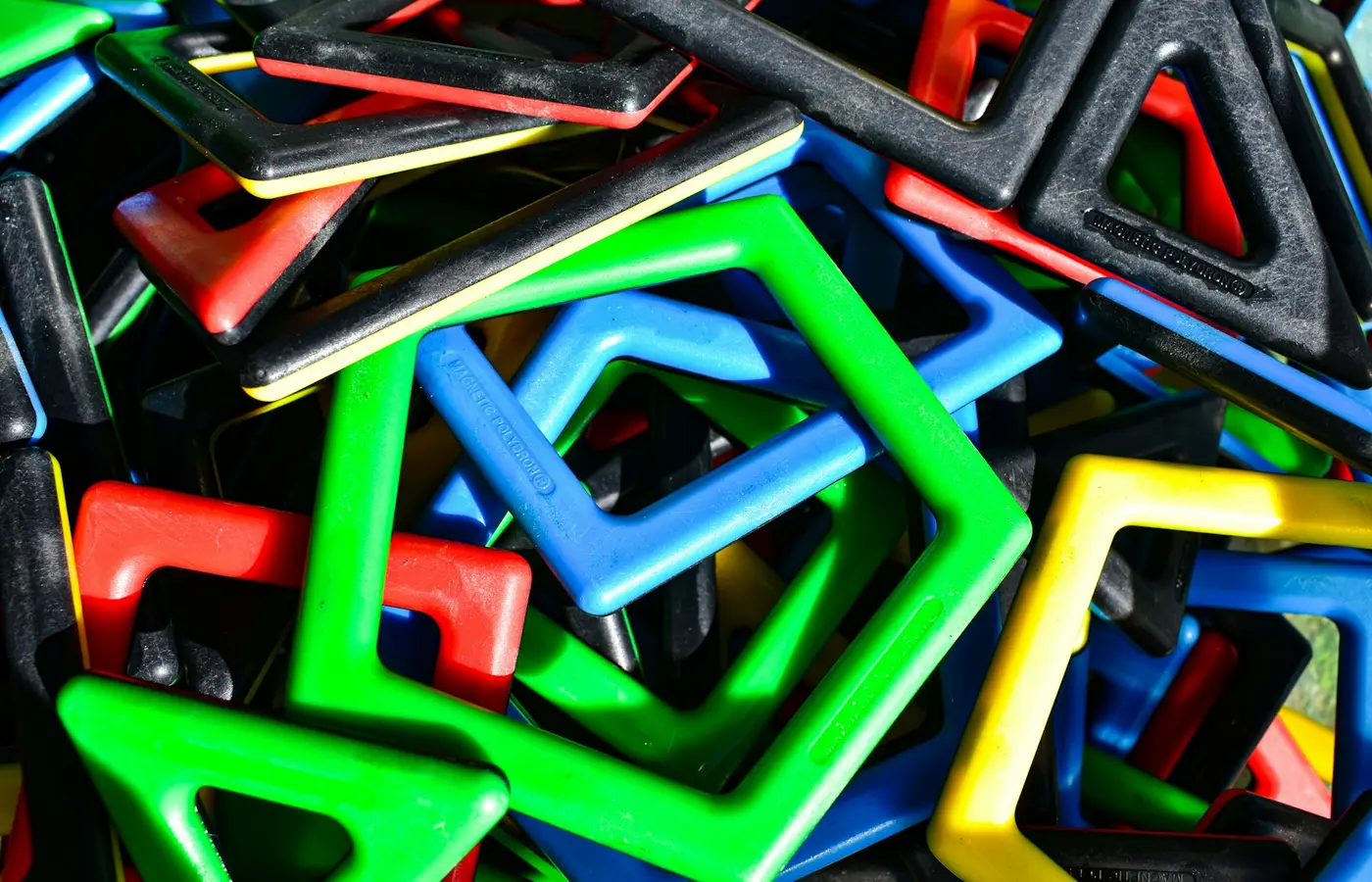
An older child may be ready to connect magnetic pieces, build tall structures, and dismantle them again. But if a baby, toddler, or child who mouths objects shares the home, the decision cannot rest on the intended builder’s age alone.
The quick answer is to choose a magnetic toy only if its magnets are securely contained and your household can reliably separate play, account for every magnetic piece, check for damage, and store the complete set out of reach. If those routines are unlikely to hold during ordinary interruptions, nonmagnetic construction materials are a reasonable choice.
Most importantly, if you know or suspect that a child has swallowed magnets, seek immediate medical attention. Do not wait for symptoms.
Why swallowed magnets require an immediate response
One swallowed object can present a hazard, but multiple magnets create a particular emergency. According to the U.S. Consumer Product Safety Commission (CPSC), two or more swallowed magnets can attract to each other through internal tissue. A magnet can also attract to another swallowed object made from material that magnets pull toward.
That attraction can trap and damage tissue. The CPSC’s 2022 federal-standard announcement identifies possible outcomes including intestinal perforation, twisting or blockage, infection, blood poisoning, and death. Treatment has sometimes required surgery.
This concern is not limited to toddlers. The CPSC describes high-powered magnets as a risk from toddlerhood through the teen years. An older child or teenager might place magnets in the mouth while playing, experimenting, or imitating a piercing.
If ingestion is known or suspected:
- Seek immediate medical attention, following the CPSC’s direction.
- Do not wait to see whether pain, vomiting, or another symptom develops.
- Tell the medical team that magnets may be involved. The CPSC notes that multiple magnetic pieces can appear to be one object on an X-ray.
The American Academy of Pediatrics’ HealthyChildren.org guidance likewise highlights the severe internal injuries associated with swallowed loose and high-powered magnets.
Decide whether magnetic play fits the whole household
When considering magnetic toys with toddlers at home, start with access rather than the picture on the box. An age grade may indicate that a set is intended for your older child, but it does not protect a younger sibling who can reach the pieces.
Ask what play and cleanup look like on a normal day:
- Can a baby or toddler crawl, climb, or wander into the play area?
- Does anyone in the home frequently put toys or other objects in their mouth?
- Could a visiting child reach the set?
- Can a pet scatter pieces or carry them away from the play zone?
- Can an adult oversee setup and cleanup—not just the middle of play?
- Is there somewhere to put the set immediately when the doorbell rings, dinner starts, or the older child loses interest?
- Can the set be stored in an adult-controlled place rather than on an open bedroom shelf?
The Australian Competition and Consumer Commission (ACCC) advises following toy age labels, keeping relevant magnetic products out of reach of children under 3, and supervising children using toys with magnets. Its consumer guidance specifically recommends supervision through age 14 in Australia; that is Australian guidance, not a universal legal rule.
A closed room or gated area can help only if your household can use it consistently. If siblings share a bedroom, children move freely between rooms, or adult attention is regularly divided, separated magnetic play may be difficult to maintain.
That does not mean the older child has done anything wrong or that your home needs a better system. It may simply mean the toy asks for more access control than your current season of family life can support.
Screen the product, label, and current safety record
Magnetic pieces come in many forms, but format alone does not establish safety. Do not assume that tiles are always safer than rods, balls, cubes, or another design. The relevant questions concern the exact product, how its magnets are retained, its instructions, and its current warning or recall history.
Before buying or accepting a secondhand set, check the following.
Identify the exact product
Look for the manufacturer, product name, model or set number, market, and version. Keep the packaging or photograph the identifying information. Similar-looking sets can differ in construction, warnings, and regulatory status.
If a secondhand set has no label, no instructions, mixed pieces, or an uncertain identity, it becomes harder to check its safety record or know whether all parts are present. In a home with younger children, that uncertainty is a sound reason to decline it.
Read the age grade and warnings
Use the manufacturer’s age grade and instructions for the exact product sold in your market. Retailer filters, gift-guide labels, and words such as “educational” do not replace safety information.
An age grade for an older child is not permission to leave the toy where a younger sibling can access it. It describes the intended user under specified conditions, not every person who shares the home.
Distinguish contained components from loose magnets
Look at whether the magnets are enclosed within larger components or supplied as loose pieces. The ACCC describes toys with attached or embedded magnets as well as products containing accessible magnets. Its Australian mandatory standard includes design and construction requirements intended to prevent access to small magnets, including testing related to whether a magnet separates during play.
Australian rules provide limited treatment for loose, small high-powered magnets in magnetic or electrical experimental sets intended for children 8 and older, accompanied by required warnings. Such a set may still be an unworkable household choice where a toddler or mouthing child could gain access.
A visual check cannot prove that an enclosed magnet meets a standard or will remain contained. It can only help you notice visible design features and later damage.
Check regulator notices for the exact set
Search the relevant regulator’s current warnings and recalls using the product’s identifying details. Regulations and notices vary by country and may change over time.
For example, a specific 2026 CPSC warning covers magnetic building ball-and-stick sets described on that page. The agency reported that stronger-than-permitted magnets could be liberated from those products and directed consumers to stop using and dispose of the affected sets. This is evidence about the named products—not proof that every ball-and-stick set has the same defect.
Plan a contained play zone before opening the set
Decide where the toy will be used before pieces spread across the floor. The aim is to limit access and make cleanup more observable, not to create a perfect playroom.
A workable setup might include:
- a room the younger child cannot enter during play;
- a raised surface the younger child cannot reach;
- a contrasting mat or shallow tray that defines the play boundary;
- the storage container within adult reach for quick takedown; and
- adult-controlled transitions into and out of play.
A mat or tray may make pieces easier to see, but it does not contain every piece automatically. Children build beyond boundaries, structures collapse, and pieces can roll or be carried away. A closed door or baby gate is useful only while it is actually closed and secure.
Consider floor space too. A set that encourages wide structures may be difficult to keep contained in a busy living room. Building on a table reduces floor spread but can introduce dropped pieces. Shared bedrooms are especially challenging because the toy may remain accessible after the planned play session ends.
Magnetic construction can also produce repeated clacking as pieces connect and structures fall. If that sound disrupts naps or overwhelms someone in the home, shorter sessions in a separate space may be more realistic than keeping the set freely available.
Make every magnetic piece accountable
Piece accountability is an adult task, even when an older child helps. Counting pieces, using a defined area, and stopping when something is missing are conservative household practices; they reduce uncertainty but cannot guarantee that ingestion will not occur.
A simple routine is easier to repeat:
- Start with a known complete set. Keep an inventory based on the manufacturer’s contents list where available. If the set includes many nonmagnetic accessories, track the magnetic components separately.
- Set out only what the child plans to use. A smaller working group is usually easier to monitor than several combined sets.
- Keep pieces inside the chosen play area. Pause to retrieve dropped or carried pieces rather than leaving them for later.
- Stop if a magnetic component is missing. Keep the younger child out of the area while you look. Do not return the incomplete set to ordinary use as though nothing changed.
- Clean up before reopening the space. Check under furniture, along baseboards, inside blankets, and among nearby toys where pieces could have moved.
- Store the set closed and out of reach. Use a container that does not spill open easily, placed in an adult-controlled cupboard or similarly inaccessible location.
A huge set may offer more building options, but it also creates more counting, floor spread, storage, and inspection work. It is reasonable to choose fewer pieces or not combine expansion sets while younger siblings are in the mouthing stage.
Builds left standing overnight complicate accountability. If preserving a structure matters to the older child, you might photograph it before dismantling. If dismantling causes frustration, say before play begins when cleanup will happen and leave enough time to take the structure apart without rushing.
Check for damage and know when to stop
Inspect pieces when setting up and putting away the toy. You are not performing a compliance test; you are looking for obvious changes that could expose or release a magnet.
Watch for:
- cracks or punctures;
- split or widening seams;
- loose caps or panels;
- visible or exposed magnets;
- rattling or movement that was not previously present;
- misshapen components; and
- pieces that do not match the documented set.
Stop using the entire set if a magnet is exposed, has come free, or cannot be accounted for. Isolate all components where children cannot reach them while you check the exact manufacturer instructions and any applicable regulator notice.
Do not improvise a repair with glue, tape, or another covering unless the manufacturer’s instructions for that exact product specifically direct it. A home repair may hide damage without restoring the original magnet retention. Follow product-specific disposal directions; do not sell, donate, or pass on a product that a regulator has directed consumers to stop using.
If the missing magnet may have been swallowed, seek immediate medical attention rather than continuing to search while waiting for symptoms.
When a magnetic toy is not a workable fit
Choose another play material when any of these conditions applies:
- Play cannot be separated from a baby, toddler, or child who mouths objects.
- An adult cannot reliably manage setup and complete cleanup.
- The number or size of pieces makes accountability unrealistic.
- Secure, adult-controlled storage is unavailable.
- The product cannot be identified well enough to check its instructions and safety record.
- Components are already damaged, mixed with unknown pieces, or incomplete.
- The toy would routinely be left out in a shared room.
- A missing or damaged piece would be difficult to notice.
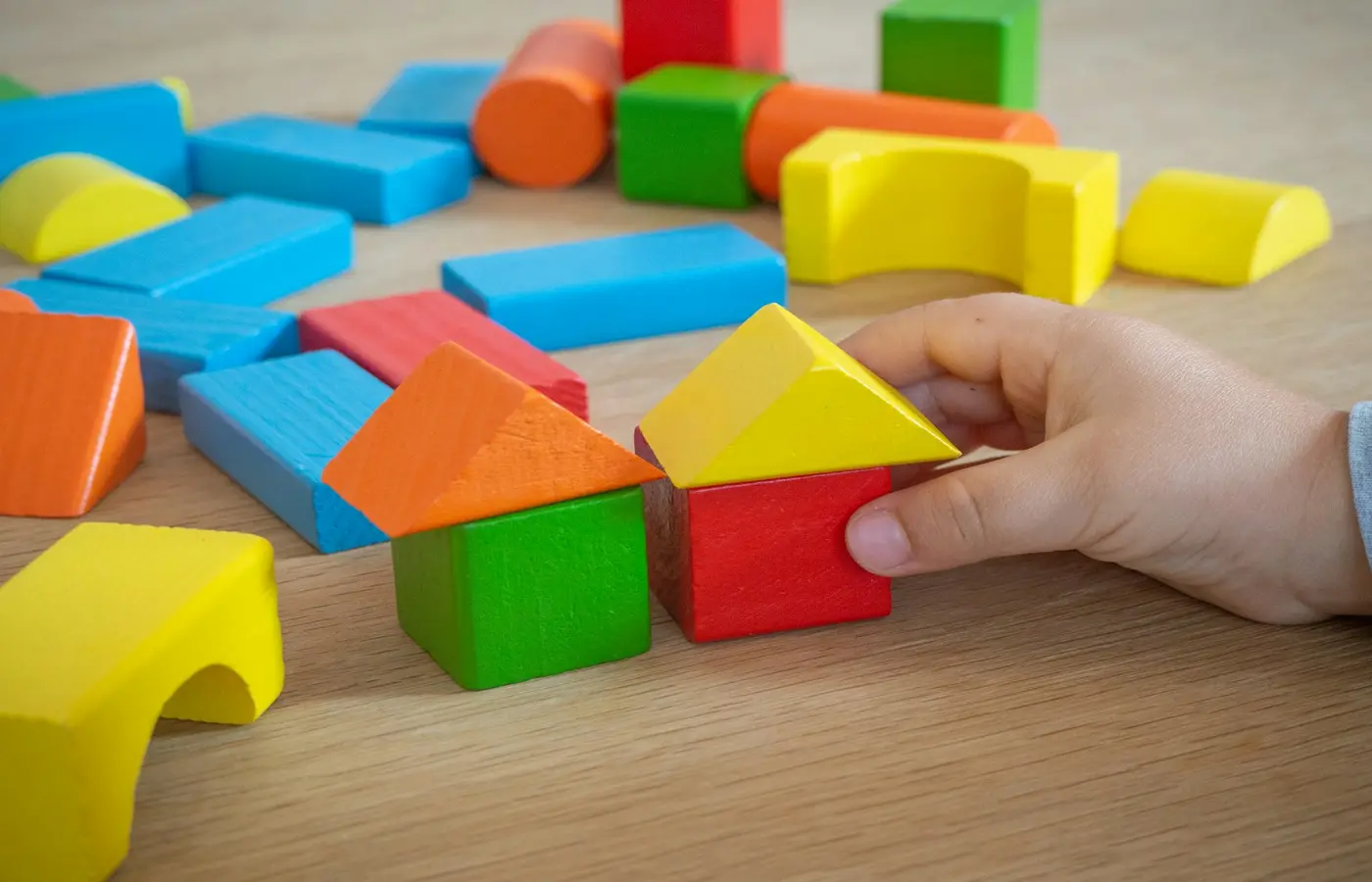
Nonmagnetic blocks, larger construction pieces, cardboard building materials, or supervised materials you already own may offer the carrying, stacking, connecting, pretending, and dismantling the child wants with less magnet-specific complexity. Those alternatives are not automatically safe: follow their own age grades, small-parts warnings, condition checks, and supervision instructions.
Your practical next move is to walk through one imaginary play session—from opening the container to storing the final piece. If you cannot name where the younger child will be, who will oversee cleanup, how magnetic pieces will be counted, and where the set will be locked away, wait on the magnetic toy. Household fit matters more than novelty.
Sources and jurisdiction note
Sources were retrieved September 15, 2026. CPSC materials concern the United States, while ACCC materials concern Australia. Requirements and regulator notices should not be assumed to apply identically in other markets.
- CPSC: Magnets — U.S. consumer safety guidance on ingestion hazards, the affected age range, urgent medical attention, and imaging concerns.
- CPSC: 2022 federal safety standard announcement — announcement explaining the purpose of the U.S. standard and injuries caused by magnets attracting through tissue.
- CPSC: 2026 magnetic building ball-and-stick set warning — product-specific U.S. warning concerning the sets identified by the agency.
- ACCC Product Safety: Toys that have magnets guide — Australian consumer guidance on age labels, supervision, and keeping magnetic products away from young children.
- ACCC Product Safety: Toys containing magnets mandatory standard — Australian requirements addressing access to small magnets, separation testing, and specified experimental sets.
- HealthyChildren.org: How High-Powered Magnetic Toys Can Harm Children — pediatric context from the American Academy of Pediatrics on loose and high-powered magnet ingestion.