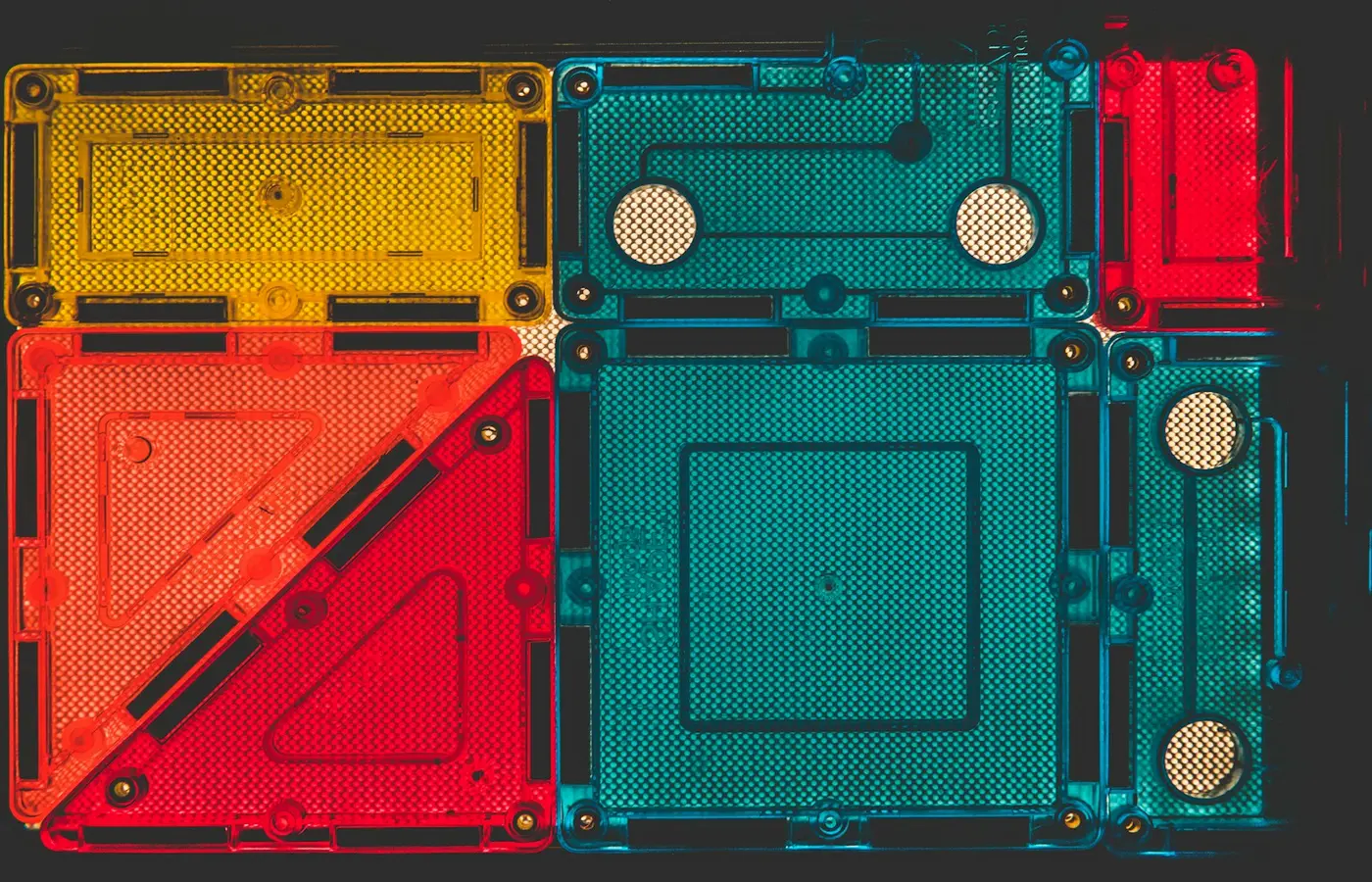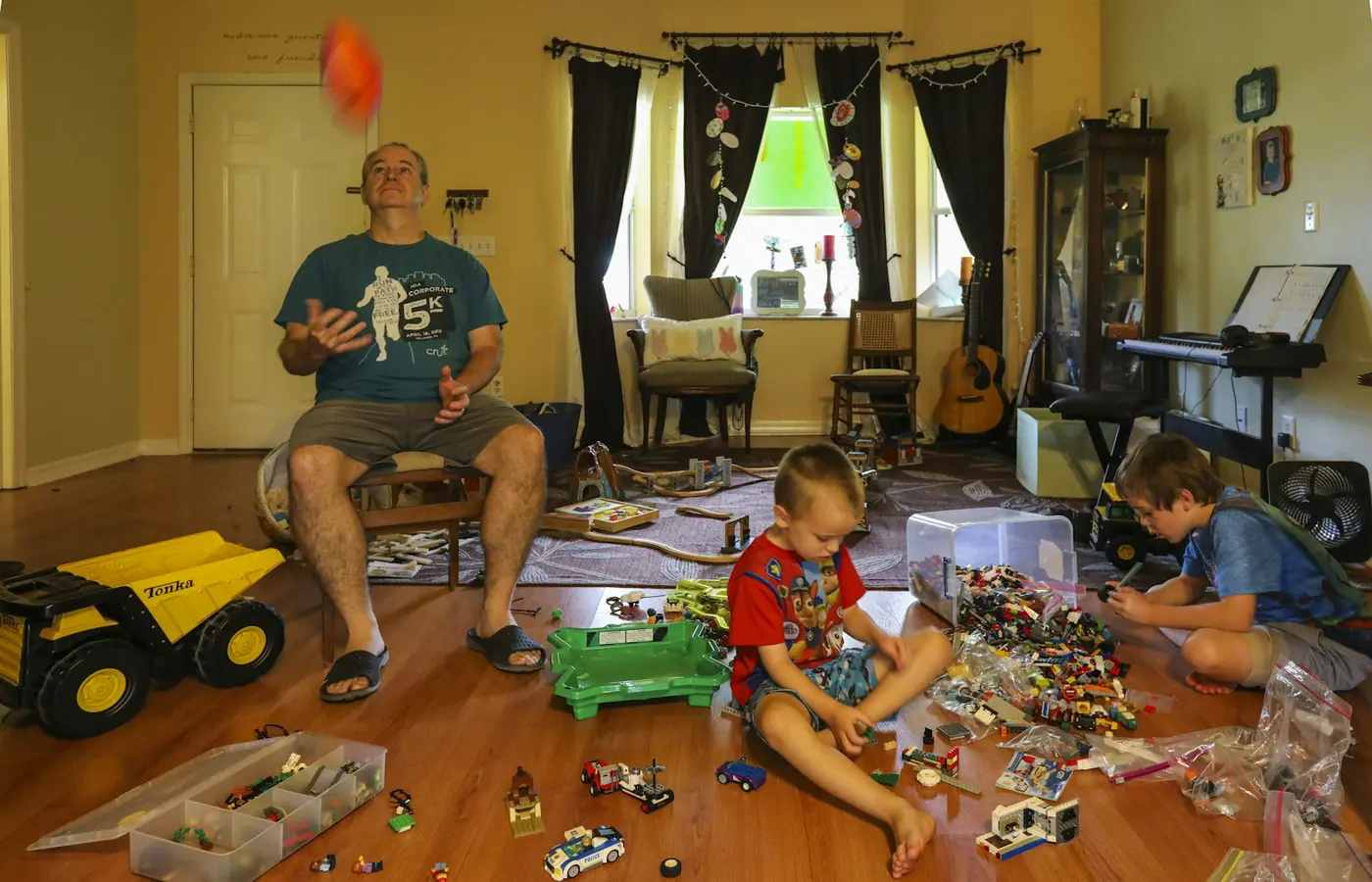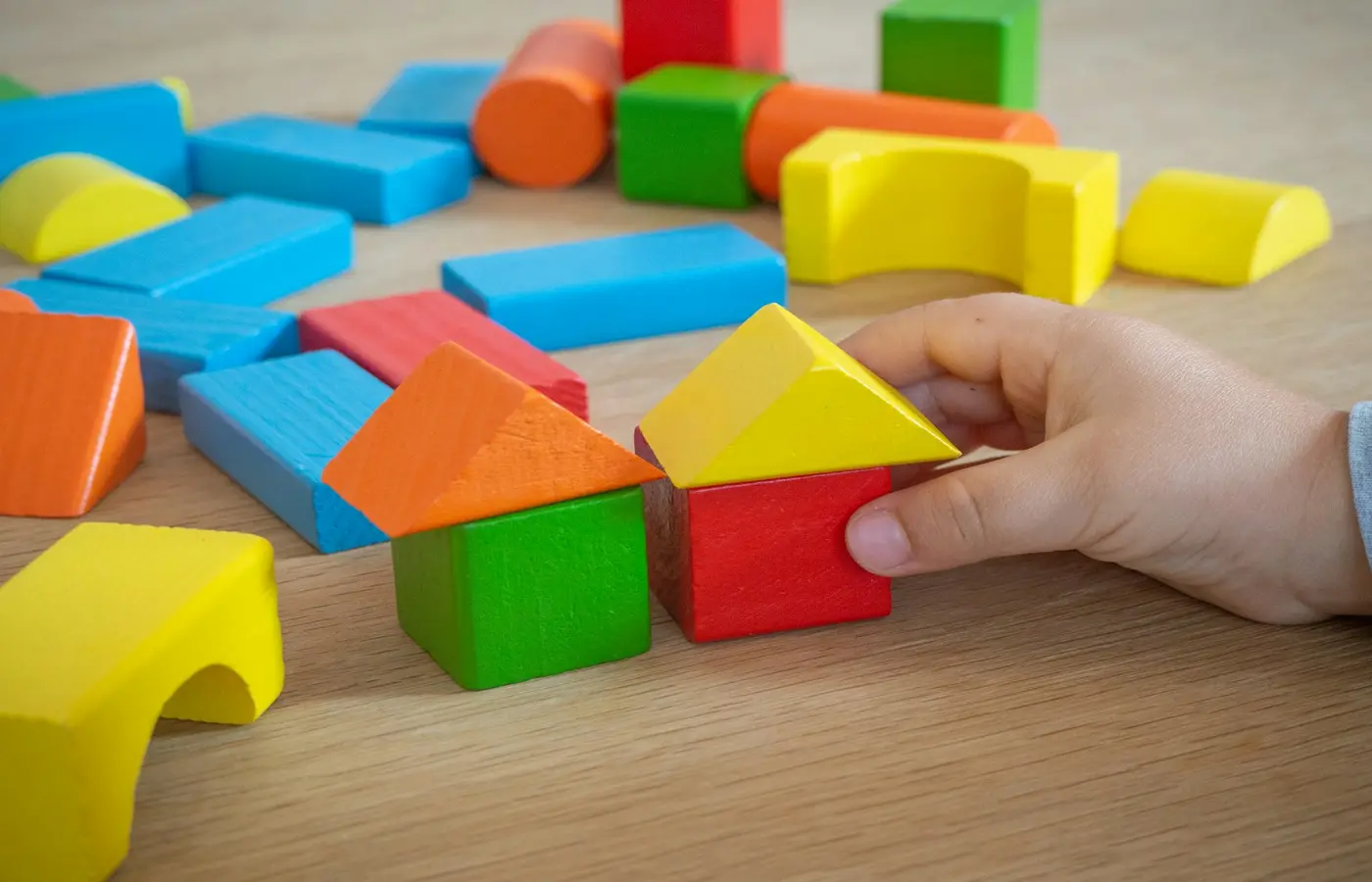
When an older child loves building towers, roads, animal enclosures, or pretend-play scenes with magnetic toys, a younger sibling does not necessarily mean the set has to disappear forever. It does mean the household needs an access plan.
The most useful starting point is not the older child’s age or how carefully they usually play. It is the youngest child who can reach the pieces—during play, during cleanup, or after a set has been put away. A magnetic toy that works for one child can become a different safety question when a baby, toddler, visiting child, or determined climber can access it.
For magnetic sets, especially those containing small, loose, or high-powered magnets, treat damaged, opened, or missing pieces as a stop signal. The American Academy of Pediatrics warns that swallowed high-powered or “rare-earth” magnets can cause severe internal injuries, particularly when more than one magnet is swallowed. HealthyChildren.org explains the risk here.
The aim is not a perfect system or constant policing. It is a simple routine that lets an older child keep using an appropriate set while reducing the chances that a younger child encounters loose pieces.
Start with the youngest child who can reach the toy
Manufacturer age grades and warnings matter, but they describe the product’s intended user—not every person who may encounter it in your home.
An older child may be ready to build independently with a magnetic construction set. At the same time, a younger sibling may crawl through the play area, empty a bin, put objects in their mouth, or find one piece under a sofa after everyone has moved on. That is why mixed-age toy decisions need to be based on access as well as the older child’s readiness.
Before bringing out a magnetic set, ask a few plain questions:
- Who is in the room, and who may enter it?
- Can the younger child reach the play surface, container, or storage location?
- Are all pieces still intact and accounted for as far as you can tell?
- Can an adult respond if a younger child approaches the play area?
- Is there enough time to finish cleanup before the family shifts to another activity?
This approach does not require older children to stop building whenever a younger sibling is nearby. It does mean choosing times and places where the set can be contained.
Life With Toys’ guide to magnetic building toy safety recommends planning around every household member who could access the pieces, rather than treating the age label as the whole safety plan.
Age grades are a starting point, not a household boundary
Use the exact manufacturer age grade, warnings, and instructions for the specific product you own. Product design varies: some sets have magnetic components enclosed within larger pieces, while other products consist of loose magnetic balls, cubes, or other small magnets.
Do not assume that a familiar brand, a retailer’s age filter, or the word “educational” tells you enough. Check the packaging or manufacturer documentation for the exact model and market version. If you cannot identify the product, its age grade, or its warnings, that uncertainty is a good reason to pause and choose another activity until you can.
Why loose or damaged magnets need a different response
Ordinary small toy pieces can create a choking concern for young children. Magnets can create an additional concern when swallowed, especially if they are high-powered magnets and more than one is involved.
High-powered magnets are often called rare-earth magnets. According to HealthyChildren.org, loose high-powered magnet sets have posed particular dangers because swallowed magnets can attract each other through sections of the digestive tract.
This does not mean every magnetic building toy has the same design or the same level of risk. Enclosed magnetic components are different from a set of loose magnetic balls or cubes. But damage changes the situation. A cracked tile, split block, opened seam, loose cap, or missing magnetic piece may mean a magnet is no longer reliably contained.
Use a clear household rule:
If a magnetic piece is cracked, opened, damaged, or missing, stop access to the entire set until you know what happened and can follow the manufacturer’s instructions.
That rule can feel inconvenient, especially when the older child is absorbed in a project. Still, it is more workable than trying to decide in the moment whether one questionable piece is “probably fine.” It also gives older children a predictable expectation: damaged pieces are not repaired with tape and returned to play.
A quick check before play
You do not need to inspect every piece under bright light every day. A short visual check is usually more realistic:
- Look for cracks, splits, opened seams, dents, or loose parts.
- Notice whether any piece sounds different, rattles, or appears misshapen.
- Check whether the set looks incomplete compared with how it was stored.
- Read any product-specific care or inspection guidance from the manufacturer.
If something looks wrong, remove the whole set from children’s access rather than sorting through it while younger children are nearby.
Create a magnetic-toy zone that still works for the older child
The best play location is usually one with a controllable boundary, not necessarily the fanciest table or the quietest room.
For one family, that might be a dining table used during a supervised afternoon play window. For another, it may be a desk in a room where a younger sibling does not have independent access. The practical question is whether the pieces can stay together and whether an adult can notice when the play arrangement stops working.
A magnetic-toy zone can be simple:
- Bring out one set at a time instead of combining several magnetic toys.
- Use a tray, mat, shallow bin, or tabletop to visually define where pieces belong.
- Keep the container nearby so unfinished builds do not migrate across the house.
- Choose play periods when an adult can help with boundaries and cleanup.
- Pause the activity if the younger child begins reaching the area or if the older child needs to leave.
A boundary is not a guarantee that a younger child cannot get through, climb up, or grab a piece. It is one layer of access control. The child’s abilities, the room layout, and the toy’s condition still matter.
General toy-safety guidance from Singapore’s Consumer Product Safety Office emphasizes choosing age-appropriate toys and supervising their use. Its safety tips for children’s toys are here. For magnetic toys, use that broad principle alongside the exact warnings for your particular set.
Let the older child know the plan
Older children are more likely to cooperate when the rule protects their play rather than sounding like a punishment.
Try language such as:
- “These are your table-building pieces. They stay on the table while your sibling is awake.”
- “Before you start another game, we count what we can and put the magnet set away together.”
- “If a piece cracks or goes missing, we stop using this set until an adult checks it.”
You do not need to make an older child responsible for a younger sibling’s safety. The adult remains responsible for supervision and storage. But children can gradually help with routines such as carrying the bin, checking under the table, and putting pieces into one container.
Make cleanup a counted handoff, not an afterthought
The most vulnerable moment may be after a successful build, when everyone is ready to eat, leave the room, answer the door, or start bedtime. A striking structure gets knocked over, pieces scatter, and cleanup becomes hurried.
Treat cleanup as part of the play session rather than a separate chore. A brief, repeatable handoff is more likely to happen than an elaborate inventory system that no one can sustain.
A workable routine might look like this:
- Stop building before the next transition. Give the older child a warning when possible so cleanup does not begin at the most frustrating moment.
- Gather pieces into one container. Avoid carrying handfuls from room to room.
- Check the play surface. Look under the table, around chair legs, and at the edges of the mat or tray.
- Check nearby furniture and clothing. Magnets can stick to metal furniture parts, toys, or other objects.
- Compare with the expected set when feasible. You may not count every piece every time, but you can notice whether a key component or a whole handful is absent.
- Close the container and put it away before moving on. The handoff is not complete while the bin remains open on the floor or counter.
If a piece is missing, do not assume it will turn up later and leave the rest available in the meantime. Remove the set from access and investigate. Check the immediate play area, clothing, bags, and places where pieces may have stuck or rolled. If you cannot account for a magnetic piece, follow the manufacturer’s support, disposal, or replacement guidance for that exact product.
The Life With Toys magnetic building toy safety guide similarly recommends removing the full set from access when magnetic pieces are damaged or missing.
Choose storage for access control, not just tidiness
A storage bin is useful only if it helps prevent independent access by the children who should not use the set.
Think of storage in two parts: the container and the location. A tightly closed container left on the floor may still be accessible. A high shelf may not be secure if an older sibling can bring it down, a younger child can climb to it, or the contents are routinely displayed within reach.
Look for a storage arrangement that fits your real household:
- Keep the whole set together rather than splitting pieces among several toy bins.
- Use an adult-controlled location when younger children cannot safely access the set.
- Avoid open baskets, low shelves, floor-level drawers, and decorative displays in shared spaces if younger children can reach them.
- Return damaged, questionable, or incomplete sets to a separate location where children cannot access them while you check next steps.
- Reassess the arrangement as younger children become more mobile, climb more confidently, or learn to open containers.
There is no universally childproof shelf, drawer, latch, or room setup. What works depends on the individual child and the adults’ routines. The useful standard is modest: can the younger child get to the pieces without an adult noticing?
When to pause the set and seek urgent help
Pause the set immediately if:
- a magnetic piece is cracked, opened, or otherwise damaged;
- a magnet appears loose or exposed;
- a piece is missing after play or storage; or
- you cannot verify the set’s age grade, warnings, or product information.
Follow the manufacturer’s instructions for disposal, replacement, product support, and any product-specific warnings. If the product has been recalled, instructions can depend on the exact model and market, so check using identifying details rather than relying on a brand name alone.
If you suspect a child has swallowed a magnet or magnets, seek urgent medical guidance rather than waiting for symptoms or trying to manage the situation at home. The American Academy of Pediatrics’ HealthyChildren.org guidance on high-powered magnetic toys explains why suspected ingestion needs prompt attention.
Common questions from mixed-age households
Can older children use magnetic tiles when a baby or toddler is in the house?
Possibly, if the exact set is age-graded for the older child, its pieces are intact, and the family can prevent the younger child from accessing the pieces during play, cleanup, and storage. The younger child’s presence changes the supervision and storage plan; it does not automatically mean the older child can never use the toy.
If you cannot maintain that plan on a particular day—for example, everyone is moving between rooms or cleanup will be rushed—choose a different activity and save the magnetic set for another time.
What should I do if a magnetic toy piece is cracked or opens?
Stop access to the whole set. Keep it away from children, especially younger siblings, and check the exact manufacturer’s instructions for the product. Do not assume a cracked enclosure is safe because the magnet is not immediately visible.
What if one magnetic piece is missing after cleanup?
Treat it as a reason to pause use of the full set and look for the missing piece. Check the immediate play area and nearby places where it could have rolled, stuck, or been carried. Do not leave the remaining set available while assuming the missing piece will eventually reappear.
Are magnetic building tiles safer than loose magnetic balls?
The supplied guidance does not establish a general ranking for every type or brand of magnetic toy. Product design matters: enclosed magnetic components are different from loose, high-powered magnet sets. But a damaged or opened enclosed piece can change the risk. Compare the exact product’s age grade, warnings, construction, condition, and manufacturer documentation rather than relying on the broad label “magnetic toy.”
A practical rule for the next play session
Before magnetic toys come out, make one quick decision: Can this set stay intact, contained, and inaccessible to the youngest child who could reach it?
If yes, bring out one set, use a defined play area, and finish with a deliberate cleanup-and-storage handoff. If no, it is reasonable to save the magnetic set for a more manageable time and offer another building or pretend-play material instead.
That is not taking play away from the older child. It is making space for the kind of play that can continue without turning every scattered piece into a household uncertainty.
Sources and research note
- Life With Toys: What to Check Before Buying Magnetic Building Toys for Young Children — household access planning, age-grade checks, supervision, storage, cleanup, and stop-use guidance for damaged or missing pieces.
- HealthyChildren.org: How High-Powered Magnetic Toys Can Harm Children — American Academy of Pediatrics guidance on the serious internal-injury risk associated with swallowed high-powered magnets.
- Consumer Product Safety Singapore: Safety Tips on Children Toys — general guidance on age-appropriate toy choice and supervision.
For any specific magnetic product, review the current manufacturer age grade, warnings, instructions, model details, and support information. Recalls and warnings can vary by product model and market.