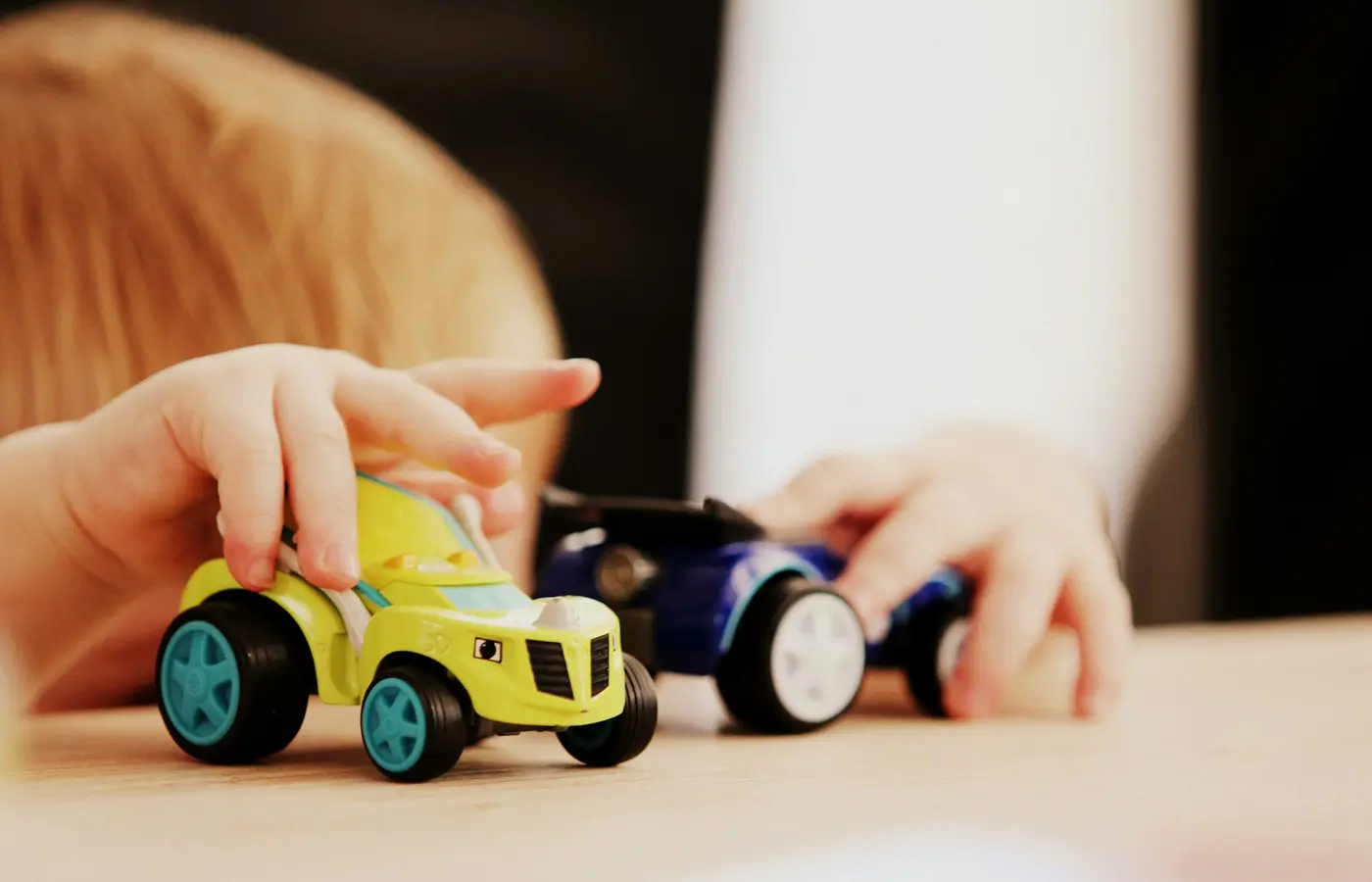

Toy figures can invite rich, child-led play: carrying a person from room to room, putting an animal to bed, lining up vehicles, making a character talk, or rebuilding the same small world each day. But when you are choosing figures for a toddler or a mixed-age home, the character is only part of the decision.
The quick rule is to choose for the youngest child who can reach the toy, not the oldest child who wants to play with it. Read the manufacturer’s age grade and warnings before comparing characters or themes. Then look at the entire set for small detachable parts, magnets, batteries, and accessories that could become accessible during ordinary play.
That does not mean every family needs the same figures, or that an older child must give up detailed play sets. It may simply mean that one sturdy, age-appropriate set stays available for general play while older children’s tiny accessories and collectible figures have separate storage and adult-managed play times.
Start with the child who may reach the toy
A detailed action figure, miniature animal family, or dollhouse character may suit an older sibling’s interests and abilities. It can still be unsuitable for a younger child who crawls into the room, mouths objects, or empties a toy bin without much warning.
Health Canada’s toy safety guidance notes that a toy safe for an older child may be dangerous for a younger one. Its guidance is especially relevant in a shared home because it asks adults to follow the manufacturer’s recommended age range rather than assuming a child can use a toy safely because they seem careful or advanced.
Age grading is not a score for intelligence, imagination, or skill. The Toy Association’s guidance on age grading and small parts explains that age grading is based largely on safety considerations, not on how smart a child may be.
That distinction can take some pressure out of choosing. A child does not need access to every elaborate figure set to have meaningful pretend play. A few larger figures, simple animals, soft props, blocks, blankets, and containers can offer plenty of ways to make stories.
For a young child, the first action may be simple: carrying a figure, putting it in a cup, making it walk across the floor, or dropping it into a basket. Later, the same figure may become part of a longer story or a shared game. The best choice is one that fits that child’s access and the household’s safety setup now.
Read the age grade and warning before comparing characters
Packaging can be crowded with character art, accessories, and play ideas. Begin with the practical information instead.
Before buying a toy figure or set, look for:
- The manufacturer’s recommended age range.
- Any warning that the toy is not intended for children under 3.
- The specific hazard named in the warning, such as small parts or batteries.
- The manufacturer’s identity and contact information.
- Instructions for assembly, batteries, use, or supervision, if included.
The American Academy of Pediatrics’ parent guide advises caregivers to read labels because warnings provide important information about intended use and appropriate ages. Health Canada similarly advises buying toys with clear safety warnings and manufacturer contact information, and avoiding toys with missing or unclear labels.
An unclear listing is not a puzzle you need to solve. If you cannot find the age grade, warning information, or manufacturer details for a figure set, it is reasonable to pass on it and choose a product with clearer documentation.
Age labels and standards vary by country. The guidance in this article draws from Canadian, Australian, and U.S.-based sources, so do not assume that a particular symbol, wording, or labeling requirement applies everywhere. What travels well across jurisdictions is the basic selection habit: find the official age guidance and warnings for the exact product you are considering.
Look beyond the main figure for small parts
A large figure can appear reassuring at first glance, but the full set may include much smaller pieces. Tiny shoes, helmets, tools, food pieces, furniture, removable hair, wheels, jewelry, capes, and decorative parts can change the safety picture.
For children under 3, and for older children who still regularly mouth objects, small accessories deserve particular caution. Health Canada advises not giving small parts or accessories to children under 3, listing examples that include buttons, beads, marbles, pellets, magnets, detachable decorations, and wheels.
When looking at a new figure set, consider the whole play pattern rather than only the item photographed on the front of the box:
- Does the figure come with tiny loose props?
- Are any accessories designed to pull off, snap on, or come apart?
- Could a child remove a shoe, wheel, eye, badge, or decorative attachment during ordinary play?
- Is the figure part of a set with miniature food, tools, coins, furniture, or costume pieces?
- Will an older sibling naturally leave accessories on the floor, in a dollhouse, or in a shared play bin?
The ACCC Product Safety kids’ toys guide recommends choosing toys that are sturdy and well made, and that will not fall apart when a young child bites, tugs, sucks, throws, or otherwise uses them. This is useful as a buying principle, but it is not a guarantee that any particular toy is suitable. The manufacturer’s age grade and warnings still come first.
The HealthyChildren guide also advises that toys and their parts should be larger than a young child’s mouth to reduce choking risk. There is no need to create an at-home pass/fail test from that guidance. If a set includes small components or carries an under-3 warning, treat that information as decisive for open toddler access.
Treat magnets as a separate purchase check
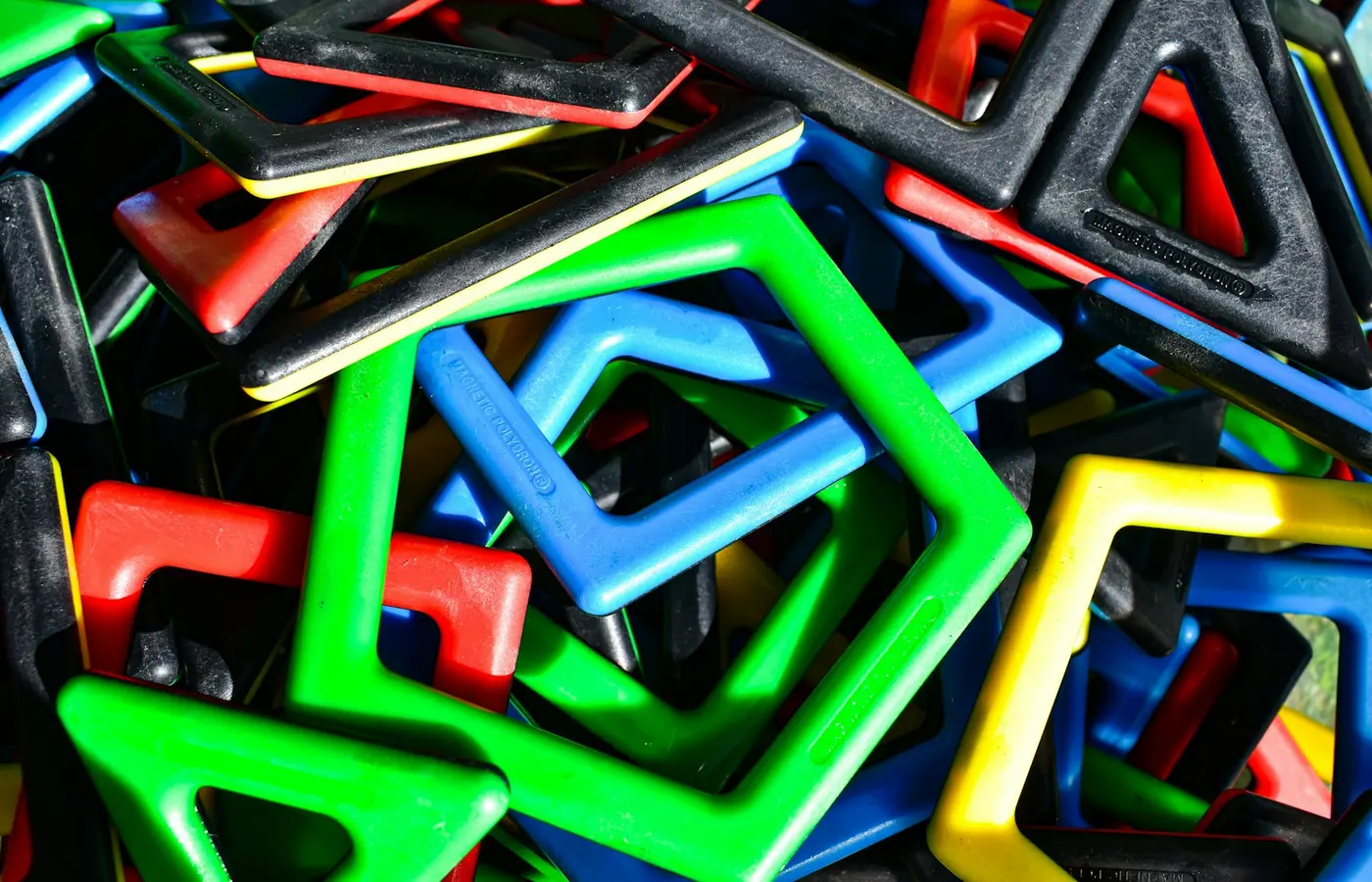
Magnets are not just another small accessory. Before choosing a figure or figure set, check whether magnets appear anywhere in the product: inside a character, in removable clothing, in a vehicle, in a play-board feature, or in an accessory.
Health Canada includes magnets among the small parts and accessories that should not be given to children under 3. Healthier Together’s toy safety guidance also notes that small parts, including magnets, can be dangerous if a child puts them in their mouth.
Do not assume a magnetic feature is fine because it is hidden, looks firmly attached, or makes a figure easier to dress or connect. Instead:
- Read the exact age grade and warning for the product.
- Check whether the set has loose magnetic pieces, magnetic clothing, or detachable magnetic props.
- Consider who may access the toy when an older child is not actively using it.
- Choose a non-magnetic alternative when the household cannot reliably keep the set separate from children who mouth objects.
If a child swallows a magnet or inserts one into an ear or nose, Health Canada advises seeking immediate medical attention. This is one reason to treat a magnet warning as more than ordinary packaging language.
Check every battery compartment, including button batteries
Some figures talk, light up, move, sing, or respond to a button press. Those features may be enjoyable for a child, but they add maintenance and safety questions. A battery-powered figure can be the right choice for some families; it is not automatically a better play material than a simple, non-battery figure.
Before buying, check:
- What type of battery the toy uses: replaceable, rechargeable, or button battery.
- Whether the battery compartment is described as child-resistant.
- Whether the compartment stays securely closed as intended.
- What the manufacturer says about installing and replacing batteries.
- Whether the toy’s extra feature is worth the charging, battery changes, sound, and supervision it adds to your home.
Health Canada’s guidance for specific toy types says that toys may use replaceable, rechargeable, or button batteries, and that incorrect handling can cause injuries or fires. It advises caregivers to choose toys with child-resistant battery compartments and not allow children to install batteries.
Button batteries deserve particular attention. The ACCC advises consumers to be wary of button-battery toys, and Health Canada says to seek immediate medical attention if a child swallows a button battery or inserts one into an ear or nose.
A simpler figure may be the more workable option when you want a toy that can stay in an open basket, travel between rooms, or be used without adult battery management. Pretend play does not require sound effects. A child may supply the voices, movement, and story themselves.
Plan shared play without making every figure shared
Mixed-age play can be lovely, and it can also be logistically messy. An older child may enjoy sorting miniature accessories or building a detailed scene while a younger child wants to sweep everything into a bucket. Neither child is doing play incorrectly. The setup may just need clearer boundaries.
One practical approach is to divide figure toys by access rather than by whose toy they are.
Keep one simple set available
Choose a set that fits the youngest child with regular access. Larger, sturdy figures with no small detachable accessories, no accessible magnets, and no battery concerns may work well for open-floor play, depending on the manufacturer’s age guidance.
Store these figures in a low basket or bin if that suits your home. A limited number can make cleanup easier and help children find the pieces they want without dumping a large mixed collection.
Give detailed sets a separate home
Older children’s small-scale figures, collectible characters, miniature furniture, magnetic accessories, and battery-powered sets may need a higher shelf, closed container, or another adult-managed location. The goal is not to make the set forbidden or precious. It is to keep its access consistent with the warnings and the children in the home.
A clear household rule can reduce conflict: detailed figure sets come out at a table, on a tray, or during a time when the younger child is elsewhere or closely supported with another activity.
Supervision matters, but it does not turn a product with an under-3 warning into a general-access toddler toy. Health Canada advises following age labels, supervising children during play, and checking toys for loose, broken, or damaged parts. Think of supervision as one layer of care, not a substitute for choosing and storing the toy appropriately.
A short pre-purchase checklist
Before you bring home a figure or pretend-play set, pause for a final check:
- Who is the youngest child likely to reach it? Choose based on that child’s access, especially in shared spaces.
- What does the manufacturer’s age grade say? Follow it rather than relying on character appeal or retailer filters.
- Are the warnings clear? Look for the stated hazard, instructions, and manufacturer information.
- What comes with the figure? Include accessories, vehicles, clothing, props, packaging features, and detachable decorations in your decision.
- Are magnets involved? If so, read the product warning carefully and do not treat them as ordinary loose accessories for young children.
- Does it use batteries? Check the battery type and compartment information, with particular care around button batteries.
- Can your household store and use it as intended? If not, a simpler set may be the better choice right now.
It is also reasonable to stop using a toy if it becomes broken, brittle, torn, loose, or starts falling apart. The ACCC notes that damaged toys can become a choking risk, while Health Canada advises checking toys for loose, broken, or damaged parts and throwing away broken toys.
A good selection rule is simple: choose figures only when the age grade fits the child with access, the warnings are clear, the whole set—not just the main character—fits your safety needs, and you have a realistic plan for storage and shared play. If any one of those pieces is uncertain, choosing a simpler figure set or waiting is a sound decision.
Sources and research note
This guide uses current safety guidance from public health, pediatric, consumer-product, and toy-industry sources. Labeling rules and required marks vary by jurisdiction; the sources below include Canadian, Australian, U.S., U.K., and industry guidance and should not be read as a single worldwide standard.
- HealthyChildren.org: How to Buy Safe Toys: A Parent’s Guide — American Academy of Pediatrics parent guidance on labels, intended ages, and choking risk.
- Canada.ca: Toy safety tips — Health Canada guidance on age labels, warnings, manufacturer information, and small parts.
- Canada.ca: Safety tips for specific toy types — Health Canada guidance on magnets, batteries, supervision, and damaged toys.
- ACCC Product Safety: Kids’ toys guide — Australian consumer guidance on age grading, sturdy construction, button batteries, and damaged toys.
- Toy Association: Statement on Toy Safety, Age Grading and Small Parts — Industry guidance explaining that age grading is largely safety-based and advising caution with small parts.
- Healthier Together: Toy Safety — U.K. health guidance on choosing age-appropriate toys and considering small parts, magnets, and batteries.