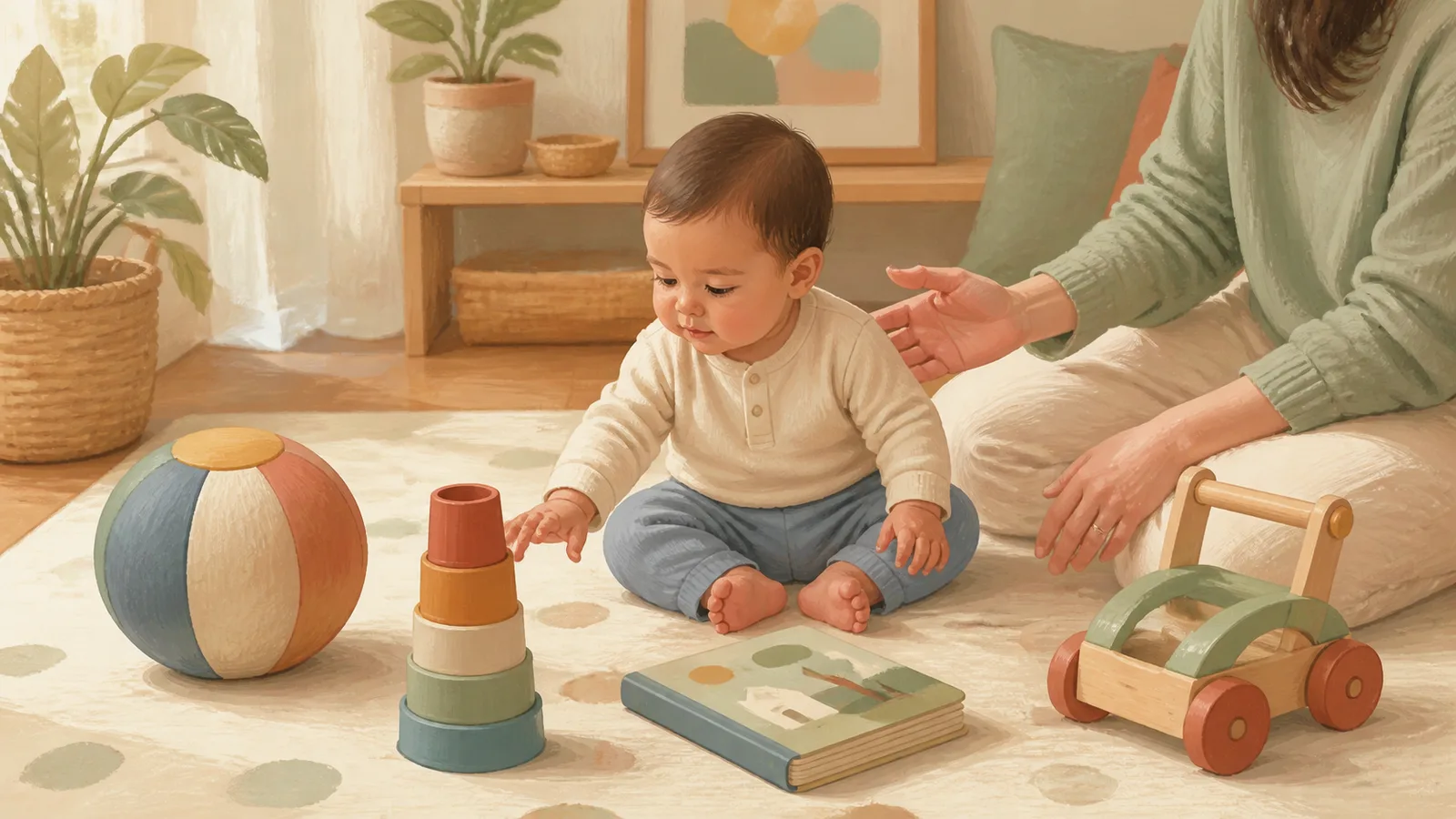
The best gift for a one-year-old matches an action they already repeat and offers one small variation. It does not need lights, an app or a developmental promise.
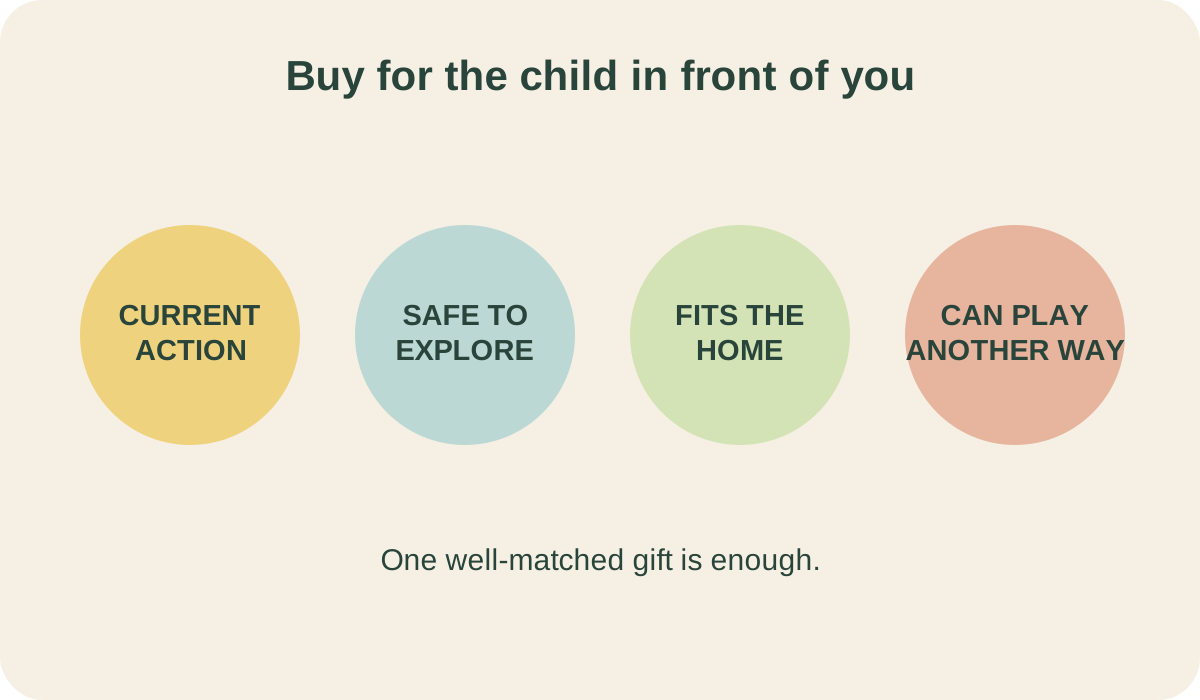
Match the action
| What the child keeps doing | Useful gift format | What to check |
|---|---|---|
| Put in / take out | Large containers, nesting cups, posting toy with large pieces | Openings, detachable parts, cleanability |
| Carry | Light basket, large soft blocks, sturdy handled toy | Weight, handle gaps, trip risk |
| Bang / shake | Simple drum, sealed shaker designed for the age | Sound level, seams, no loose filler |
| Crawl / chase | Large lightweight ball | Diameter, surface grip, stairs and pets |
| Pull to stand / cruise | Stable activity surface or manufacturer-rated push toy | Tip resistance, speed, floor and instructions |
| Turn pages / point | Sturdy board books | Bindings, damage, shared reading interest |
| Stack / knock down | Cups or large first blocks | Size, finish, weight |
If the child is still mostly playing on the floor, use our baby floor-play menu before buying vertical equipment. For blocks, the first-block guide compares foam, fabric, wood and plastic trade-offs.
Six gift categories worth considering
Stacking and nesting set
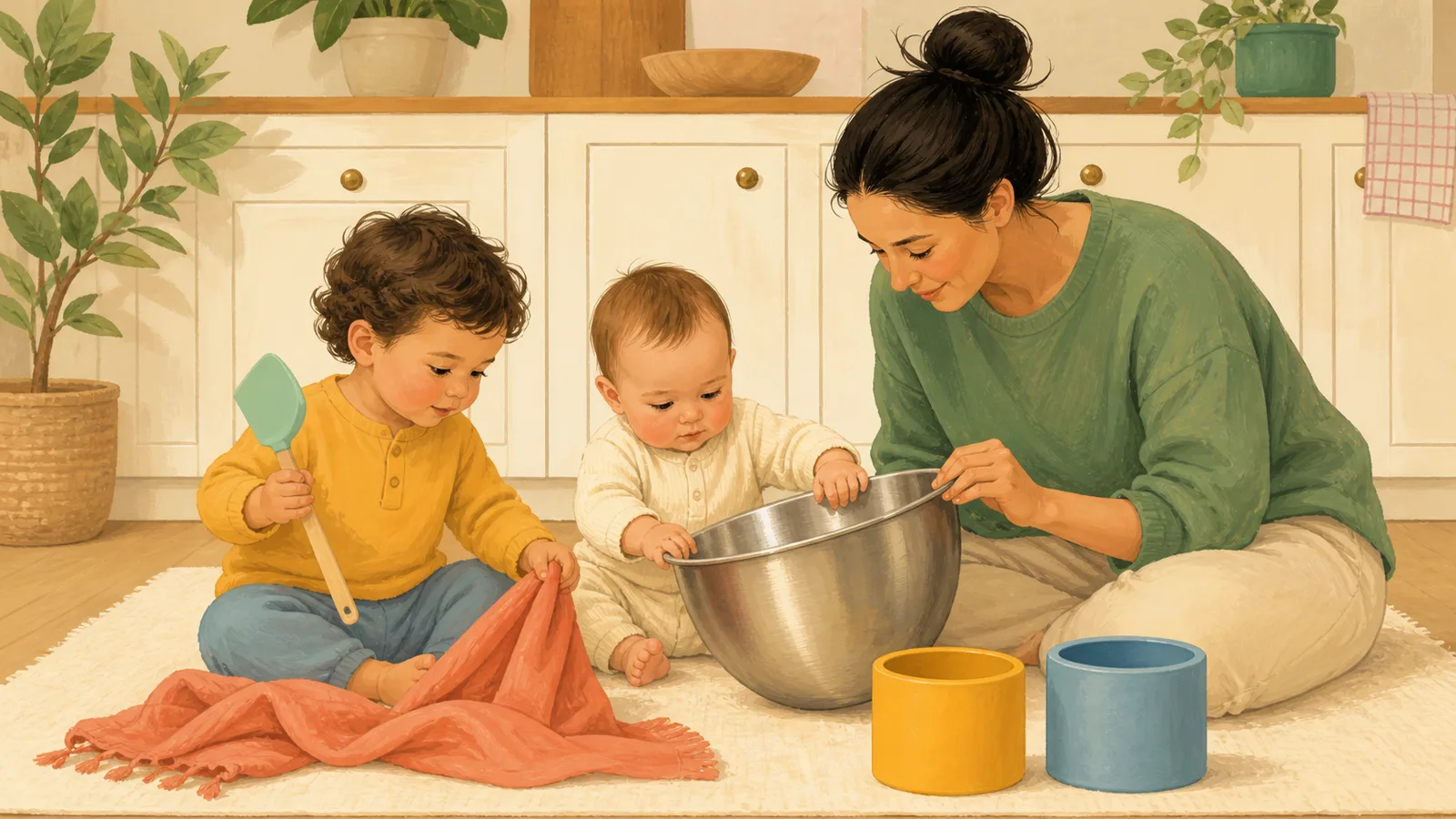
Choose pieces designed for the age, large enough for mouthing behavior and easy to wash as instructed. The same set can become a tower, container, scoop or hiding place. Avoid sets with decorative caps or inserts that detach.
Large ball
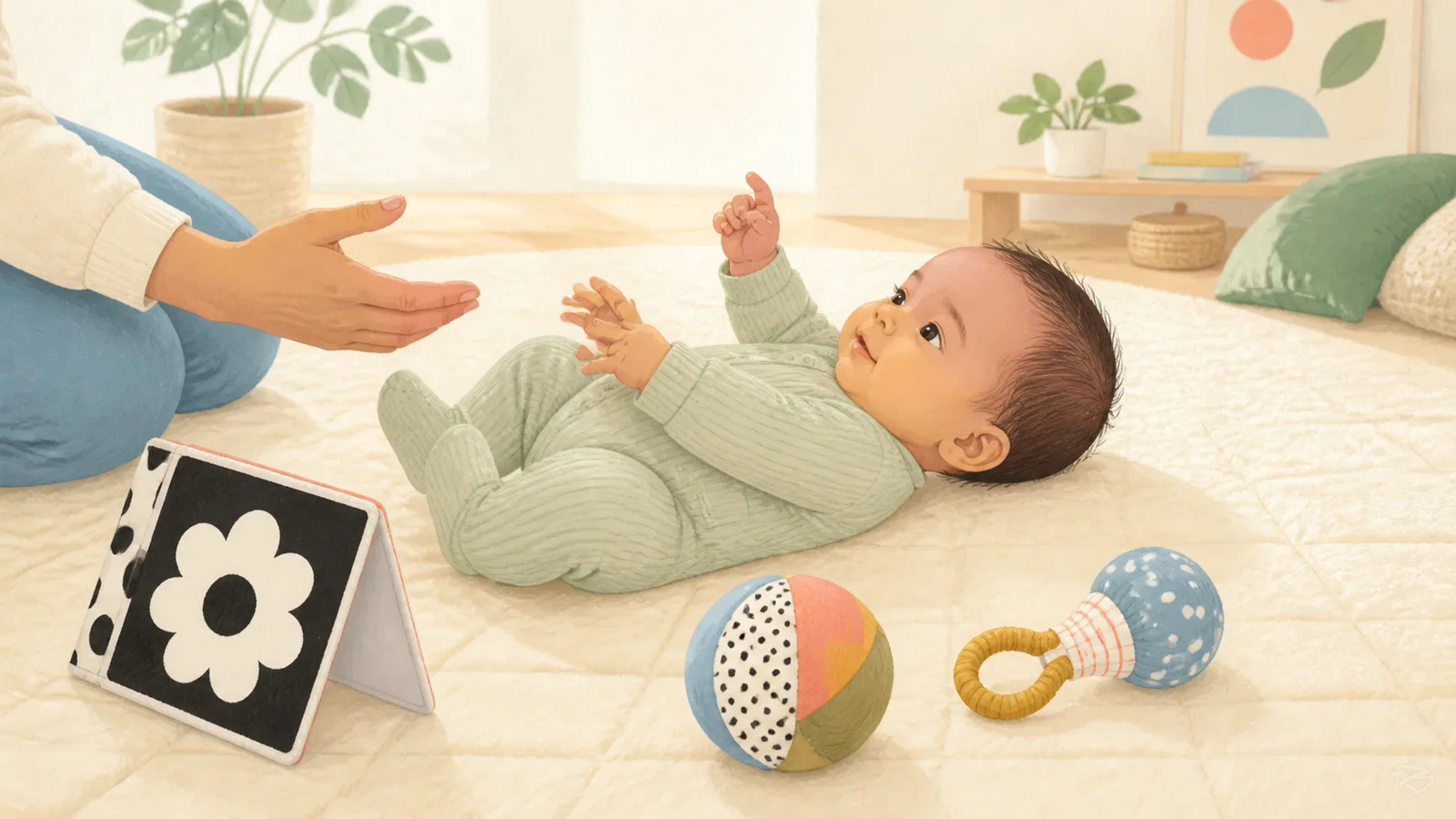
A soft, lightweight, slow-moving ball supports rolling back and forth before kicking. Use it on a clear floor away from stairs, pets and hot surfaces. Balloons are not a substitute; uninflated and broken balloons are a serious choking hazard.
Sturdy books
Pick clear images, durable pages and a subject the family will enjoy repeating. The useful feature is shared attention and access—not an “early reader” claim.
First blocks
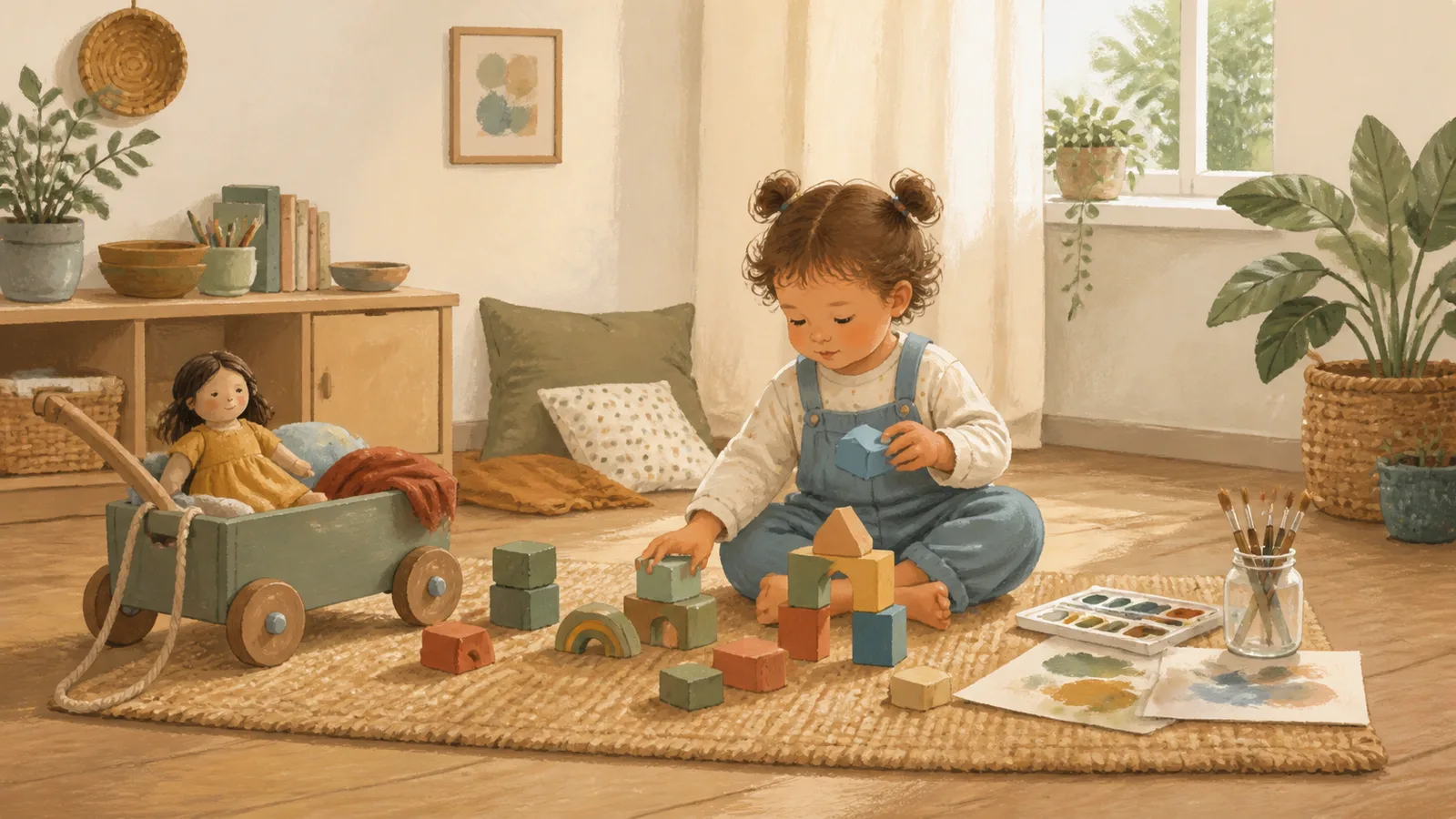
Large blocks allow carrying, transferring, knocking down and eventually stacking. Check weight: a dense block that feels pleasant to an adult may hurt when dropped on a bare foot.
Push toy
A push toy is not required for learning to walk. If choosing one, follow the age label and instructions, test stability and wheel resistance, and use it on a level clear surface with supervision. Do not use seated infant walkers with wheels; the AAP has long warned about serious injury risks.
A practical experience
A zoo, garden, library event or children’s museum visit can be the gift when transport, timing and sensory access truly fit the family. Pair it with one board book or photo so the child has something concrete. “Experience” does not automatically mean low effort or low cost.
Safety pass before wrapping
Read the package’s age grading and warnings. Examine accessible batteries, magnet closures, cords, wheels, seams and every removable component. A gift intended for an older sibling must be stored outside the one-year-old’s reach.
Keep volume low and avoid placing sound-producing toys near ears. Register eligible products and keep the receipt and model information. Used gifts need the full secondhand toy safety checklist, including recall review before cleaning.
Gifts that often disappoint
Large play equipment can overwhelm a room, complicated toys can recruit an adult for every reset, and highly specific toys may offer only one short script. Clothing labeled as a “gift for the child” may mainly solve an adult need—and that is fine if named honestly.
Do not buy a new object to solve normal short attention. One-year-olds often move rapidly among actions. Repetition can look simple while still being deeply engaging.
Frequently asked questions
How many gifts should a one-year-old receive?
There is no developmental target. One usable gift is sufficient; coordinate with relatives if storage or duplication is a concern.
Are educational electronic toys better?
Not inherently. AAP guidance favors toys that support child-caregiver interaction and warns against claims that a digital toy or app alone teaches complex skills.
What if the child only wants the box?
Let the box be part of supervised play after removing staples, plastic film, tape loops and small pieces. The household-object guide explains the screening process.
Sources and research note
Selection criteria use the AAP clinical report on appropriate toys for young children and parent-facing toy buying tips. Safety checks draw on CPSC guidance for toys, small parts, button batteries, and magnets. Categories are specification-based editorial guidance, not hands-on product tests.