A child is ready for a particular music lesson when the child, teacher, instrument, format, and family routine can work together. Age is one clue, not the decision. A highly interested six-year-old with a responsive teacher may thrive; another needs movement-based group music or more informal exploration.
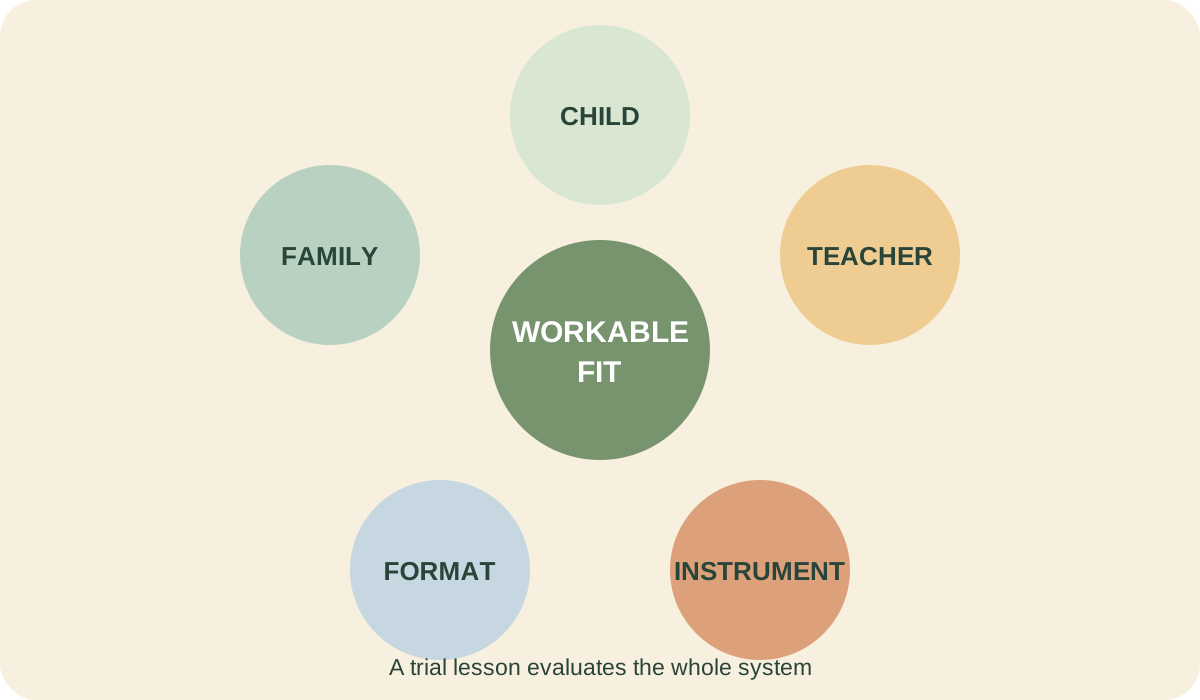
Five kinds of readiness
Child
Look for recurring interest—not one enthusiastic afternoon. Does the child return to sounds, songs, or the instrument? Can they communicate discomfort and understand a short correction? Can they repeat a small action without the entire session becoming conflict?
Reading is not a universal prerequisite. Methods and instruments differ. The teacher should explain which symbols, listening, imitation, or reading skills their approach uses.
Teacher
The teacher needs experience with the child’s age, communication style, motor needs, and goals. They should welcome observation or explain safeguarding arrangements, set realistic expectations, and avoid humiliation, pain, or miracle claims.
A trial lesson tests teacher readiness as much as child readiness.
Instrument
Physical fit matters. Hand size, reach, posture, breath, teeth, hearing, strength, coordination, and access to an appropriately sized instrument can change timing. A qualified teacher or instrument specialist can assess fit; online age charts cannot see the child.
Format
Private instruction concentrates attention. Group classes add peers, ensemble skills, and movement but require waiting and shared pace. Choir removes instrument purchase. Short workshops allow exploration. Online lessons change audio quality, setup, and adult help.
Family
Consider transport, fees, rental, maintenance, daily noise, practice space, adult support, sibling care, and the plan for missed weeks. A theoretically ideal lesson is not ready if the surrounding routine makes it a weekly crisis.
A useful trial lesson
Before booking a term, ask:
- How does the teacher work with beginners of this age?
- What does a normal first month look like?
- How long and how often is home practice expected?
- What happens when a child resists or needs movement?
- Can the instrument be rented or borrowed before purchase?
- How are cancellations, observation, communication, and safeguarding handled?
- Which hearing-protection or volume practices apply?
Afterward, ask the child concrete questions: “Which part would you want to do again?” “Was anything uncomfortable?” “Would you rather play alone or with a group?” Avoid making them evaluate the teacher’s career.
Practice without turning the home into a checkpoint
Start smaller than the maximum attention the child showed in the lesson. A two-minute return to one action can establish routine. Separate opening the case, assembling, tuning, and cleaning from playing time when those tasks exhaust attention.
Offer bounded choice: practice before or after snack, start with the familiar piece or new pattern. Do not disguise unlimited adult control as choice.
Praise information rather than identity: “You slowed down where the fingering changed.” Avoid “You’re a natural,” which can make later difficulty feel like losing an identity.
Our guide to building independence through play offers a broader way to transfer responsibility gradually rather than withdrawing help on a schedule.
Signs the fit needs changing
- recurring pain, strain, dizziness, or hearing discomfort;
- fear of the teacher or humiliation;
- an instrument that cannot be positioned safely;
- conflict at nearly every practice;
- expectations that were never explained;
- no room for the child’s musical interests; or
- logistical stress that overwhelms family benefit.
Change one variable: teacher, format, repertoire, instrument, practice length, frequency, or season. Quitting one arrangement is not quitting music.
If private lessons are not the next step
Try group singing, movement, community ensembles, school music, instrument demonstrations, family music-making, concerts with appropriate sound protection, or continuing the rhythm games for younger children at a more complex level.
A child can build a meaningful musical life without private lessons. Likewise, lessons can be worthwhile without being justified as a cognitive investment.
What research cannot promise
Music-training studies report changes in trained musical skills and sometimes other measures. Meta-analytic work has challenged claims of broad far transfer to general cognitive or academic ability when study quality and controls are considered. No strong evidence establishes one universal “critical” age for private instruction that families must beat.
Start because the activity, relationship, and routine fit—not from fear of a closing brain window.
Frequently asked questions
Is age five the best age to start?
It is a common starting period for some instruments and formats, not a universal optimum. Check the five kinds of readiness and the teacher’s approach.
Should a child choose the instrument?
The child’s interest matters, but adults must assess cost, size, noise, maintenance, teacher availability, and physical fit. Offer a realistic shortlist and chances to hear or try each.
How much should a beginner practice?
Use the teacher’s specific plan, then adjust for quality, age, and family capacity. Several focused minutes may be more productive than a long conflict. Pain is never a practice target.
What if my child wants to quit after buying an instrument?
Clarify whether the issue is instrument, teacher, repertoire, format, schedule, or novelty. Use rental/borrow programs when possible and agree on a short review period rather than indefinite obligation.
Sources and research note
Before lessons, explore the toddler instrument guide or use no-instrument rhythm and movement games.
Practical guidance draws on Children’s Minnesota’s Music and Your School-Age Child, MacPhail Center for Music’s Pathway to Lessons, and PBS Kids’ discussion of the right age to begin music lessons. Broad cognitive claims are bounded by a meta-analysis of music training and cognitive/academic skills. Hearing context comes from the AAP’s noise guidance and WHO safe-listening advice.