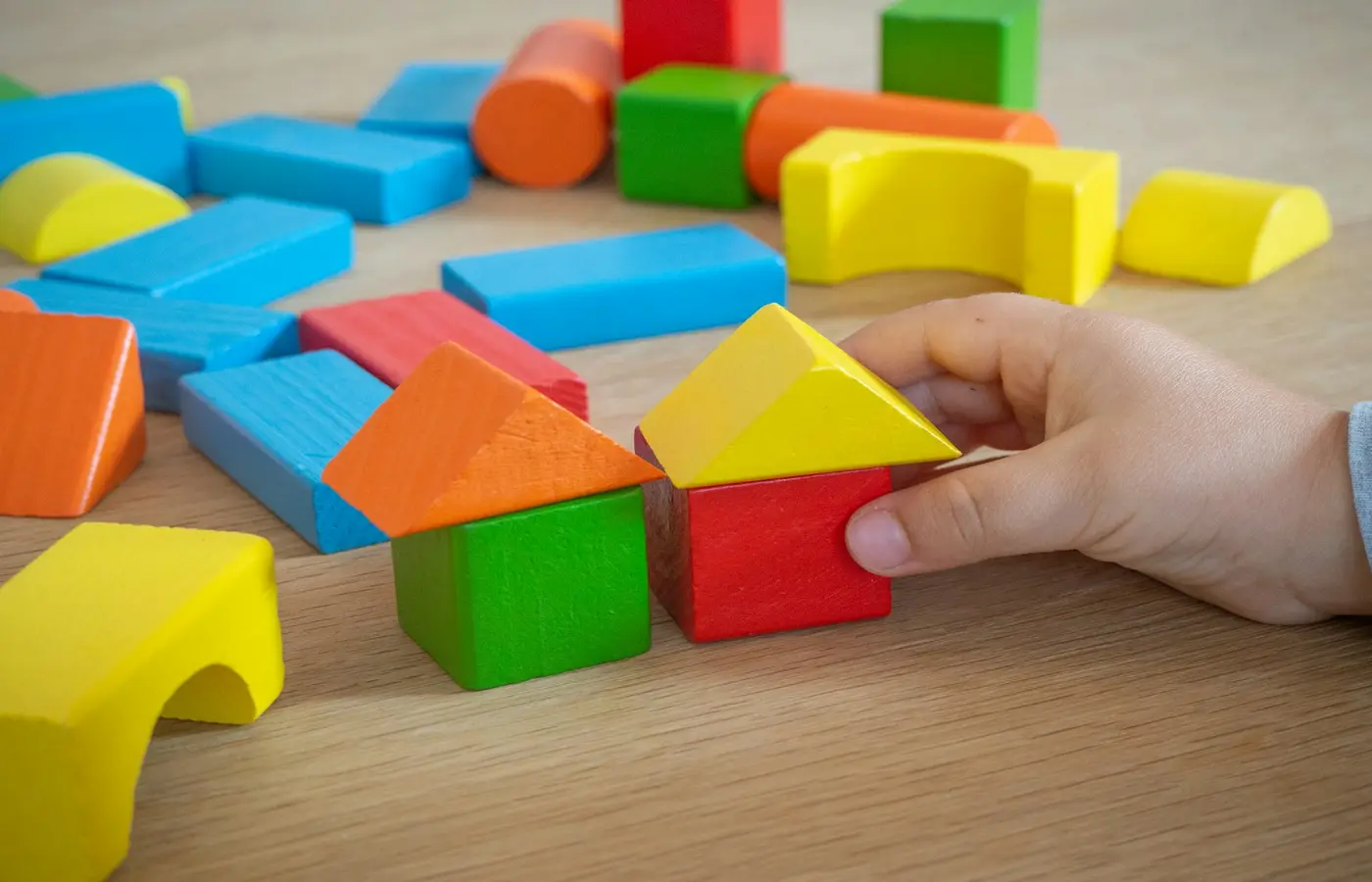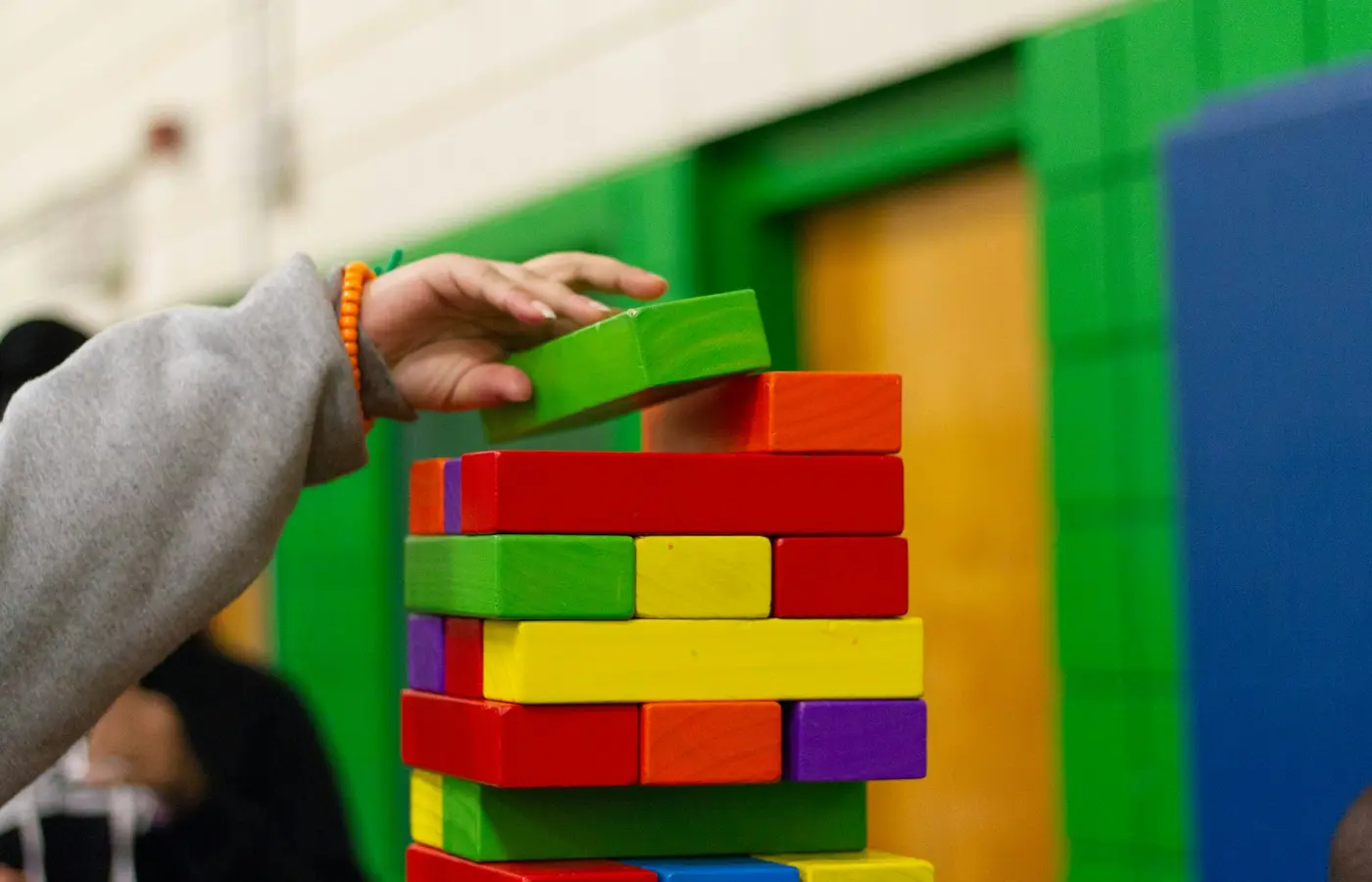
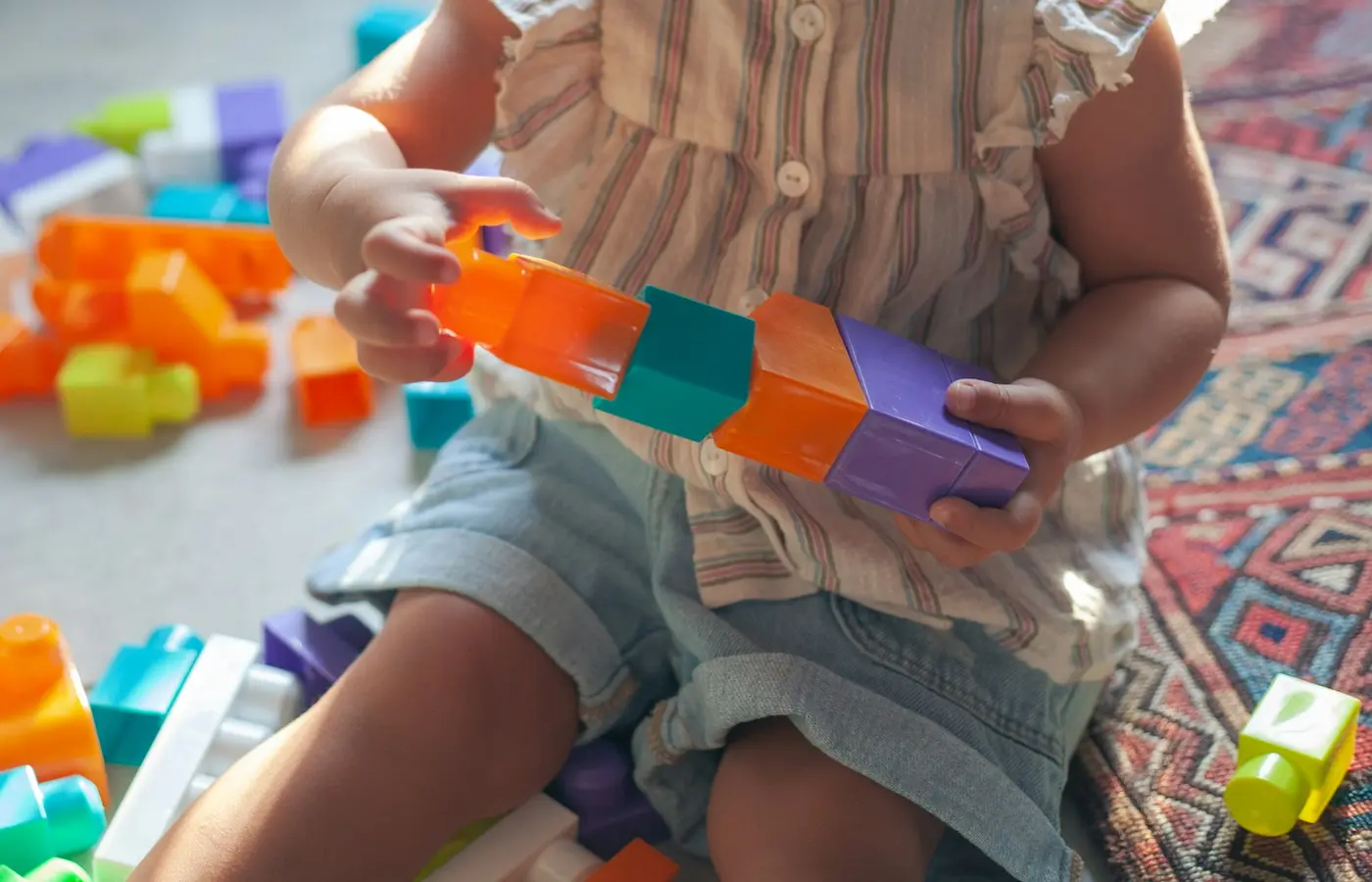
A child who repeatedly parks vehicles in a row, groups figures by color, or arranges objects with careful spacing is showing you what currently feels satisfying in play. You do not need to buy something new simply because lining up is a favorite activity. Often, the most useful first step is to notice what the child is arranging and what makes them return to it.
If you do choose a toy, look for an age-appropriate collection with pieces that are easy to place, see, move, and put away. Follow the exact age grade, warnings, and instructions for that product, especially if the pieces are small or a younger child shares the space.
Lining up by itself should not be used to draw a developmental or diagnostic conclusion. This guide treats arranging as a play preference and focuses on selecting materials for it—not interpreting what the behavior means clinically.
Start with what the child likes to arrange
Watch a few rounds of play before deciding that a different set would be better. The useful clues are in the child’s actions rather than in labels such as “educational,” “sensory,” or “STEM.”
You might notice that the child likes to:
- put similar objects into one long row;
- separate objects by color, type, shape, or size;
- alternate two or more kinds of pieces;
- create equal spaces between objects;
- arrange a sequence known only to them;
- carry a collection from place to place before arranging it;
- dismantle and rebuild the same arrangement;
- keep a finished row intact for a while.
These observations are selection clues, not developmental tests. A child who concentrates on exact spacing may appreciate pieces with flat bases and a firm play surface. A child who sorts before lining up may enjoy visible differences within a coordinated collection. One who builds, dismantles, and starts again may benefit from a set that is quick to gather and reset.
Also notice what causes friction. Do round pieces roll away? Are there so many components that the preferred objects disappear in a bin? Does a row regularly stretch across a doorway? Is cleanup difficult because the child wants to preserve the arrangement? The answers may point to a tray, a smaller selection, or a defined play area rather than another toy.
Look for pieces that are satisfying to place and easy to reset
No single feature is necessary for lining-up play, but the following qualities can make arranging more workable in a real home.
A collection the child can see
A shallow container, divided box, or small basket can make the available pieces visible without requiring the child to empty a deep bin. A divided container may suit someone who enjoys maintaining categories. One open container is usually faster for general cleanup.
Neither storage style is inherently better. Choose according to whether sorting is part of the pleasure and how much adult time is available for resetting compartments.
Pieces that stay where they are put
Flat-bottomed figures, blocks, vehicles that do not roll too freely, and pieces that connect can support orderly rows. Stability matters most when repeated tipping or rolling interrupts the activity the child is trying to create.
A soft rug can make some objects wobble, while a table, board, tray, or smooth section of floor may offer a more predictable surface. Test the surface you already have before replacing the materials.
Enough similarity—and enough difference
Matching pieces create a clear series. Varied pieces offer visible features for grouping. A collection can include both: for example, objects with the same basic form but different colors or sizes.
Treat these as play possibilities rather than promised learning outcomes. Colors, shapes, and sequences give a child things to notice and arrange, but their presence does not by itself establish a cognitive, mathematical, or fine-motor benefit.
A manageable quantity
More pieces allow longer rows and more categories, but they also require more floor space, storage, and cleanup. Begin with a small portion of a larger set. You can add pieces later if the child appears to want a longer sequence or more variation.
There is no ideal number. The useful amount is the quantity the child can use and the household can reasonably contain. Keeping the remainder out of sight is also an option; rotation does not need to be elaborate.
Compare features by the arranging they invite
This is not a ranking of toy types. It is a way to match physical features to the actions you already see.
| Feature group | Arranging possibilities | Likely setup or reset work | Practical trade-offs |
|---|---|---|---|
| Matching figures or vehicles | Repeating, spacing, grouping by type, making long rows | Usually quick if everything goes into one container | Pieces may topple or roll; a large set can spread into walkways |
| A visibly varied collection | Sorting by an observable feature, alternating, ordering, inventing categories | Divided storage can preserve groups but takes longer to reset | Too much variation may make a specific item hard to find |
| Stackable pieces | Lining up, stacking, nesting, comparing arrangements | Pieces may store compactly if they nest | Towers can fall noisily or frustrate a child who wants the arrangement left intact |
| Connectable pieces | Making linked rows, chains, walls, or enclosed spaces | Connected sections may need dismantling before storage | Connections can require more effort than simple placing; check instructions for intended use |
| Open-ended building pieces | Making platforms, parking spaces, borders, or rows that become structures | Sorting by shape can add cleanup time | Hard pieces dropped into a bin or onto a hard floor can be noisy |
| Approved outdoor play materials | Arranging across a larger area or making routes and boundaries | Dirt, moisture, and transport add cleanup | Materials suitable indoors may not be intended for weather, water, or rough ground |
For any commercial set, check the current documentation for the exact model and market. Similar-looking versions can have different components, warnings, or age grades. Without verified specifications or documented testing, packaging photographs do not establish piece count, dimensions, durability, or how easily an item stands in everyday use.
Check age grading, warnings, and how pieces will be used
Safety comes before how neatly a set lines up. Use the manufacturer’s age grade, warnings, and instructions for the exact product rather than relying on a retailer’s age filter or an “educational” badge.
Before offering a set, consider:
- whether the child still puts objects in their mouth;
- whether any sibling or visiting child who uses the space may mouth pieces;
- whether components have cracked, loosened, splintered, or changed shape;
- whether pieces are intended to detach;
- whether batteries, magnets, cords, projectiles, or other specifically warned-about components are present;
- whether the instructions require supervision or limit where the toy may be used.
Do not transfer a small-piece rule from one jurisdiction or product category to another. Exact definitions, tests, and labeling requirements need to come from the applicable product-safety authority and the product’s current documentation. This guide does not provide a measurement threshold because no regulator source was supplied for verification.
Combining sets also deserves a pause. A piece intended for an older child can end up in a younger child’s play area, and a homemade combination may be used in ways neither manufacturer anticipated. Keep warnings and instructions available, and separate materials when the age grades or intended uses do not fit everyone sharing the space.
Be more cautious with non-toy objects
A familiar household object is not automatically suitable for play. It may have no toy age grade or play instructions and may break, be swallowed, trap a finger, have a sharp edge, contain a hazardous component, or carry residue that is difficult to clean.
If a child wants to arrange household items, assess each object rather than approving a broad category of “loose parts.” Consider its size, condition, material, detachable components, cleanliness, and the child’s likely use. When those points are uncertain, substitute an age-graded toy or do not offer the object.
Natural objects need the same individual assessment. Outdoor arranging does not require collecting unfamiliar items; the activity can instead use toys specifically intended for the child’s age and planned setting.
Plan for floor space, storage, noise, and cleanup
Arrangements tend to expand. A neat row can become a route across the room, a set of parallel lines, or a display that the child does not consider finished when it is time to clear the floor.
A few simple boundaries can protect the play without giving the collection unlimited space:
- Use a tray or board. It provides a defined surface and may allow a small arrangement to be moved. Check that the loaded tray is not too awkward for the child to carry.
- Mark available space. A mat, low shelf, table section, or out-of-traffic floor area can show where an arrangement may remain.
- Offer fewer pieces. Put out a workable selection and store the rest separately.
- Match storage to cleanup priorities. Compartments preserve categories; one container makes a fast sweep possible.
- Photograph before clearing. If the child agrees, a picture can record the arrangement when the physical row cannot stay. The child may still prefer not to dismantle it immediately.
- Set a practical stopping point. It is reasonable to keep doorways, stairs, and household routes clear, even when an arrangement is important to the child.
Noise varies with both the material and the room. Hard pieces dropped onto wood or tile may be loud, especially during rapid cleanup. A mat can soften impact, while a shallow container can reduce the distance pieces fall. Connectable sets may be quieter during placement but add the work of pulling sections apart.
You do not have to preserve every arrangement, sort every piece into its original compartment, or make the setup permanently available. A sustainable routine for the household is more useful than a storage system that creates extra adult work.
Extend the interest without replacing the child’s idea
Lining up can be the whole activity. An extension is an invitation, not a required next stage, and the child may accept it, change it, or ignore it.
To add pretend possibilities, you might place a destination near a line of vehicles or figures: a station, home, waiting area, or simple sign. Rather than assigning a story, try a brief observation such as, “They all have a place,” and wait to see what the child does.
To connect arranging with building, offer a few blocks for parking spaces, platforms, gates, or borders. Keep the original row available instead of dismantling it to demonstrate your own plan.
Other low-pressure invitations include:
- paper tickets, labels, or signs placed beside a row;
- a toy character that can visit the arrangement;
- an empty tray for creating a second group;
- a short ramp or bridge compatible with the toy’s intended use;
- a choice of two approved play surfaces;
- age-appropriate outdoor toys arranged along a path or boundary.
You can also join without adding anything. Describe a concrete feature—“These three are close together”—or ask before moving a piece. If the child protects an exact order, your best role may be to watch, hand over requested pieces, or make a separate arrangement nearby.
Common caregiver questions
Is lining up toys something I should be concerned about?
Lining up alone cannot answer that question, and a toy guide cannot interpret it as evidence for or against a developmental condition. If you have questions about a broader pattern of communication, play, distress, daily functioning, or change over time, seek individualized guidance from a qualified pediatric or clinical professional. Avoid using social-media checklists or toy preferences as a diagnosis.
What if my child lines up household objects instead of toys?
Start by assessing the exact objects and the way they are being used. Familiarity does not make an item toy-safe. If you cannot verify that the objects are suitable for the child’s age and intended play, offer age-graded pieces that provide a similar action: carrying, placing, grouping, or making a row.
How many pieces are useful without making cleanup overwhelming?
There is no universal number. Begin with fewer pieces than the full collection and watch whether the child uses all of them or searches for more. The available floor space, storage container, presence of younger children, and amount of cleanup help should guide the limit.
How can I join without disrupting the arrangement?
Pause before moving anything. You can comment on what you see, offer a requested piece, ask where your object may go, or build a separate row. If the child declines your idea, you can step back without treating the arrangement as incomplete.
The simplest selection rule is to choose the smallest age-appropriate collection that supports the action the child already enjoys and that your household can safely store, reset, and live around.