A child who repeatedly puts animals in boxes, builds walls around figures, covers toys, or makes a small place to sit may not need a dedicated play tent. Start by noticing the action they return to, then offer the simplest material that allows it.
The practical rule is: match the material to the action, not to a broad label for the play. A container suits filling and carrying. Blocks suit building boundaries. Fabric can cover an object or mark a temporary area. Figures provide something to arrange or shelter.
Apply a safety gate before deciding what to offer. Check the stated age grade and warnings, account for younger children who can reach the setup, and inspect materials for damage or sharp edges. A storage container for toys should not be assumed to be a child hideaway. Child-entry spaces, fabric structures, tents, and fort kits require their own current instructions and warnings.
Start with the kind of enclosing play you see
Caregiver discussions and recommendation articles mention everything from filling baskets to making forts, but these examples do not establish a developmental stage or explain why a particular child enjoys the action. It is more useful to observe what is happening in front of you.
Hiding small objects
The child may place a figure under a cup, tuck an animal behind a block, or hide several objects for you to find. The important features may be covering, revealing, remembering locations, or repeating the exchange with another person.
Possible materials include:
- One or two open containers
- A few figures large enough for everyone who can access them
- Blocks that can stand in front of an object
- A piece of fabric used according to its instructions and age guidance
You do not need a large collection. Too many hiding places can make the setup harder to track and reset.
Filling, emptying, and carrying
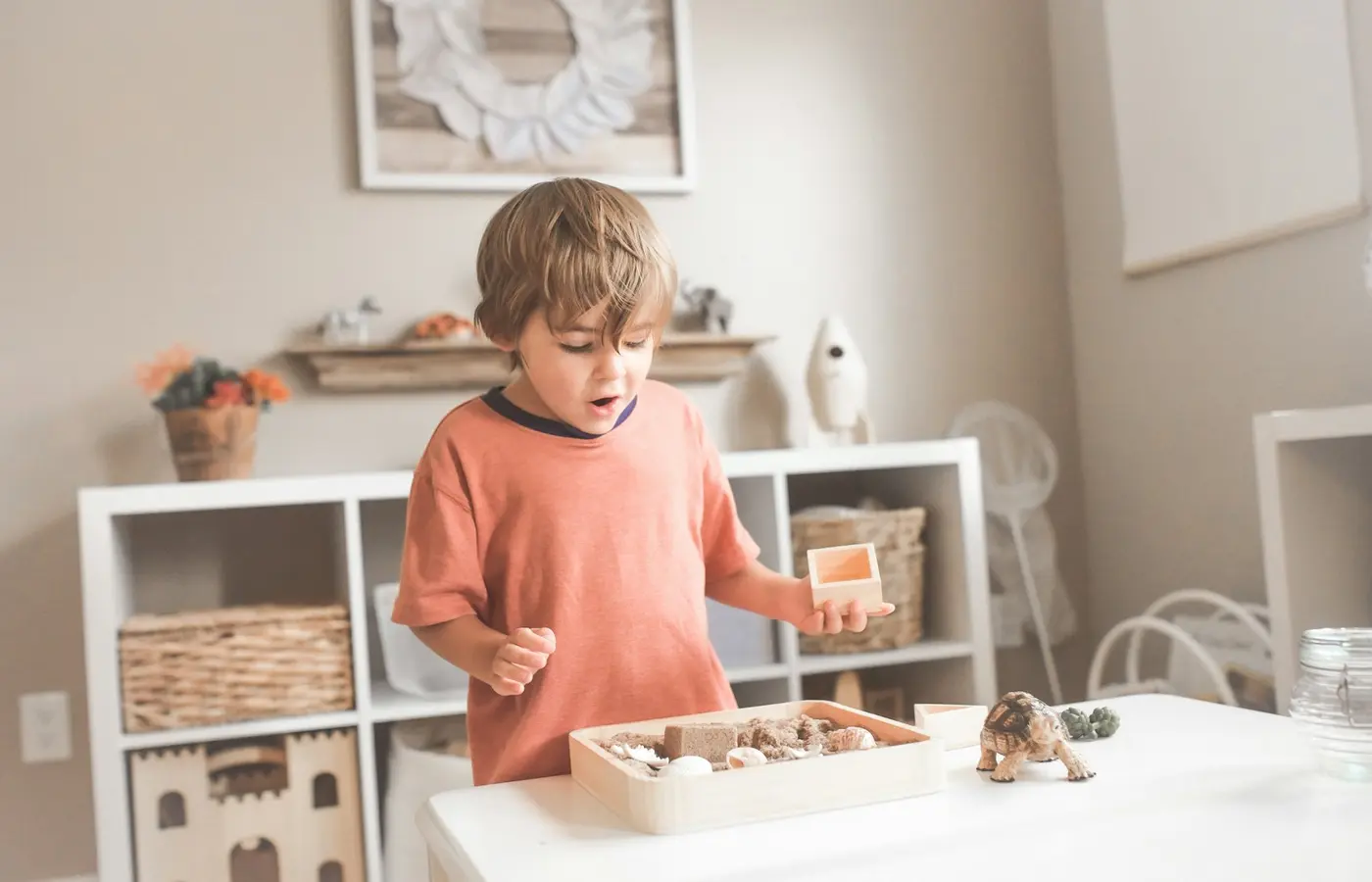
Some children are less interested in hiding than in moving objects across a boundary: into a basket, out of a box, through an opening, and into another container.
Choose containers that are meant to hold the selected toys and that remain manageable when filled. Check them regularly for cracks, splinters, detached components, or newly exposed sharp edges. Keep the distinction clear between a container used for objects and a product intended for a child to enter.
Building walls around toys
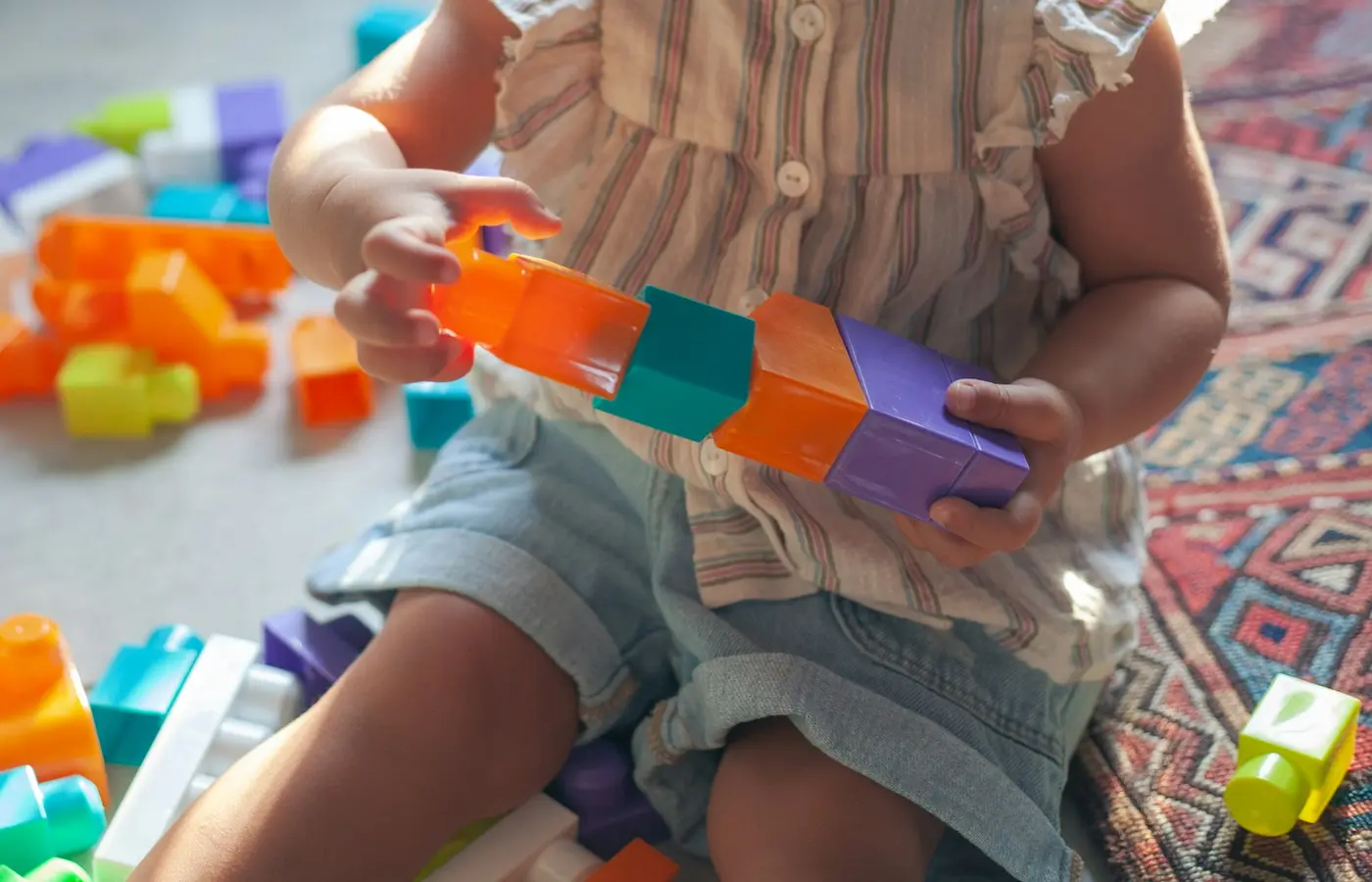
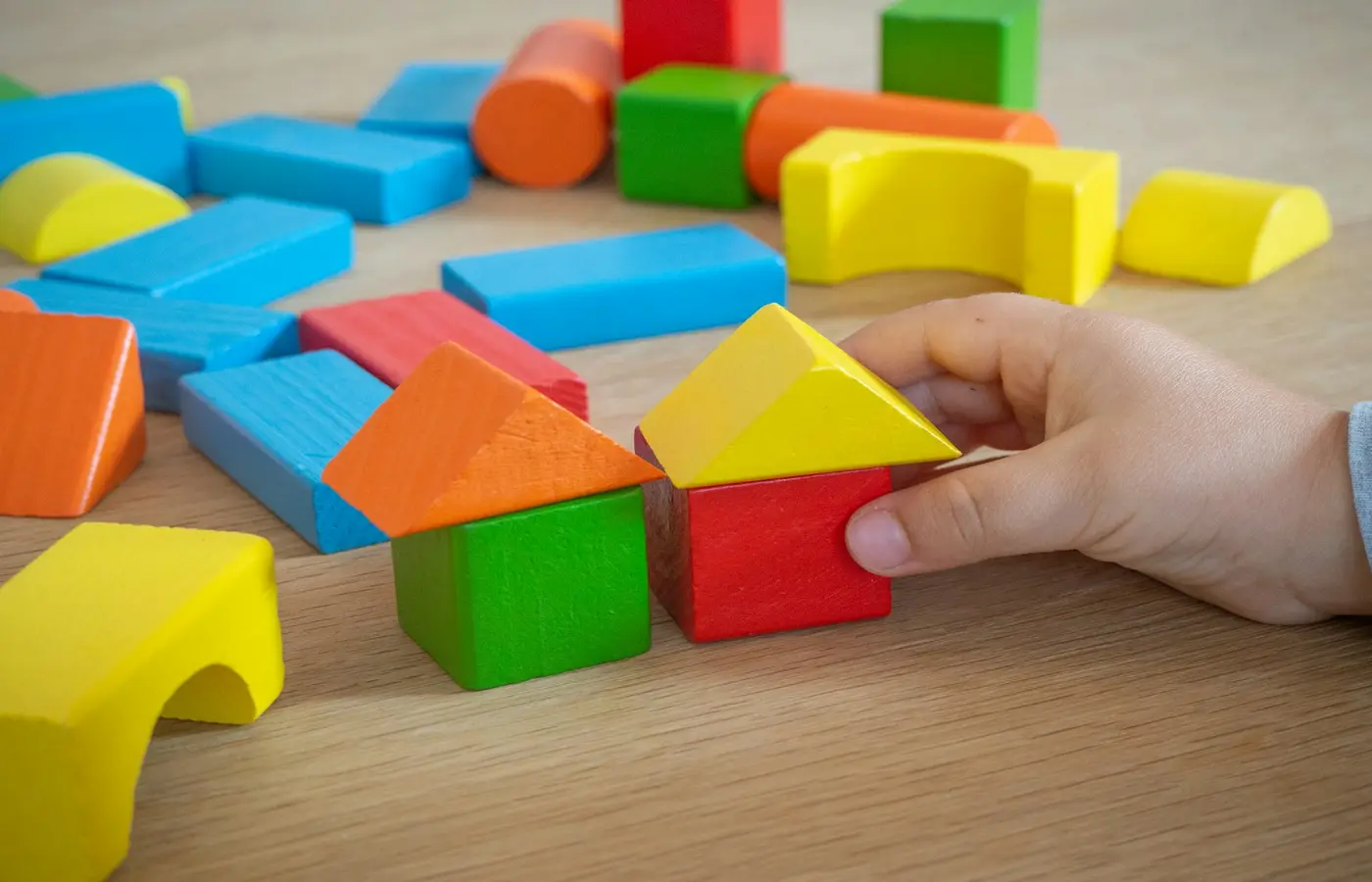
If the child makes rings, fences, rooms, or lines around figures, blocks may be a closer match than a tent. Blocks keep the boundary visible and allow it to be moved, joined, knocked down, and rebuilt.
Large blocks reduce the number of pieces to collect and may work better in a room shared with a younger child. Smaller blocks, miniature figures, counters, and connectors require closer attention to the product age grade and to who else can reach the floor.
Covering toys or marking a temporary space
Fabric can become a toy blanket, roof, curtain, wrapping, or boundary. Commercial recommendation material commonly suggests play silks and scarves for forts and blankets, but that does not establish that any particular fabric is suitable for child-sized enclosure play.
Before offering fabric, check the product’s intended use, age grade, warnings, care directions, and instructions. Do not assume that fabric is suitable because it looks light, has an open edge, or is marketed as a play silk. This research package does not contain the authoritative guidance needed to give detailed controls for cords, entrapment, suffocation, fire safety, or fabric fort construction.
Making a place large enough to enter
A child-sized retreat is a different choice from a box that holds toys. It introduces questions about the structure, entrances, moving parts, stability, collapse, and the way the product is meant to be used.
Only consider a tent, fort kit, or similar structure after reviewing its current age grade, warnings, instructions, dimensions, and intended use. This guide does not recommend improvising child-entry structures from storage bins or climbable furniture. The supplied research is not sufficient to assess the relevant entrapment, suffocation, furniture stability, or tip-over risks.
Match the material to the repeated action
Different materials that are all called “open-ended” create very different work for the child and adult.
| Material | What it allows | Home trade-offs |
|---|---|---|
| Open containers | Posting, filling, emptying, sorting, carrying, and hiding objects | Repeated dumping, containers underfoot, and objects migrating between rooms |
| Sturdy boxes used for toys | Grouping, transporting, and hiding toys | Wear at edges, bulky storage, and possible confusion about whether the box is for toys or child entry |
| Blocks | Building visible walls, paths, rooms, and boundaries | Floor space, impact noise, unstable stacks, and many pieces to reset |
| Fabric used as directed | Covering objects, wrapping, and marking a temporary area | Laundry, dragging, fastening questions, and additional hazards if used to make an enclosure |
| Figures | Giving the child something to shelter, surround, line up, or move between spaces | Miniature figures may be small parts; detailed sets are easy to scatter or lose |
| Other loose parts | Filling containers and arranging repeated borders or groups | Potential small-parts concerns, high piece counts, and a longer reset |
The best match is not necessarily the material with the most possible uses. It is the one that supports the current action without creating more space, supervision, or cleanup work than your household can reasonably take on.
No product specifications or documented Life With Toys testing were supplied for this article, so these comparisons describe observable affordances rather than product durability, ease of assembly, or likely engagement.
Use safety and age guidance as a gate
The available Broward Health toy-safety overview recommends choosing age-appropriate toys, avoiding small parts for children under three, and checking for durability and sharp edges or points. This is general healthcare guidance, not a substitute for the warnings and instructions supplied with a specific product.
Before adding a material, ask:
- What age grade and warnings appear on this exact item?
- Is it intact, without cracks, sharp edges, splinters, or detached pieces?
- Does it include small parts, and can a younger child reach them?
- Is the child using it in the way described by the manufacturer?
- Does the activity require an adult to assemble, secure, or monitor something?
- Can the setup interfere with a walkway or shared room?
- Where will every component go afterward?
Marketing terms such as “Montessori,” “sensory,” “educational,” “natural,” and “open-ended” do not answer these questions. Nor does a general safety label establish that every possible use—such as turning storage equipment into a hideaway—has been assessed.
Is a storage bin safe for a child to climb into?
Do not infer that it is. A bin sold for storage is not automatically intended as a child-entry play space. Its shape, lid, handles, hinges, capacity, and warnings would need product-specific review, which is not available in the current research package.
Use storage containers for objects unless the manufacturer explicitly documents another use. If a child repeatedly tries to enter one, pause that setup rather than relying on an open lid or adult presence as proof that it is safe.
Choose for every child who can reach the play
In a mixed-age home, the main player’s readiness is only part of the decision. A set may fit an older child’s plans while presenting small, detachable pieces to a younger sibling or visiting child.
Possible lower-piece alternatives include:
- A few large blocks instead of many miniature building components
- Large figures rather than miniature characters
- One container with a small number of larger objects
- Materials kept for use in a controlled area and put away immediately afterward
Follow the age grade and warnings on each exact product. Do not combine sets without reconsidering the youngest person who can access the new mixture. A large-block set can effectively become a small-parts setup if miniature figures, counters, or connectors are added to it.
Limiting pieces is not a lesser version of the play. A child can repeatedly carry three objects, rebuild one wall, or hide the same figure in several places.
Plan for the room and the reset
A toy can fit the child’s interest and still be a poor fit for the home. Before buying a permanent structure or a large loose-parts collection, picture both the active setup and what happens when play stops.
Floor space and pathways
A permanent tent keeps its footprint even when nobody is using it. A temporary block boundary can be dismantled, but its pieces may spread through a shared room. Containers can stack or nest if designed to do so, although their contents still need a storage place.
Decide in advance how much floor area can remain occupied and whether the setup will intrude on a route people need to use.
Noise
Blocks landing on a hard floor can be loud. Filling and dumping rigid containers also creates repeated impact noise. If noise is a concern, use fewer pieces or move the activity to a suitable surface, provided that doing so remains consistent with the product instructions and does not create a new obstacle.
Cleanup and missing objects
Hiding play can work very well: objects disappear. Use a piece count that you can realistically track, especially when small components need to remain away from younger children or pets.
A shallow tray, basket, or designated shelf may make the reset clearer. The child may help, decline, or turn cleanup into more carrying and hiding. Adult involvement is not a failure of the material.
Adult setup and supervision
A basket of large objects may need little setup. A block room may require occasional rebuilding. Fabric structures and commercial fort kits can demand assembly, instruction checks, and more direct supervision.
Choose based on the attention available at the time. It is reasonable to offer containers or blocks today and leave a more involved structure packed away. Supervision matters, but it should not be treated as a way to cancel a product warning or make an unintended use safe.
Begin with one simple invitation
You can test the fit of the idea without creating a themed play area.
Try one of these small setups using age-appropriate, intact materials:
- Put three or four appropriately sized objects beside one open container.
- Place one figure next to several blocks that can form a boundary.
- Set two containers a short distance apart for carrying objects between them.
- Offer a figure and an item intended for covering it, following that item’s instructions.
Then observe the action rather than looking for a finished result. The child might dismantle the wall, carry the container away, ask you to hide the figure again, or repeat one placement many times. Those actions can be the play; a completed fort or tidy scene is not required.
Extend only when the added material answers something the child is already trying to do:
- Add a second container if objects are being transported.
- Add a few blocks if the boundary keeps expanding.
- Add one larger figure if the child wants something to place inside.
- Consider a documented child-use structure only if entering the space is central and its instructions, warnings, footprint, and supervision needs fit your home.
If the pieces produce more tracking, noise, conflict, or adult construction than your family wants, scale back. The most useful selection rule is simple: choose the smallest age-appropriate set that supports the repeated action and that you can safely supervise, store, and reset.
Sources and research note
Retrieved September 5, 2026.
- Broward Health: Toy Safety—Ensuring Fun and Safety Go Hand-in-Hand. General healthcare-system guidance on age appropriateness, small-parts choking hazards for children under three, durability, and sharp edges. It is not product-specific regulatory documentation.
- RIWI Buildit: Open Ended Toys for Kids—Play Guide and Top Picks. Commercial context for the types of materials families may encounter, including blocks, loose parts, play silks, magnetic tiles, and boxes; not used as safety or developmental evidence.
- Chalk Academy: Best Open-Ended Toys According to a Pediatrician Mom. Recommendation article used only for examples of blocks and play silks in forts and toy-blanket play; not independent evidence of safety or learning outcomes.
- Facebook caregiver discussion about play silks. User-generated question-discovery context only; not evidence of safety, age appropriateness, or development.
- Instagram post about filling containers and circling objects. User-generated question-discovery context only; not evidence that enclosing play is a developmental stage or has a particular meaning.
The supplied research identifies common family questions and broad material categories, but it does not include regulator guidance or product documentation sufficient for detailed instructions about suffocation, entrapment, cords, furniture stability, tip-over, collapsible structures, or fabric forts. It also contains no exact product models, age grades, dimensions, recalls, compliance records, or testing. For those decisions, consult current official instructions and warnings for the exact item rather than relying on general play advice.