
When toys spill from the living room into the kitchen, or a bedroom has to work as a sleep space and a play space, storage can start to feel like a choice between two frustrating options: leave everything out or put it all somewhere children cannot use it.
A workable setup usually sits in the middle. Keep a limited selection of suitable materials visible and reachable. Store items that need closer supervision, have many small pieces, or belong to an older child where an adult controls access. Then make the reset simple enough that your household can repeat it on an ordinary tired evening.
The goal is not to make every toy disappear. It is to give play a usable route: out, into play, and back again.
Start with the path from shelf to play to reset
Before buying bins, shelves, or labels, watch what happens to toys now. A storage system has to work with the route a toy already travels.
A child may carry animals from a bedroom basket to the rug, bring magnetic tiles to the kitchen table, or dump vehicles beside the sofa. That route is useful information. It tells you where storage needs to be portable, where a small play surface may help, and where putting an item away is likely to happen.
Try this brief observation over a few days:
- Which toys are used repeatedly?
- Where does play actually happen?
- Which materials are carried from room to room?
- What gets abandoned because it is difficult to reach or retrieve?
- What creates the longest cleanup at the end of the day?
- Which toys do adults need to get out and put away themselves?
The existing Life With Toys guide on storage that children can reach and reset frames the useful test clearly: suitable materials should be possible for a child to identify, remove, carry, and return without climbing or lifting overhead.
That does not mean every item needs a child-accessible home. It means the items you choose to leave available should have a realistic path back after play.
For example, a low basket near the sofa may be a better home for a few board books than a deep closet in another room. A portable tub can make sense for building pieces used at the dining table. And a complicated craft kit may be easier to enjoy when it stays in an adult cupboard until someone can help set it up.
Decide what stays accessible and what needs adult-controlled storage
Child-accessible storage should hold materials that are suitable for that particular child to handle in that setting. Age labels, instructions, the child’s habits, and the presence of younger siblings all matter.
Keep adult-controlled storage for materials that:
- include small parts that are unsuitable for a younger child in the home;
- require supervision or help to use safely;
- are fragile, sharp, messy, or difficult to clean up;
- are intended for an older child;
- need a particular table, tray, or protected surface;
- are likely to become unsafe when mixed with other toys.
In a mixed-age household, this distinction matters more than making all storage look uniform. A preschooler’s building set might live on a low shelf, while a sibling’s tiny construction parts stay in a latched or high adult-managed location. The older child can still use them; the point is to make access a planned activity rather than an accidental discovery.
Make the plan visible to adults, too. If a supervised activity comes out after dinner, decide where it will be reset afterward. A labeled adult cupboard, a lidded container placed out of reach, or a designated high shelf can be more dependable than leaving the item on a table and hoping it remains undisturbed.
Accessibility is not an all-or-nothing measure. A child may be able to choose a basket of animals, while needing help with a large train layout or a box of art materials. That is a normal arrangement, not a failure of independence.
Use vertical space only after making furniture stable
Walls and height can help in a small home, but vertical storage is not automatically a safety solution. Any low unit, bookcase, dresser, shelf, or television stand can become a climbing opportunity depending on its placement, contents, and the child.
The U.S. Consumer Product Safety Commission warns that furniture, televisions, and appliances can tip over when children climb on them, fall against them, or pull themselves up. Its guidance recommends anchoring furniture to a wall or floor for added security. See the CPSC’s Childproofing Your Home guidance for its tip-over prevention information.
Before using a tall shelf or bookcase for toys, consider these questions:
- Is the unit anchored according to its manufacturer’s instructions?
- Could a child climb it to reach an appealing item?
- Are heavy objects kept low rather than on upper shelves?
- Does opening a drawer, pulling a bin, or leaning on a shelf change the unit’s stability?
- Is the furniture positioned near a bed, chair, window, or other object that makes climbing easier?
- Does the arrangement still work when children are excited, tired, or playing together?
Wall-mounted storage can preserve floor area, but installation details matter. Use the specific product’s instructions and appropriate hardware for the wall type. Do not assume a wall shelf, cube unit, or furniture label makes an arrangement safe in every home.
The Toy Association suggests using walls and vertical surfaces to conserve room, including wall-mounted book storage. That can be a useful space idea, but safety still depends on the exact installation, the furniture, and how children use the room. Their practical decluttering suggestions are available in 8 Ways to Declutter Your Child’s Room.
A simple rule helps: the more likely an item is to invite reaching and climbing, the less useful it is as a tempting display item above a child’s ordinary reach.
Match the container to the toy and the cleanup task
Matching bins can look calm in a photograph, but a uniform system often creates more work if every toy has different needs. A container should suit the item’s shape, number of pieces, weight, and route to play.
Open shelves for visible choices
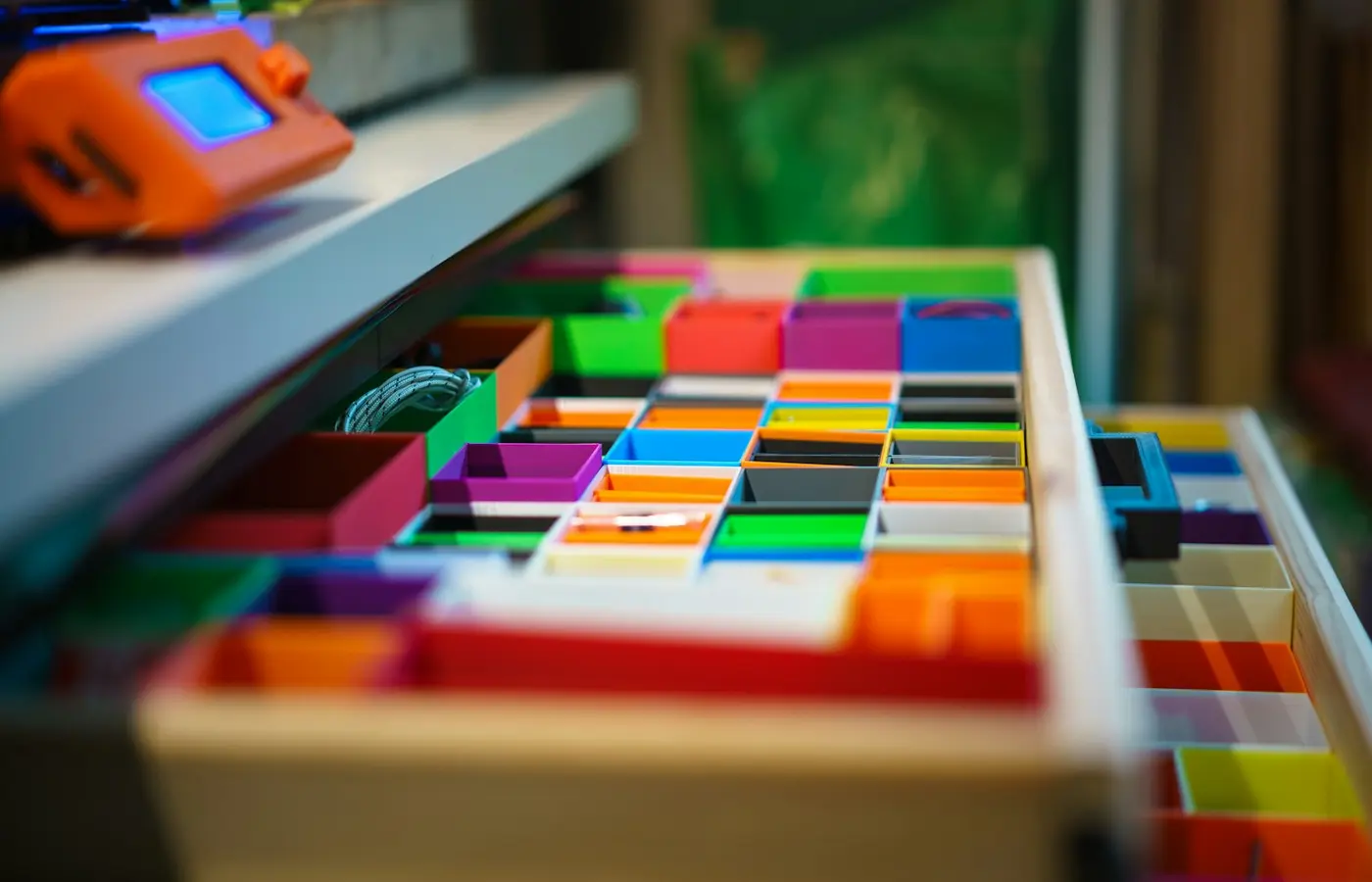
Open shelves work well for a modest number of larger toys, books, puzzles in sturdy boxes, or baskets with clear categories. They can help a child see what is available without emptying multiple containers to find one item.
They are less useful when shelves become packed edge to edge. If removing one toy requires moving three others, the shelf is acting more like a warehouse than an accessible play area.
Broad bins for easy gathering
A broad basket or open bin can suit dolls, vehicles, animal figures, dress-up accessories, or larger blocks. The category does not need to be perfect. “Cars,” “soft toys,” or “things for pretend cooking” may be more usable than many tiny subcategories.
For a child who likes to carry toys to another room, a lighter container with comfortable handles may work better than a large, heavy box. A bin that a child cannot safely lift is still storage, but it is not a practical independent reset tool.
Lidded or adult-managed containers for special materials
Lidded containers can help keep sets together, but they add a step. They are often best for materials that come out with adult help, rotate in and out of use, or need to stay separate from younger children.
If a set has many pieces, consider whether the container can travel with it. A shallow tray, portable case, or designated table bin may reduce the number of pieces that spread through a shared room.
Book displays for books in active rotation
Front-facing book storage can make a small selection easy to recognize, while a larger collection can live elsewhere. It is not necessary to display every book at once. A few accessible titles near the reading spot may be enough for the current week.
Furniture that does more than one job
In a small home, a table may provide both a place to play and a way to keep small pieces off the floor. Storage benches, carts, and under-bed containers can also help, but each has trade-offs: lids may be awkward, wheels can move unexpectedly, and deep under-bed storage may be adult-managed rather than child-accessible.
Wirecutter notes a practical distinction between fixed shelving and portable bins: shelves can hold a great deal in a small footprint, while portable containers can be removed from a shared room when needed. Its discussion is useful household context, not a safety assessment of any particular product. Read more in 9 Toy Storage Ideas Your Kids Will Actually Use.
Make visibility useful, not overwhelming
Visible storage helps only when what is visible remains manageable. A child does not need access to every toy the household owns in order to have meaningful choices.
Try treating the accessible area as the active collection rather than the whole collection. Keep a few types of play available: perhaps something for building, something for pretend play, a few books, a drawing option, and a movement-friendly item if your space allows. The exact mix depends on what your child returns to and what your home can handle.
Put less-used toys away in a closet, high cupboard, or other adult-managed location. You can swap something in when interest changes, when an activity needs refreshing, or when you simply want to clear room for a current project.
This is often called toy rotation, but it does not need to be a schedule or a developmental program. It can be as simple as placing one basket in storage when another becomes the main source of play. There is no research in the supplied material showing that a specific number of toys improves attention, reduces overwhelm, or produces independent play, so avoid treating a particular limit as a rule.
Instead, use the practical measure: can the family put the active materials away without a major sorting project?
Build a reset for the hardest part of the day
A storage plan succeeds or fails at the time when everyone has the least energy. Design the reset around that moment, not around the ideal version of a weekend afternoon.
The Toy Association recommends setting a regular cleanup schedule and cleaning up together. In a small home, a predictable reset point can be helpful: before dinner, before bath time, before adults use the living room, or before bedtime.
Keep it short and concrete. You might say:
- “Vehicles go in this basket.”
- “Books go in the low shelf.”
- “Let’s put the blocks in their bin before we choose a bedtime book.”
- “This tower can stay on the tray until tomorrow.”
A child’s participation will vary. It depends on the toy load, the container, their interest, their energy, and how much adult support is needed. A toddler may carry a few animals to a basket. An older child may sort a game back into its box with help locating pieces. On another day, you may do most of the reset yourself. Storage is there to support household life, not to turn cleanup into a performance test.
When space allows, protect ongoing play with a tray, a designated shelf, or one corner of a table. An unfinished construction does not always need to be dismantled because it is not tidy. But if a shared room needs to change function, choose a container that lets you move the project without mixing it into everything else.
A quick storage check before you buy or rearrange
Before bringing home another organizer or moving furniture, run through this list:
- Can the child reach suitable toys without climbing, stretching overhead, or moving furniture?
- Are furniture units anchored and arranged with tip-over risks in mind?
- Are heavy items stored low?
- Which materials need adult-controlled storage because of small parts, supervision needs, or younger siblings?
- Can a child carry the accessible container safely, or should it stay in one place?
- Does the storage fit where play actually happens?
- Are the visible toys few enough to return without sorting every item into a tiny category?
- Can unfinished play stay contained when necessary?
- Are there only as many cleanup destinations as your household can remember at the end of the day?
- Would the system still work if you had ten minutes and limited patience?
If the answer to the last question is no, simplify before buying more storage. One stable shelf, two broad baskets, and an adult-controlled cupboard can be more useful than a room full of organizers.
The best next move is usually to choose one play area, remove what does not belong there, and give the remaining materials a clear route back. Once that routine works, you can decide whether the home needs another container at all.
Sources and research note
- U.S. Consumer Product Safety Commission: Childproofing Your Home — reviewed for furniture and appliance tip-over guidance, including anchoring recommendations.
- Life With Toys: How to Store Toys in a Small Home So Children Can Reach and Reset Them — related guidance on accessible storage, adult-controlled materials, broad categories, and repeatable resets.
- The Toy Association: 8 Ways to Declutter Your Child’s Room — practical context on wall use, floor space, and regular shared cleanup routines.
- Wirecutter: 9 Toy Storage Ideas Your Kids Will Actually Use — practical context on fixed shelving, portable bins, and changing the active supply of toys.