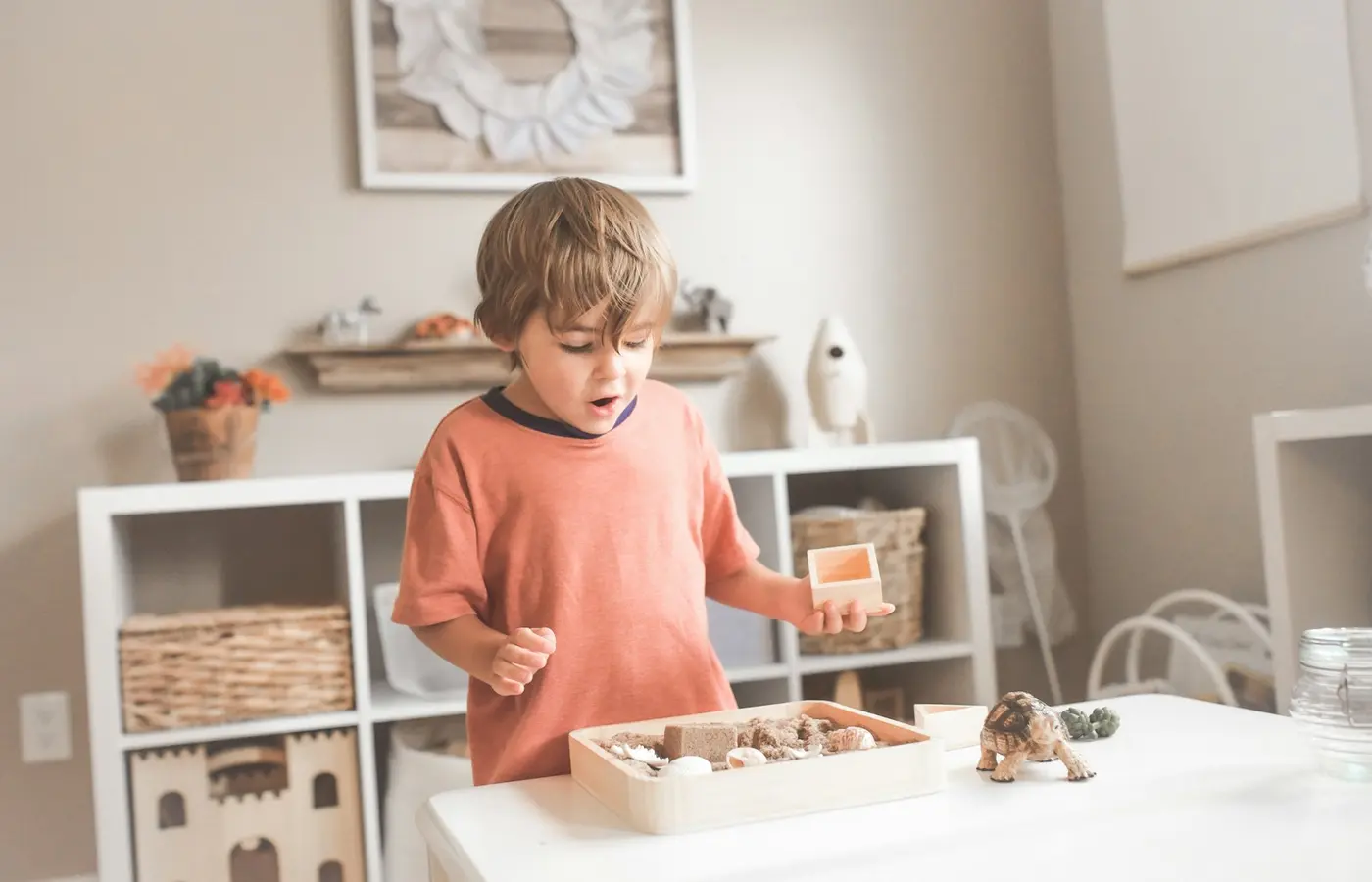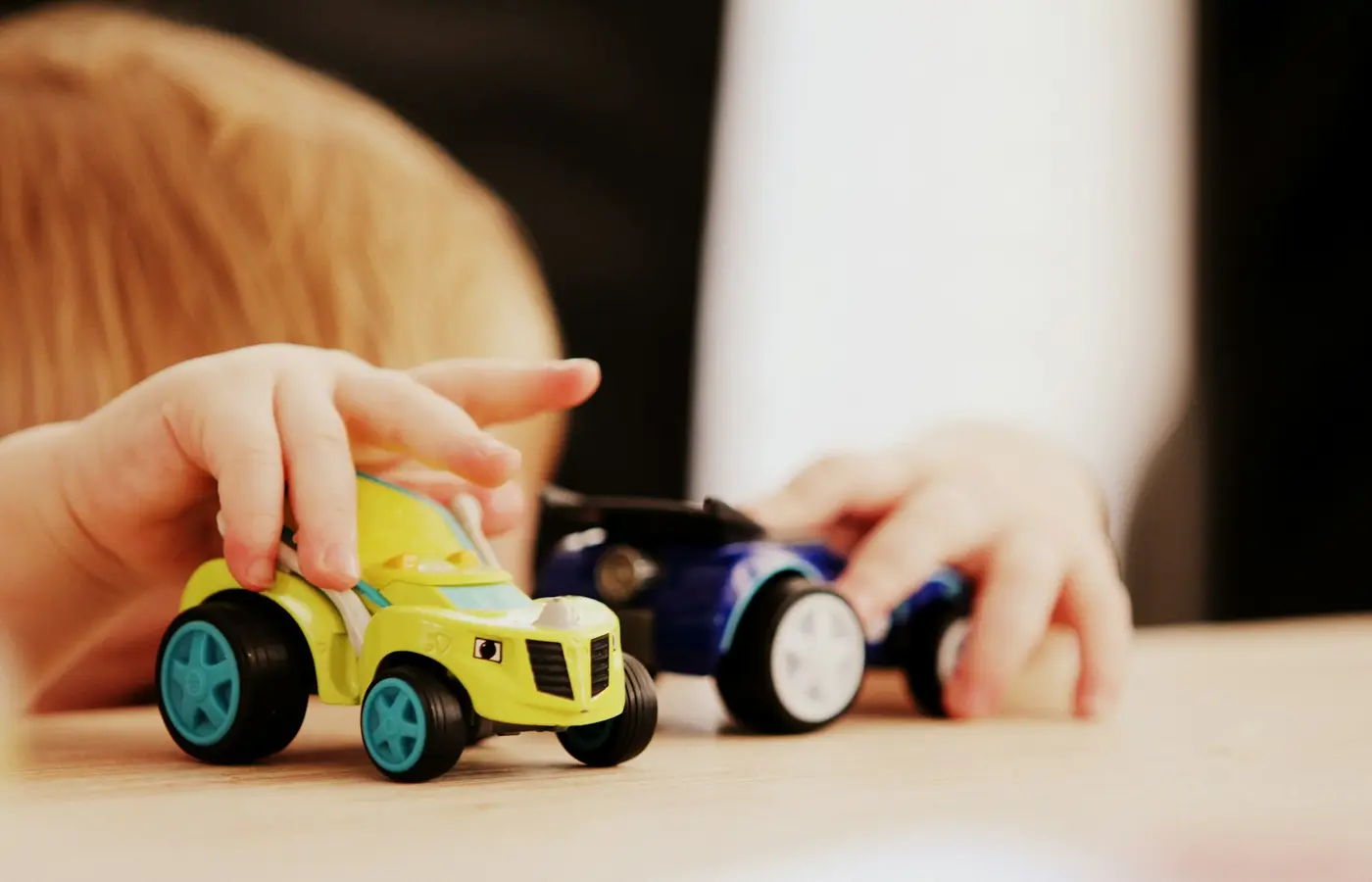
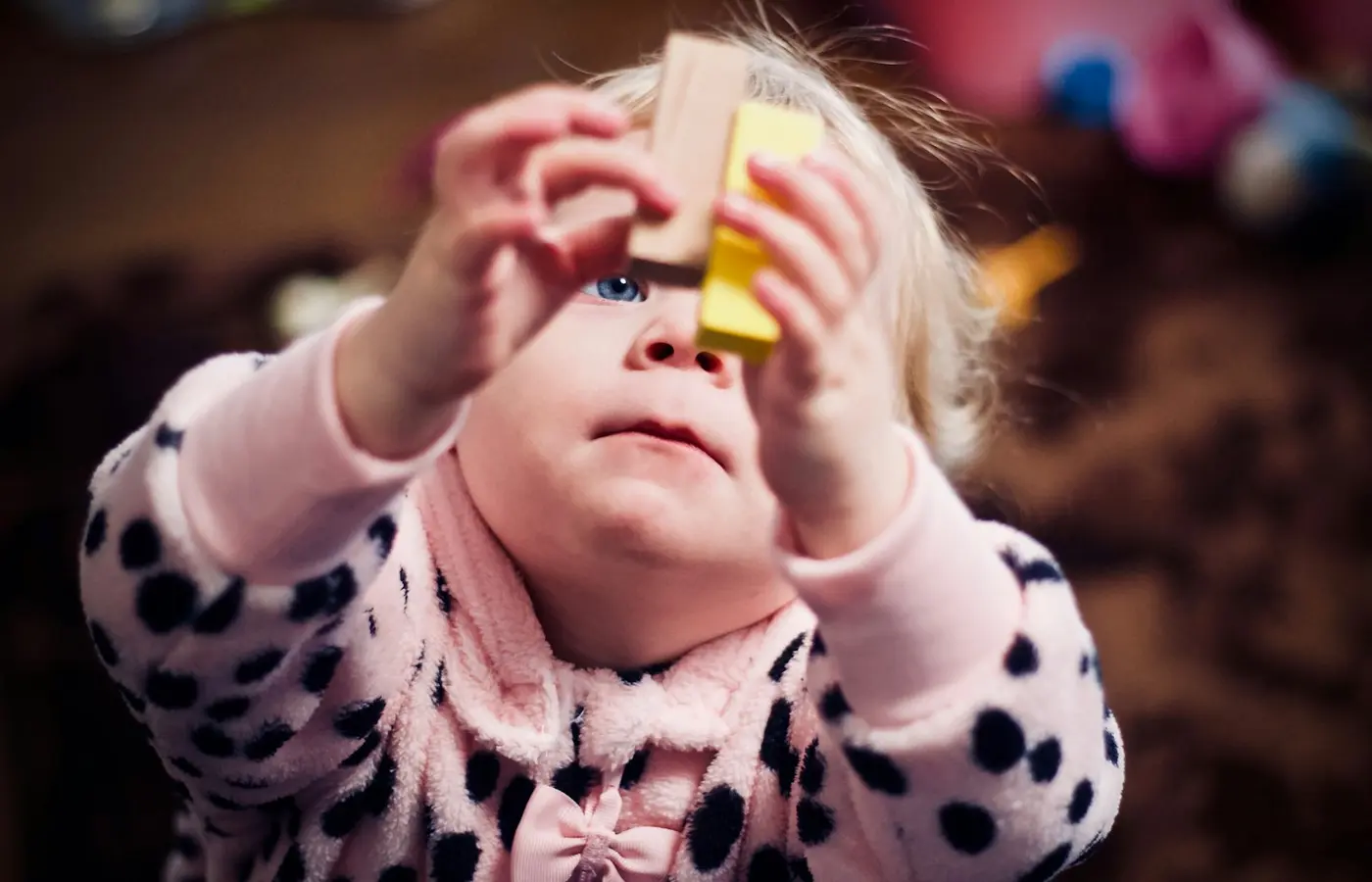
A child who watches other people play is already near the activity. They may be taking in the materials, the noise, the rules people seem to be making up, or simply deciding whether this is a moment they want to enter.
You do not need to turn watching into participation right away. A more useful goal is to make play easy to read, easy to approach, and possible to join in more than one way. That might mean leaving an open place at the table, putting a few materials within reach, or continuing your own play without repeatedly asking, “Do you want to join?”
There is no supplied evidence here that tells us why a particular child watches before joining. Watching is not, by itself, a sign of shyness, anxiety, a sensory difference, or a social-skills concern. Treat it as information about this moment rather than a problem to solve.
Watching is already a way of being near play
A child does not have to pick up a toy, speak, or copy another child’s idea for a play setup to have value. Watching can be part of getting familiar with an activity. It can also be the child’s chosen way to be close while someone else builds, pretends, races vehicles, makes a marble run, or sorts small objects.
That perspective fits a child-led approach to play. The National Institute for Early Education Research’s description of play facilitation distinguishes children’s own play—where children choose what and how to play—from co-created play, where an adult joins as an equal without taking control. In both cases, children retain meaningful choice.
For a caregiver, that can look less like finding the perfect invitation and more like paying attention:
- What does the child keep looking at?
- Do they move closer when the activity becomes quieter or simpler?
- Do they touch one piece, bring an object over, or comment from across the room?
- Do they seem more comfortable alongside one person than a busy group?
- Is there a practical barrier, such as a crowded floor, a high table, loud sounds, or materials they cannot easily reach?
You do not need to interpret every cue. Simply noticing can help you make the next setup less demanding.
The Learning through Play play-facilitation guide describes adult roles that include observing, listening to, and acknowledging children during play. That is a useful starting point at home too. You can be available without making participation the price of belonging.
Make the play easy to read from the edge
A complicated, crowded setup can be hard to enter—even for a child who wants to play. You can lower the practical barrier by making the activity visible and leaving a simple first action available.
This is not a formula for making a child join. It is a way of making the invitation clearer.
Start with a small, visible arrangement
Rather than opening every bin or spreading a large collection across the room, set out a small number of materials that show what could happen next. For example:
- Two or three vehicles and a strip of masking-tape road.
- A few blocks beside a partly built tower.
- A basket with scarves, soft animals, and two cups for pretend feeding or packing.
- A tray with large buttons, lids, bowls, and tongs for sorting or moving.
- Paper, tape, and a few cardboard pieces for attaching and dismantling.
The point is not to prescribe a correct use. It is to make the materials understandable without requiring a child to ask what they are for.
If you are playing with the materials yourself, let your actions stay simple. Roll one vehicle. Stack two blocks. Put a figure into a cardboard box. Pause. A child watching can see an available action without being told to perform it.
Leave physical room to approach
A play area can accidentally communicate that it is already full. A tightly packed blanket, a circle of bodies, or materials arranged at the center of a crowded table may make entry awkward.
Try leaving one reachable spot open. This could be an empty chair, a clear section of floor, an unused tray, or space beside—not directly opposite—the person already playing. If the child uses mobility equipment, prefers seating, or needs more room to move, build that space into the setup from the beginning rather than treating it as an add-on.
The California Department of Education defines inclusive play as ensuring that children, including children with or at risk for disabilities, have access to and can fully participate in play with appropriate support. Its Powerful Role of Play in Early Education Resources emphasizes participation and individualized strategies within regular routines and play experiences.
At home, “access” may be as ordinary as putting materials on a low surface, using a stable tray, choosing larger pieces that are easier to grasp, or ensuring a child can see what is happening from where they are comfortable.
Keep the first action optional
An accessible first action is not an assignment. Instead of saying, “You can build the next part,” you might place a block nearby and say once, “There’s room for another block here.” Then return to what you were doing.
The difference is small but important. One approach puts the child on the spot. The other leaves an opening they can use, ignore, or return to later.
Leave an opening instead of assigning a role
Children can be interested in a play scene without wanting a named job in it. “You be the driver” or “Tell us what to do” may work for some children and moments, but it can also create pressure when a child is still watching.
Instead, make an opening in the activity itself.
Try invitations that do not need an answer
You might:
- Set down an extra vehicle at the edge of a road.
- Put a second figure beside a pretend house.
- Pause with one block in your hand before adding it to a structure.
- Place loose parts near a child who is watching a construction scene.
- Leave an empty bowl beside a pretend café.
- Keep a few animals outside a barn instead of placing every piece into the scene.
- Roll a ball slowly nearby, then continue without asking the child to roll it back.
A brief, matter-of-fact narration can help make the opening visible: “This animal is looking for a place to sleep,” or “I have one more wheel.” After that, leave space. Repeating the invitation can make a low-pressure moment feel like a test.
If a child takes over, follow their lead where you can. If they move the road, line up every animal, remove the roof from the house, or hand you a piece without speaking, those are all possible ways of entering play. Co-created play does not require the adult to direct the storyline; it allows the adult to play alongside the child without taking control.
Let nonverbal participation count
Joining can look like sitting closer, touching one item, pointing, making a sound effect, watching an adult repeat an action, or handing over a piece. A child may also direct play through gesture, gaze, a communication device, a familiar sign, or by moving materials into position.
You do not need to turn these actions into a lesson or demand a next step. Respond to what is offered: accept the block, move the vehicle where the child points, or repeat the sound effect. That response lets the child know their contribution was noticed without requiring more.
Choose setups with more than one way to take part
Some play arrangements are easier to enter because they do not depend on one role, one skill, or one correct sequence. Flexible materials can give children different ways to be near the same activity.
This is about play affordances—the actions a setup makes possible—not a promise that a certain toy will produce confidence, social skills, or any other outcome.
| Setup | Ways a child might take part | Real-home considerations |
|---|---|---|
| Blocks, boxes, and tape | Carrying, stacking, lining up, knocking down, holding pieces, suggesting where something goes | Can spread quickly; use a tray or defined floor area if cleanup matters. |
| Vehicles and a simple road | Rolling, parking, watching, making sounds, adding obstacles, moving one vehicle at a time | Hard plastic can be noisy on wood or tile; a rug or towel softens sound. |
| Animals, figures, fabric, and containers | Arranging, hiding, transporting, feeding, narrating, handing over objects | Small figures may be a choking hazard for younger children; follow the manufacturer’s age grade and keep unsuitable pieces out of reach. |
| Household sorting materials | Moving lids, nesting cups, placing objects in bowls, lining up, carrying | Check for sharp edges, breakable items, loose parts, and items that are not safe for mouthing. |
| Drawing and collage materials | Watching marks appear, choosing paper, holding tape, placing pieces, making marks | Offer only age-appropriate supplies and supervise scissors, glue, and small collage items. |
A setup can also include an adult doing parallel play nearby. You might fold fabric around a stuffed animal while the child watches, or sort large lids into bowls while they arrange something else. Parallel activity can be less socially demanding than asking a child to enter an already active shared game.
Adapt the invitation for access, energy, and sensory needs
Inclusive play does not require a complicated special setup. It means looking for barriers that may be getting in the way and adjusting the environment when practical.
The right adjustment depends on the child and the day. The Inclusive Play chapter from All means all! frames inclusion around participation and reducing barriers, while recognizing the importance of observing children and considering their individual context.
Here are low-pressure adaptations to consider.
Change the physical setup
- Place materials on the floor, a low table, a tray on a lap, or another stable surface that works for the child.
- Leave clear paths for mobility devices, walking support, or an adult assisting with positioning.
- Use larger, lighter, easier-to-grasp objects when small or slippery pieces are frustrating.
- Secure materials that slide away, such as paper on a non-slip mat or containers on a tray.
- Put favorite or familiar objects within reach rather than across a large play space.
Reduce competing input when it helps
Some children may prefer a quieter, less visually busy area; others may enjoy a lively scene. You do not need to assume what a child needs based on a label or a single behavior.
If the current play area seems overwhelming, try one change at a time: lower background music, reduce the number of toys out, move to a smaller corner, or use softer materials. If the child moves away, that is useful information too. You can stop rather than trying to make the setup work.
Allow a short visit
Not every play opportunity needs to become a long activity. A child may watch for two minutes, touch one piece, then leave. That can be enough for now.
Keeping play periods easy to end can help adults avoid turning them into a project. Leave materials available for a little while if that is manageable, then pack them away without commentary if the moment has passed.
What to do when the child does not join
If the child watches but does not enter the play, you do not need to escalate the invitation.
A calm next move might be to continue what you are doing briefly, acknowledge the child’s presence, and let the activity end naturally. You could say, “I’m going to park these cars here,” rather than, “Are you ready yet?” If they choose another activity, let that choice stand.
Avoid using participation as a condition for access: withholding a favorite material until they join, repeatedly calling attention to their watching, or asking other children to persuade them can make the moment feel less voluntary. The child-led frameworks in the supplied sources support adults making materials available, observing, and joining play without taking over—not requiring a particular kind of participation.
There is also no evidence in the supplied research package for a timetable in which watching should become joining. You do not need to count minutes or compare a child’s approach to someone else’s.
Should I encourage my child to join play when they are watching?
You can make joining possible, but you do not need to push for it. Offer a clear opening, keep your words brief, and let the child decide whether to use it. Watching, moving closer, or choosing another activity are all acceptable responses.
How can I invite a child into play without putting them on the spot?
Make an opening in the materials rather than asking for a performance. Leave an extra vehicle, an empty place at the table, a block within reach, or a figure outside the play scene. Name the option once, then continue playing.
What toys or materials are easiest to join after watching?
Materials with multiple possible actions can be useful: blocks, containers, fabric, vehicles, large loose parts, figures, and simple art materials. Look for a setup that allows carrying, arranging, handing over, watching, or changing the scene—not one correct role.
How can I make a play setup more accessible for my child?
Start with the barrier you can see. Adjust height, reach, pathways, grip, noise, visual clutter, communication options, or the length of the activity. Use the child’s known access needs and cues rather than a universal checklist, and seek individualized guidance from people who know the child when that would be helpful.
A simple next move
The next time a child watches play, try making one small opening instead of asking them to join: clear a place, set down one extra object, or pause before the next action. Then let the child decide what happens.
The aim is not to make watching disappear. It is to make play feel available.
Sources and research note
This article draws on child-led and inclusive-play principles. These sources support adults observing children, making materials available, reducing barriers to participation, and joining play without taking control. They do not establish one reason a child may watch before joining, and they do not show that a particular setup will cause a child to participate.
- California Department of Education, Powerful Role of Play in Early Education Resources
- Learning through Play, Play facilitation: the science behind the art of engaging young children
- National Institute for Early Education Research, Measuring Teacher Facilitation of Playful Learning
- All means all! OpenTextbook for diversity in education, Inclusive Play