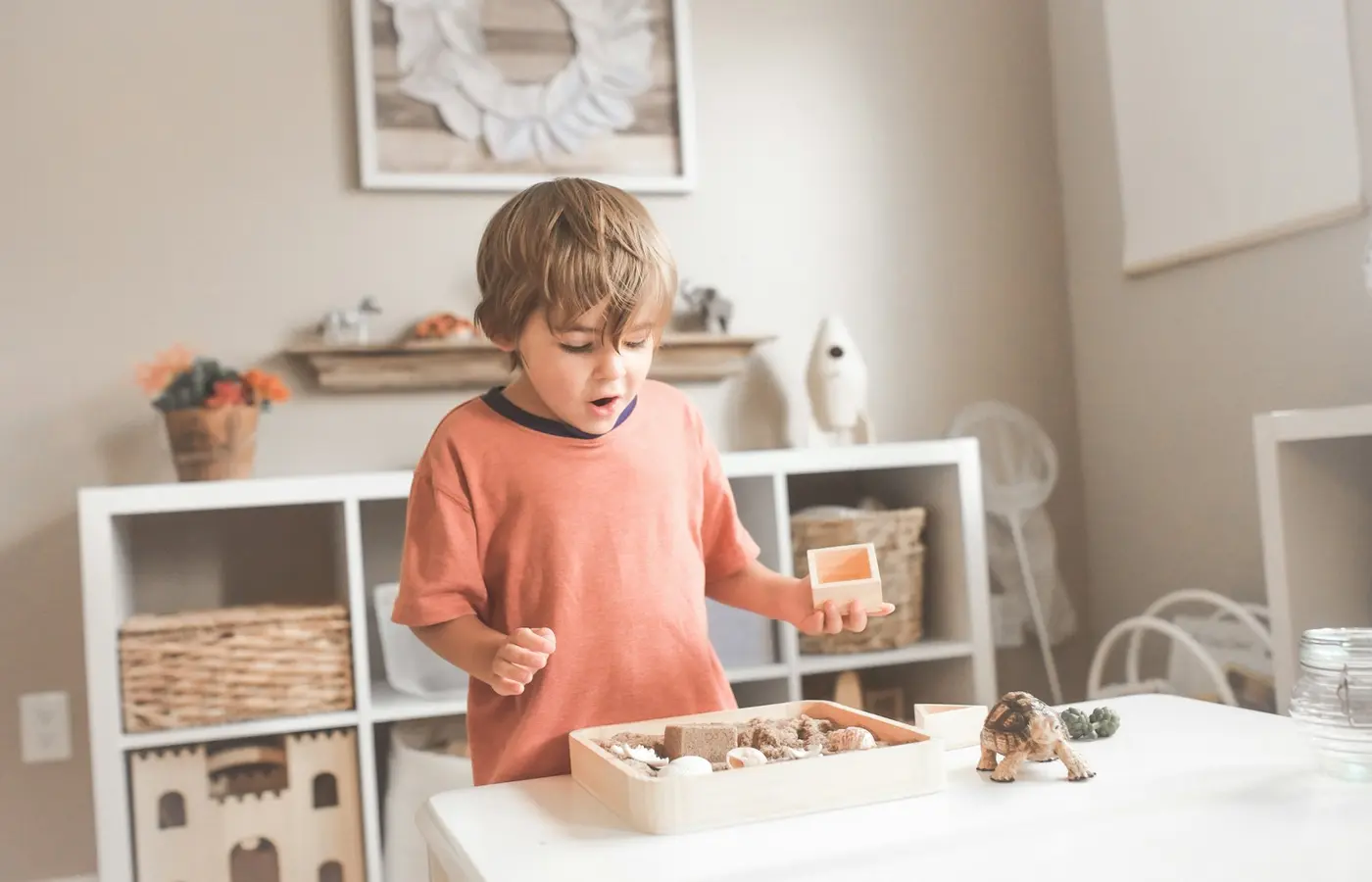
A toy that sits untouched for a few days has not necessarily been outgrown. The child may be absorbed in another kind of play, unable to find a needed piece, unsure how to begin, or tired of seeing the same setup. The toy may also require more space, force, cleanup, or adult help than the moment allows.
The quick answer is to look for a repeated mismatch, not one skipped play session. First check the toy’s condition and instructions. Then make access and the first action easier, or put the toy away and offer it again later. If the child repeatedly seeks an action the toy cannot provide—or can no longer use it comfortably as designed—it may be time to extend, store, pass on, or replace it.
There is no validated checklist or fixed number of ignored days that proves a child has outgrown a toy. The observations below are a practical decision framework, not a developmental assessment.
Start with safety, condition, and age instructions
Disinterest and safety are separate questions. Before experimenting with a new presentation, inspect the toy and pause access if you find:
- cracks, sharp areas, exposed internal parts, or other damage;
- loose components that were not designed to come off;
- missing pieces that affect assembly or secure operation;
- leaking, swollen, corroded, or damaged battery components;
- a modification or repair that changes how the toy works; or
- uncertainty about whether the toy is complete or being used as instructed.
These examples do not determine whether a particular toy can be repaired, handed down, or returned to use. That depends on the exact product, its condition, its instructions, and the guidance that applies where you live. Identify the model if possible, check its label and current instructions, and consult applicable official safety notices or recall information. Do not assume that glue, tape, a substitute part, or removal of one component makes a damaged toy suitable for play.
Follow the toy’s stated age restrictions and warnings. An age label is not a promise that every child in that range will enjoy the toy or be ready to use it without help. It also should not be overridden because a child appears advanced. If the instructions call for adult assembly or supervision, a change in interest does not remove that condition.
The research supplied for this article does not include regulator guidance, recall records, product manuals, or safety standards. Model-specific safety decisions therefore need sources beyond this general play guide.
What genuine outgrowth can look like
Outgrowth is more useful to think of as a pattern of mismatch than a moment of boredom. Observe the toy across several ordinary opportunities, including times when the child is not hungry, rushing out, or already committed to another activity.
Possible signs include:
- The child can perform all of the toy’s available actions but repeatedly shows no interest in varying, combining, pretending with, or returning to them.
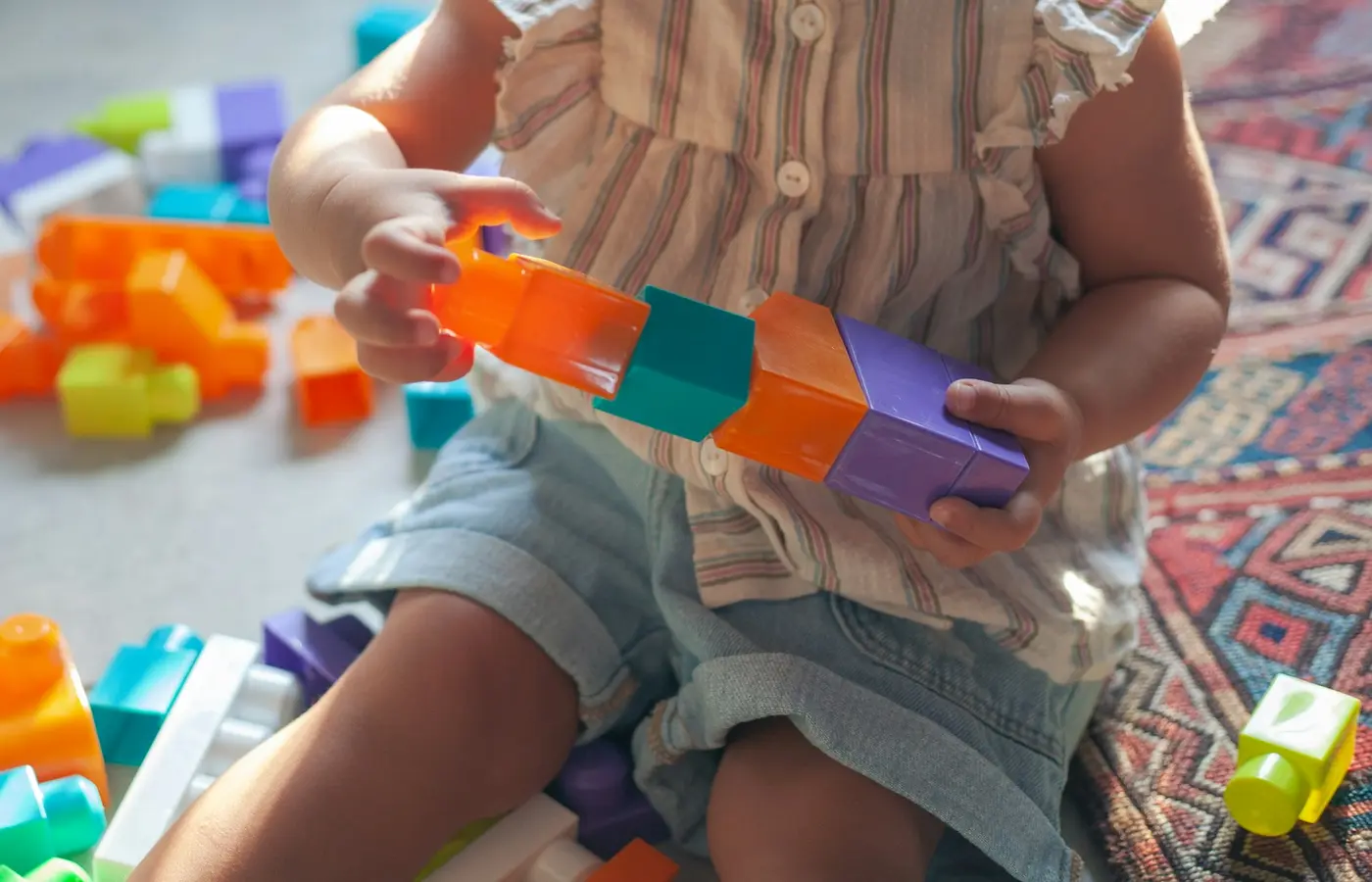
- The child consistently seeks a more involved version of the same action—for example, making longer connections when the toy permits only one short sequence.
- The item no longer fits the child comfortably in its intended position or mode of use.
- The child repeatedly abandons the toy for existing materials that better support the action being sought.
- Interest does not return after missing pieces are restored, access is improved, and the toy has spent time out of sight.
No single observation settles the question. Quick mastery alone is not proof of outgrowth, and finishing the intended task is not the only successful way to play.
A familiar toy may acquire a different role. Blocks may become pretend food, vehicles may be collected and arranged rather than rolled, or puzzle pieces may become characters in a story. That can mean the original activity has been outgrown while the materials remain useful.
Different use is not automatically a problem, but it still needs to stay within the product’s instructions and warnings. Do not add small objects, cords, magnets, water, food, or other materials unless they are appropriate for the child, compatible with the toy, and permitted by its instructions.
Check for boredom, difficulty, and access barriers first
Ignoring a toy can mean that it offers too little, but it can also mean the available challenge is too high—or that the child cannot get to the interesting part without adult work.
Can the child see, reach, and use it?
A toy at the bottom of a deep bin is technically available but may not be meaningfully accessible. Ask:
- Is the toy visible without emptying several containers?
- Can the child reach it from a stable, comfortable position?
- Is there enough floor or table space for its main action?
- Is it too heavy or awkward to carry to the play area?
- Does play have to stop whenever someone needs the shared surface?
Access can also be affected by posture, grip, force, vision, noise, or texture. These are possibilities to observe, not grounds for diagnosing a sensory, motor, or attention-related condition. A child may simply prefer a quieter object, need two hands free, or find a stiff mechanism frustrating.
Is the complete play action available?
Check whether all required pieces are together and whether the toy has been assembled or reset correctly. A marble run without enough connectors, a pretend kitchen with every accessory stored elsewhere, or a game that always needs an adult to sort it first may be easy to overlook.
Also notice whether the first action is clear. A child who cannot tell what moves, connects, opens, or stacks may walk away before discovering what the toy offers. That is different from understanding the action and no longer wanting it.
Is the real cost of play too high today?
Some toys bring friction that has little to do with developmental fit:
- loud or repetitive sound;
- a long setup for a short turn;
- pieces that scatter under furniture;
- an adult-dependent reset;
- a large floor-space requirement;
- difficult cleanup;
- charging or fresh batteries; or
- a rule structure that does not fit the child’s current mood.
You do not have to solve every source of friction. If a toy demands more time, noise, supervision, or cleanup than your household can manage, storing or passing on a suitable item can be reasonable even if the child has not technically outgrown it.
Try a small setup change before replacing the toy
A low-work reset can show whether the toy itself is the mismatch or whether its presentation is blocking play.
- Gather the intended set. Find the required pieces and check their condition. If safety-critical parts are missing, stop and consult the product instructions rather than improvising substitutes.
- Offer a manageable amount. You do not need to display every accessory at once. Keep enough pieces for the main action and store the rest nearby if that remains consistent with the instructions.
- Make a usable place. Choose a surface with enough room and a container that does not tip easily. Consider whether the child can carry, open, and put away the set.
- Show only the first action if help is wanted. Connect two pieces, post one shape, or begin one simple arrangement. Then leave room for the child to continue, change direction, or stop.
- Add one compatible connection, if appropriate. A familiar play theme or an age-appropriate material may give the toy a new role, but additions must not conflict with its warnings or create new hazards.
The aim is not to persuade the child to play correctly. It is to remove enough friction that you can see whether there is still something the child wants to do with the toy.
Stop the experiment if it creates repeated frustration, excessive noise, an unmanageable mess, or more adult setup than the household can sustain. A theoretically versatile toy is not automatically a practical fit for your home.
Commercial and general-interest toy-rotation articles suggest that changing which toys are visible may renew exploration. That is a reasonable low-stakes experiment, but the supplied research does not establish that fewer visible toys improve attention or creativity, prevent boredom, or produce longer play.
Use rotation as an experiment, not a schedule
Rotation simply means putting an intact, suitable toy away and offering it again later. It can help separate temporary familiarity from a more lasting mismatch, but it does not need a color-coded system or a dedicated storage room.
Choose an interval that fits your household. The supplied rotation articles mention daily, weekly, and fortnightly changes, with one week offered as editorial advice. They do not provide independent evidence for an ideal interval, so there is no need to treat a week—or any other period—as a test a toy must pass.
When the toy returns, record only what helps the decision:
- Does the child approach it without prompting?
- Is the first action easy to begin?
- Does the child ask for help, and is the help about setup or about what to do next?
- Is the toy used in a new way or combined with familiar play?
- Does the child again leave it alone after access barriers are removed?
You do not need to measure minutes or demand a finished object. Carrying one piece into pretend play may reveal more continuing value than completing the toy’s advertised task.
If storage space is tight, rotation can be as simple as moving one complete set to a closed container and bringing forward another. Label sets with many pieces so that future setup does not become a scavenger hunt. Keep batteries, chargers, and detachable components stored according to the product instructions.
How long should a toy stay away?
There is no research-backed waiting period in the supplied sources. Bring it back at a practical point when the room, routine, or surrounding play has changed enough to make a fresh observation possible. If the child asks for it sooner, that is useful information too.
Decide whether to extend, store, pass on, or replace
Once you have checked safety, access, difficulty, and temporary familiarity, choose the option that best matches what you observed.
Extend it
Extend the setup when the child still uses the toy’s parts meaningfully but has exhausted one narrow presentation. You might offer a different amount, make more space for construction, or connect it to an established pretend theme—provided the change remains suitable under the toy’s instructions.
Extension does not have to make play more advanced. Repeating, sorting, dismantling, transporting, and pretending are all valid reasons to keep materials available.
Store it
Storage makes sense when interest appears cyclical, the toy requires more room than you currently have, or a sibling or visiting child may use it later. Store only items you can identify and reassess. Keeping incomplete mystery pieces indefinitely rarely makes the next decision easier.
Pass it on
Consider passing on a toy only after confirming that it is complete, suitable for reuse, and permitted to be used by another household. Check the exact instructions and applicable official guidance. A recipient also needs relevant warnings, manuals, chargers, restraints, or other components required for proper use.
Do not donate or hand down a damaged or incomplete toy on the assumption that someone else can repair it. The supplied research does not provide authoritative criteria for repair or reuse, so uncertain items need model-specific guidance.
Replace it
A new toy may help when you can name an action the child repeatedly seeks and existing materials cannot reasonably support it. Start with the action rather than a claim that the child needs something more advanced.
Look for whether the child is trying to:
- connect more pieces;
- carry or transport objects;
- build at a different scale;
- sort by a self-chosen feature;
- act out stories or everyday routines;
- take things apart and reconstruct them; or
- create a longer sequence with more possible outcomes.
Then check whether something already in the home can support that play safely and manageably. If not, the observed action gives you a clearer selection rule for a replacement than an educational badge or a broad age range.
An ignored toy is therefore a prompt to investigate, not a verdict. Check the exact product first, remove setup barriers, and try one simple rotation. Buy something different only when you can describe the missing play action and the space, supervision, noise, pieces, storage, and cleanup it will require.
Sources and research note
The sources below are commercial or general-interest play-guidance articles. They help identify common rotation practices and caregiver questions, but they are not independent safety standards, pediatric guidance, systematic reviews, or developmental studies. Their claims about boredom, attention, creativity, overstimulation, and ideal rotation timing were not treated as established evidence here.
- Healthy Kid Play, Montessori Toy Rotation — secondary context for inspecting wear, broken parts, missing pieces, frustration, and disinterest.
- Tender Leaf, Toy rotation — commercial guidance describing flexible rotation intervals and observation of play.
- One Hundred Toys, Toy rotation — commercial guidance describing toy presentation, storage, and flexible rotation.
- Green Child Magazine, The Art of Toy Cycling — general-interest guidance on presenting fewer toys and simplifying storage and cleanup.
The URLs and excerpts were reviewed from the supplied research package generated September 9, 2026. The setup and rotation suggestions in this article are low-stakes observation tools, not evidence-backed schedules or a validated test of outgrowth. For safety, recall, repair, reuse, and age-warning decisions, follow the exact toy’s current instructions and the official guidance applicable to your product and jurisdiction.