A child may be old enough for the number on a toy box and still find the toy confusing, noisy, frustrating, or uninteresting. They may also need help managing its pieces or using it safely. That does not mean the label is wrong—or that the child is behind.
The quick answer is to treat a toy’s age label as a boundary for selection, not a prediction of play. Follow the stated minimum age, specific warnings, and instructions. Then make a separate judgment about the child, the setting, and the way the toy is likely to be used.
An age label does not guarantee that a child will enjoy the toy, understand its rules, use it as pictured, or be ready to play without supervision. It also does not promise a developmental or educational benefit.
The quick answer: treat the age label as a boundary, not a prediction
A label such as “3+” or “ages 6–8” gives you information about the manufacturer’s intended user. It may reflect safety considerations, expected ways of handling the toy, or the complexity of the activity. The research available for this article does not establish one universal formula used by every manufacturer, so it is better not to read more precision into the number than the documentation supports.
Use the label in this order:
- Check the minimum age and every specific warning. Do not choose a toy for a child younger than its stated minimum age.
- Read the instructions for the exact toy or model. Packaging pictures and online descriptions may leave out important conditions.
- Consider the actual household. Younger siblings, visiting children, pets, crowded floors, and shared storage can change how pieces are accessed.
- Decide what help or supervision is needed. Being within the printed age range does not automatically make independent play appropriate.
- Judge interest and usability separately. Noise, rules, piece count, physical access, cleanup, and frustration are family questions, not facts settled by the age label.
The Toy Association, a U.S. industry organization, advises caregivers to check age grading and safety information and to remain involved after a toy is opened. That is useful selection guidance, but it is not proof that any particular toy complies with applicable requirements or will be suitable in every home.
What an age grade is meant to communicate
Several ideas can sit behind an age recommendation, and they should not be treated as interchangeable.
The intended user
The age grade identifies the age group for which the manufacturer presents the toy. A commercial industry guide from LeelineToys distinguishes an age grade from intended use, meaning the way the manufacturer expects the product to be used.
That distinction matters. A building set might be intended for connecting and dismantling, while a ride-on toy might be intended for use in a particular position or setting. The instructions, not the box illustration alone, are where you should look for those conditions.
The supplied sources do not show exactly how every manufacturer balances safety, expected ability, complexity, and play expectations. An age grade should therefore be read as product-specific guidance, not as a standardized measure of what all children that age can do.
Relevant safety considerations
The age label may alert you that the toy was not intended for younger children, but broad age wording is only one part of the safety information. Specific warnings and instructions can identify a particular condition that needs attention.
A toy that looks simple, gentle, or “educational” can still contain pieces unsuitable for a younger child. A familiar theme or classroom-style design does not override the printed warning. Nor does an age label make worn, altered, or incorrectly assembled parts safe.
Expected complexity or manner of play
Some age ranges appear to reflect the number of steps, reading demands, rule complexity, or physical way the toy is used. These features can affect whether play feels manageable, but the label cannot predict an individual response.
One child may enjoy sorting the pieces without following the official game. Another may understand the rules but dislike waiting for turns. A child may be interested on a quiet morning and want nothing to do with the same activity at the end of a tiring day.
These are observations about fit, not evidence that a toy builds a particular skill or that a child needs to move to a higher age range.
Why small-parts warnings need separate attention
A broad age recommendation and a small-parts warning do different jobs. The age grade identifies the intended age group; the warning points to a particular hazard that needs to shape your decision.
Small pieces deserve extra attention when younger children share the play space. That includes pieces supplied loose and parts that may detach as a toy is pulled, twisted, dropped, or worn. The available sources discuss small-parts considerations, but they do not include regulator or standards documents supporting exact legal thresholds or test procedures. For that reason, the safest practical step is to follow the wording on the exact package and instructions rather than relying on a remembered measurement or rule of thumb.
Before opening a toy with many pieces, consider:
- whether a younger child can enter the play area;
- where pieces will go during play, not just afterward;
- whether you can notice and retrieve pieces that roll under furniture;
- whether storage can remain out of reach when the toy is not being used;
- whether counting pieces is realistic for your household;
- whether any component has become loose, cracked, or broken.
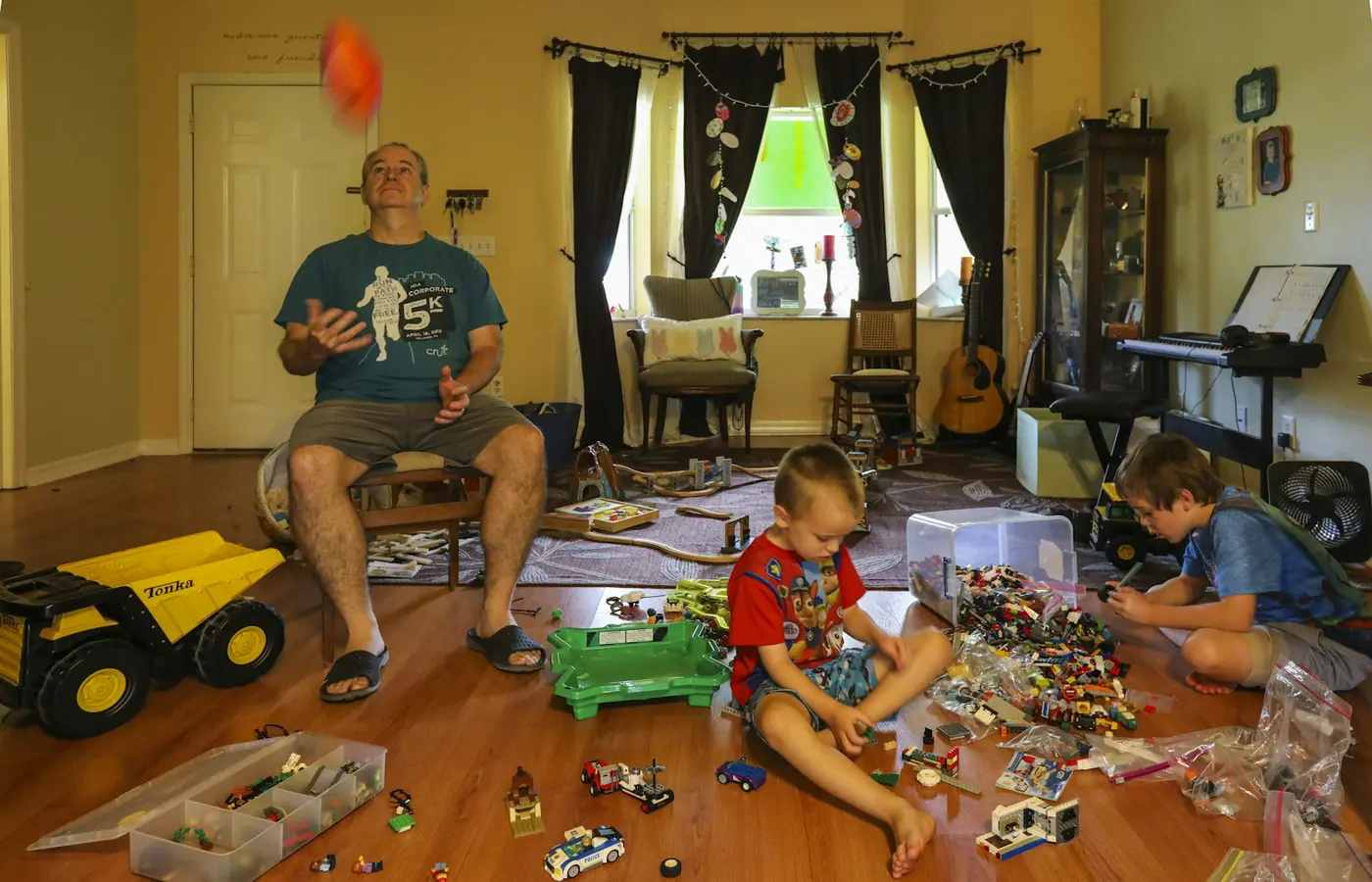
Supervision should match what is happening. Sitting nearby may not be enough if you cannot see pieces being scattered or passed to a younger sibling. In a mixed-age room, playing at a table with an adult may be more manageable than spreading parts across the floor. Sometimes the practical answer is to reserve the toy for a younger child’s nap, use it in a separate room, or put it away for now.
This is not about creating a perfect play area. It is about noticing who can reach the toy and what happens to its components in ordinary family life.
What the label cannot tell you about this child or this moment
No printed age range can tell you whether a child will want the experience the toy offers. It cannot predict whether they will tolerate its sound, understand multi-step directions, keep track of its pieces, accept help, or enjoy repeating the same action.
The label also cannot account fully for:
- prior experience with similar materials;
- differences in vision, hearing, movement, communication, or sensory access;
- energy, hunger, illness, or the time of day;
- whether the child wants pretend play, construction, sorting, movement, or conversation;
- the amount of adult setup and reset the activity requires;
- the noise, floor space, storage, charging, or cleanup your home can manage.
These questions are practical rather than diagnostic. The research package for this article contains no developmental study showing that printed toy age grades predict individual interest, readiness, or independence.
A child who ignores a toy marked for their age has not failed a test. A child who uses it in an unexpected but permitted way is not necessarily using it incorrectly. And an older child can still enjoy a toy marketed to younger children if the toy remains physically suitable and is used according to its instructions.
Moving to an older label is not a developmental achievement. Continuing to stack large blocks, carry figures, post objects, or repeat a familiar game can remain satisfying well beyond the marketing range.
Safe for the age does not mean safe to use alone
A “3+” label does not mean every three-year-old can use the toy independently. Supervision depends on more than chronological age.
Consider the activity and setting:
- Does setup expose pieces that are otherwise contained?
- Is the child likely to throw, mouth, climb on, dismantle, or combine the toy with something else?
- Are other children moving through the same space?
- Does the toy require an adult to assemble, check, charge, or reset anything?
- Can wear or rough handling loosen a component?
- Do the instructions name a condition that requires adult involvement?
The LeelineToys commercial guide uses the term reasonably foreseeable handling for actions beyond idealized use, such as dropping, pulling, or twisting. You do not need to predict every possible action, but it is worth thinking beyond the tidy demonstration shown on the box.
If your child’s usual way of playing makes a particular toy hard to oversee, you can adapt the setting, stay closer, offer only part of the set, or choose something else. Supervision is not a verdict on the child’s ability; it is a response to the toy, the environment, and what is happening that day.
How to use an age label in a real home
A short check is usually more useful than trying to decode the number as a complete assessment.
Before choosing the toy
Confirm the age grade and warnings on the exact product rather than relying only on a retailer’s age filter, gift guide, or product photograph. If documentation is missing or the markings are unclear, you do not have to guess.
Then ask what the toy brings into the home:
- How many pieces need to be stored and found again?
- How much floor or table space does play require?
- Will sounds disrupt shared rooms?
- Does the activity involve a component, power source, accessory, or use condition that the instructions tell an adult to manage?
- Can younger children reach it?
- Is the likely cleanup realistic?
A toy can match the printed age and still be a poor fit for your space, budget, available supervision, or tolerance for scattered parts. Not buying it is a valid decision.
When the toy is opened
Read the setup and use instructions before discarding the packaging. Remove and dispose of packaging in a way that keeps it away from children, and keep any documentation you may need for assembly, maintenance, or warnings.
For a piece-heavy toy, choose a defined surface and decide where unfinished play can remain. A tray, shallow container, or cleared table can reduce the distance pieces travel, though it does not remove the need to account for younger children nearby.
Start with less if the full set is overwhelming. Offering a small selection of pieces can make carrying, connecting, sorting, pretending, and cleanup easier. Add more later if that helps the play grow. This is an adaptation, not a claim that the toy should be used below its labeled minimum age.
During use and over time
Watch what the child actually does rather than what the package assumes. If the toy is being dismantled, dropped, pulled, or combined with other objects, pause and check whether that use remains consistent with the instructions.
Recheck the toy periodically for wear, loosened parts, cracks, or breakage. Stop using it if its condition creates a concern, and follow product-specific documentation rather than attempting an improvised repair that changes how it functions.
If play repeatedly ends in distress, scattered pieces, or more adult work than your household can manage, put the toy away. Trying again later is optional. A toy does not need to be mastered simply because the child has entered the age range on the box.
Common questions about toy age labels
Does a 3+ label mean a toy is safe for every three-year-old to use alone?
No. It identifies the manufacturer’s intended minimum age, but it does not guarantee safe independent play. Follow all specific warnings and instructions, then decide on supervision based on the activity, toy condition, setting, and child’s way of using it.
Can an older child still enjoy a toy labeled for younger children?
Yes. The lower age on a toy is not an expiration date for interest. An older child may enjoy familiar actions, open-ended pretend play, large pieces, or simpler rules. Check that the toy remains suitable for the child’s physical use and follow its instructions, but there is no need to move on for the sake of the number alone.
What if the age recommendation and a specific warning seem different?
Do not use the broad age range to dismiss the specific warning. Read the complete package and instructions for the exact model. If the information remains unclear or appears inconsistent, pause rather than guessing about the relevant condition.
How should I handle small pieces when younger siblings share the space?
Plan for access during play as well as storage afterward. Use a separate area when possible, supervise closely enough to see where pieces go, retrieve stray parts, and store the set out of reach. If that arrangement is not manageable, save the toy for another setting or another time.
A practical selection rule
Use three separate questions:
- Is the child within the stated age grade, and can every specific warning be followed?
- What could happen with this toy in the actual household, including access by younger children and ordinary dropping, pulling, dismantling, or wear?
- Does the play fit the child and the day—including interest, complexity, access, space, noise, cleanup, and available supervision?
The first question sets the boundary. The next two determine whether the toy is a workable choice. If any answer is no or unclear, you can simplify, supervise differently, put the toy away, or not buy it.
Sources and research note
- The Toy Association, “The Toy Association Statement on Toy Safety, Age Grading and Small Parts”
- LeelineToys Blog, “Proven Toy Age Grading Guidelines – A Seller’s Quick Guide”
Research package generated September 10, 2026. The available evidence is limited to a statement from a U.S. toy industry association and a commercial seller guide. It does not include an original product-safety regulator rule, standards text, manufacturer grading documentation, or independent developmental research. Accordingly, this article does not state jurisdiction-specific legal thresholds, testing methods, required warning language, or universal grading procedures. The LeelineToys source is used only for attributed industry terminology and practical question framing, not as regulatory authority.