Outdoor play does not need to stop at the first sign of rain, wind, mud, or a colder morning. But it also does not need to happen in every condition simply because a child wants to go out.
A useful question is: Can this child play outside comfortably and safely in this particular space today, with the clothing, shelter, supervision, and cleanup help we actually have? If the answer is no, you can change the setup, shorten the outing, move to a different spot, or carry the play indoors. That is an adaptation, not a failed outdoor day.
The CDC notes that outdoor play can offer children new experiences and movement opportunities, while also bringing risks of illness and injury that adults need to manage. The practical part is deciding what today calls for rather than following a generic all-season activity list.
Start with today’s conditions, not the calendar
Before you bring out toys or suggest an activity, take a brief look at the conditions that will shape play:
- Is it hot, cold, wet, windy, or changing quickly?
- Is there shade, a covered spot, or a straightforward way to go back inside?
- What is the ground like: dry, muddy, uneven, slippery, icy, or covered in puddles?
- Can you see and reach the child easily in the available space?
- Are loose objects likely to blow away or become harder to manage?
- Does your child seem willing and comfortable in the clothing they have on?
Children do not all experience weather in the same way. Guidance from Tusla emphasizes that children can have individual tolerance levels for heat, cold, and wet conditions, and that outdoor provision should be flexible when weather is adverse. At home, that may mean one child happily stands in drizzle to watch water run along a curb while another wants to go back inside after a few minutes.
There is no need to persuade a reluctant child to love rain, mud, wind, or cold. Offer an accessible version of the idea, notice their response, and stop when the conditions no longer work.
Change the setup before you cancel the play
Often, the child’s play idea can continue with a smaller, simpler setup. A full backyard session is not the only version of outdoor play. A front step, sheltered porch, apartment courtyard, balcony where it is safe and permitted, or short walk can be enough for observing, carrying, posting, collecting, or pretending.
Play Scotland’s outdoor-play guidance highlights the value of access to shelter and planning for weather that prevents use of a usual outdoor space. For family life, that can translate into choosing the most manageable available location rather than trying to use the whole yard or playground.
Keep the child’s idea, reduce the friction
If a child wants to play outside, begin with what they are trying to do.
| What the child wants to do | A weather-adjusted version |
|---|---|
| Run or ride | Use a drier, clearer surface; shorten the route; skip it if footing is unreliable. |
| Carry, load, and transport | Bring a bucket, sturdy container, or a few large natural objects to a sheltered area. |
| Watch water | Observe rain from a doorway, follow runoff from under an umbrella, or watch puddles from a stable edge. |
| Make things | Build a small den or arrangement under cover, using only materials that will not blow away. |
| Explore nature | Look for moving branches, wet leaves, clouds, worms, or changes in the ground without needing a long outing. |
Bring fewer things than you would on a mild, dry day. One container and a few durable materials are usually easier to supervise, retrieve, dry, and put away than a whole outdoor toy collection.
A covered spot can also support a pause rather than an immediate ending. Children may use it to warm up, take off a layer, watch the weather, or decide whether they want to continue. Play Scotland recommends providing places where children can get respite from the elements; at home, a doorway, canopy, carport, or bench under cover may serve that purpose if it is safe to use.
Match clothing, materials, and play to the conditions
Weather changes more than comfort. It changes which objects are useful, which surfaces are workable, and what you need to watch closely.
Rain and wet ground
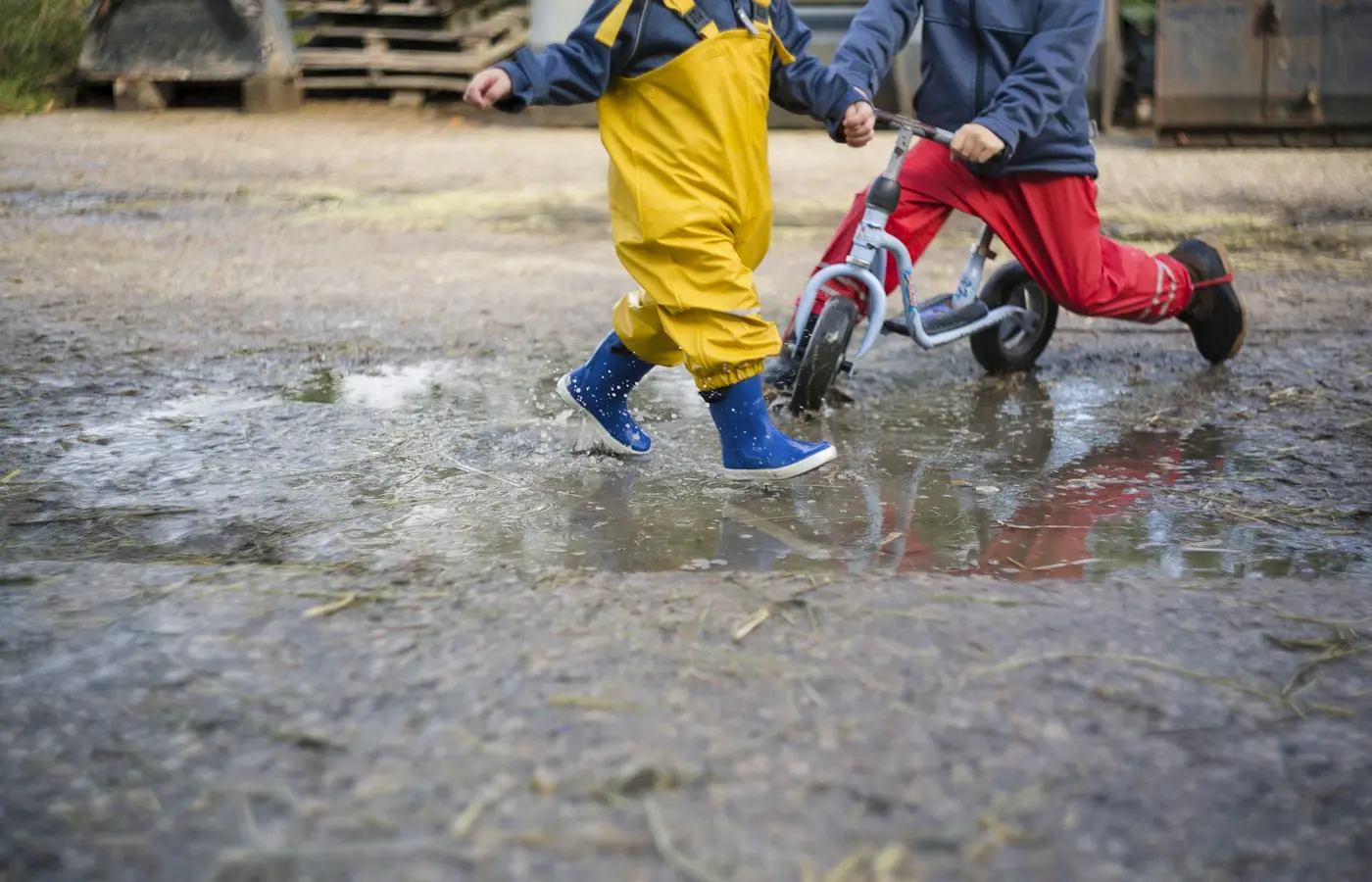
Rain can support simple observation and water play, but wet surfaces may also change footing and make steps, paths, grass, and play equipment harder to use safely. Rather than treating all wet play as either harmless or off-limits, adjust the activity to the ground you have.
For example:
- Choose slow activities such as pouring, watching, scooping, carrying, or looking for water pathways when the ground is slick.
- Skip climbing, fast riding, running games, or carrying bulky objects if surfaces are slippery or muddy.
- Use a more sheltered location if steady rain makes it difficult to see, hear, or supervise comfortably.
- Have dry clothing available if the child is likely to become wet, especially if there is no warm place to change soon afterward.
Wet clothing needs a plan after play as well as during it. Play Scotland specifically raises drying, storing, and transporting wet clothes as practical planning questions. A designated basket, waterproof bag, or hook near the entry can make a short wet outing feel more manageable.
Cold conditions
In cooler weather, layers can be easier to adjust than one very bulky outfit. What matters is whether your child can still move, use their hands, and communicate discomfort. A child who cannot bend comfortably, manage a zipper, or hold a familiar object may need a simpler play plan.
Choose activities with a clear route back inside: a brief walk, collecting a few leaves, moving small containers, looking for tracks, or standing under shelter to listen to wind or rain. If hands are cold, clothing is soaked, or your child wants to stop, it is reasonable to end the outing rather than trying to extend it.
The Natural Start Early Childhood Weather Guide describes increasingly cautious responses as conditions become more severe, including using appropriate clothing, choosing locations and activities carefully, limiting time, using shelter, monitoring children, and moving to more temperate environments when needed. Its guidance is written for early childhood programs, but the central idea is useful at home: the available support should shape the plan.
Heat and strong sun
Hot conditions call for a slower, closer-to-home version of outdoor play. Seek shade where possible, build in breaks, and stay attentive to whether your child seems comfortable. If the only available space is exposed and unpleasant, an indoor or sheltered alternative may be the better choice.
The CDC advises outdoor activity when weather is not too hot or too cold. It does not provide a universal family threshold for every location or child, so use current local weather alerts, public-health guidance, and any site-specific rules alongside your judgment.
Wind
Wind can be interesting to watch: branches moving, leaves traveling, fabric fluttering, or water rippling. It can also turn loose materials into a supervision problem.
On windy days, leave behind lightweight balls, paper crafts, loose packaging, small fabric pieces, and anything that can blow toward roads, water, stairs, or other hazards. Choose a sheltered space or materials that stay put. Watching the wind may be enough; you do not need to create a complicated activity around it.
The Play Wales toolkit includes weather and natural elements as possible parts of supervised outdoor play. The important word is supervised: use what is already present, but change or stop the plan when the environment is no longer manageable.
Plan supervision around the new hazard
Weather may change what needs your attention, even if the child is doing a familiar activity. A child who manages a scooter on dry pavement may need closer support near wet leaves. A toddler who usually carries a bucket steadily may slip when the bucket is full of water. A windy day can move a light object out of reach in seconds.
Active supervision is more than being nearby. The Early Years Inspectorate guidance describes it as using knowledge of each child’s abilities to anticipate what may happen and getting involved when needed.
At home, that can mean:
- standing where you can see the child and the changing surface clearly;
- choosing a smaller play area when visibility is reduced by rain, low light, or a crowded park;
- checking whether a puddle, slope, step, or muddy patch has changed the route your child uses;
- staying close enough to help with layers, wet gloves, stuck boots, or a sudden wish to stop; and
- removing materials that have become hard to manage in the conditions.
Age matters, but it is not the whole supervision plan. Consider your child’s mobility, confidence, impulse control, communication, interest in water or climbing, and how much adult help they need with clothing and transitions.
Make the return indoors part of the outdoor plan
Cleanup is not a minor detail. If getting back inside always means a long scramble with wet shoes, dripping coats, scattered sticks, and a frustrated adult, outdoor play may become harder to offer. A modest reset routine can protect the play without turning your entryway into a project.
Try setting up a simple stopping point before you go out:
- Pick one place for shoes, boots, or wheels.
- Keep a towel, mat, or old cloth near the door for wet feet or muddy items.
- Have a basket or bag ready for outerwear that needs drying.
- Decide which objects stay outside, even if they are part of the child’s game.
- Keep a dry change of clothing easy to reach when wet play is likely.
These are household strategies, not formal safety requirements. The goal is to make the transition less demanding for everyone.
You can also continue the child’s play idea indoors without bringing in every messy material. A child who was arranging stones can draw the arrangement, build a version with blocks, sort clean found objects later, or make a pretend garden. A child who was watching rain can look out the window, make a route for toy vehicles, or talk about where the water might go next.
Know when to move, pause, or choose an indoor version
Outdoor play is worth adapting when you can keep the conditions manageable. It is time to pause or relocate when the weather, surface, available shelter, supervision needs, or child’s comfort exceeds what you can reasonably support.
That might look like:
- a surface that is too slippery, unstable, or difficult to navigate safely;
- wind that makes loose materials or visibility difficult to manage;
- conditions that leave the child distressed, soaked, unable to move comfortably, or eager to stop;
- no appropriate shelter or straightforward route indoors; or
- a local weather alert, public-health notice, or site rule that calls for greater caution.
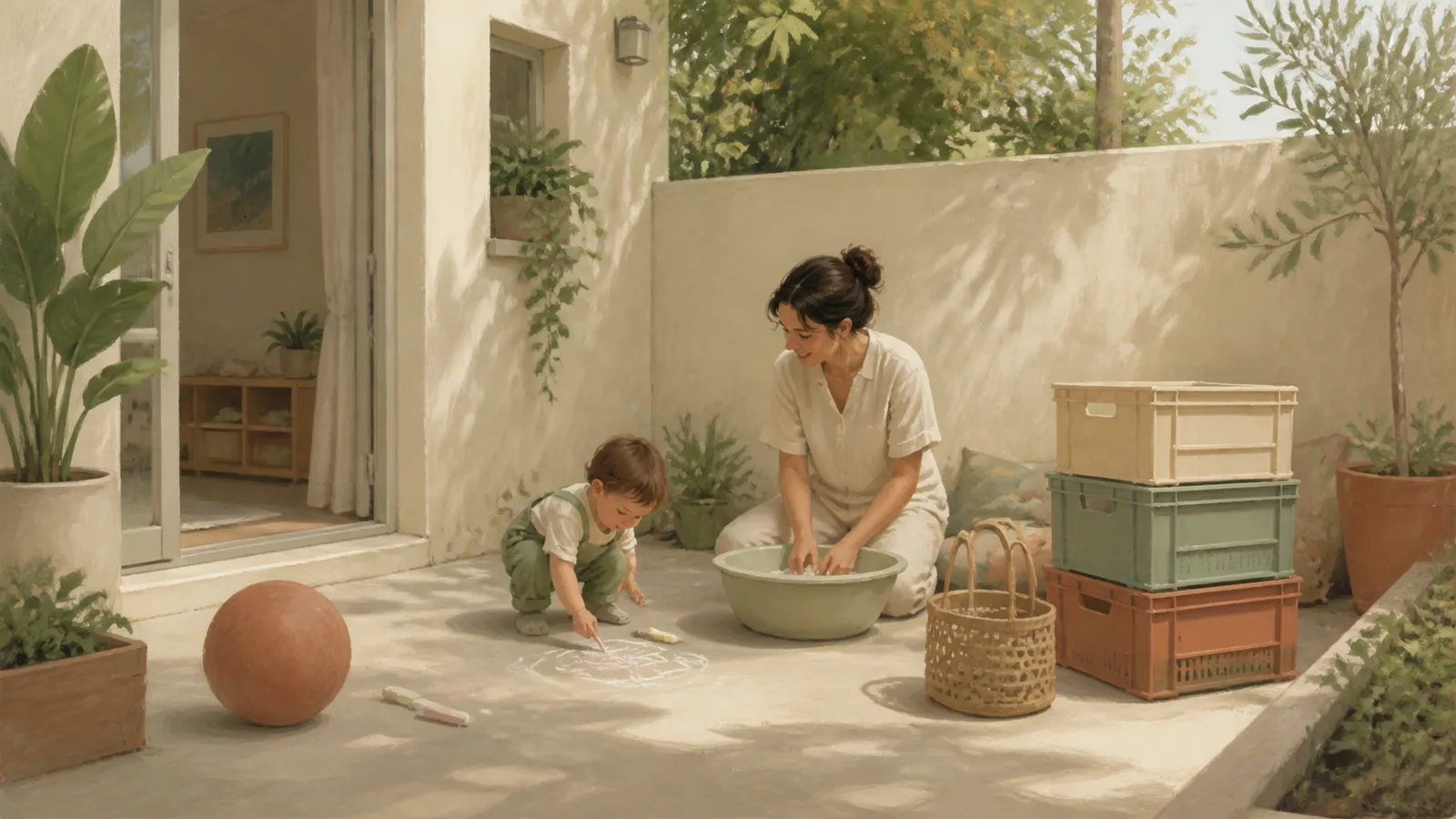
You do not need to replace outdoor time with an elaborate indoor activity. Keep the same play theme and lower the environmental demand. Move from puddle jumping to watching water from a window; from carrying sticks to loading cushions into a wagon; from wind play to making a blanket fort; from a muddy garden to washing a few sturdy, cleanable tools in a basin.
The selection rule is simple: keep outdoor play going when the child, place, and conditions still work together; change the plan when they do not. A shorter, calmer outing with an easy return indoors is often more sustainable than trying to make every weather day into a big outdoor adventure.
Sources and research note
This article draws on guidance largely written for early childhood education and care settings. Those sources can offer useful planning ideas for families, but they do not replace local weather alerts, public-health advice, medical guidance, or rules for a particular park, school, housing complex, or play area.
- CDC: Outdoor Play and Safety for Children in Early Care and Education
- Tusla: Keeping Children Safe and Comfortable Indoors and Outdoors in All Weathers
- Play Scotland: Out to Play: Practical Guidance for Creating Outdoor Play Experiences
- Play Wales: Playing Outdoors in Early Years Settings Toolkit
- Early Years Inspectorate: When the Roof Is the Sky
- Natural Start Alliance: Early Childhood Weather Guide