
If your child is regularly assigning voices to figures, turning the sofa into a ship, arranging a shop, or inventing rules for a made-up world, the most useful imaginative toys are often the ones that give them somewhere to take that idea.
For ages five to seven, a good starting point is usually a small set of materials with room for the child to decide what is happening: one story prompt, one or two flexible props, and a place to keep them. Before choosing anything, check the exact product’s manufacturer age grade, warnings, assembly instructions, and the possibility that younger children may reach the materials. A child’s interest in a toy does not override its safety information.
The goal is not to create a perfect pretend-play corner or to make play look educational. It is to choose materials that fit the stories your child already likes to tell and the realities of your home.
Start with the pretend play already happening
Children of the same age can use pretend materials very differently. One five-year-old may spend a long time arranging a tiny animal habitat before beginning a story. Another may want to put on a costume and announce everyone’s role. A seven-year-old might use a familiar character or setting as the opening scene, then change the rules completely.
These are selection clues, not expectations. You do not need to steer a child toward a particular kind of story, social style, or level of independence.
For a few days, notice what your child tends to do first:
- Acts out familiar routines: serving food, caring for toys, running a clinic, operating a shop, travelling, or hosting visitors.
- Builds a setting before playing: making roads, rooms, forts, dens, stages, habitats, or villages.
- Creates fantasy worlds: inventing creatures, magic rules, missions, transformations, or unusual places.
- Collects and sorts characters: grouping figures, deciding who belongs together, or making teams.
- Directs other players: assigning roles, explaining what happened before the game began, and setting rules.
- Tells private stories: quietly moving objects, narrating under their breath, or returning to the same setup alone.
The American Academy of Pediatrics’ family site, HealthyChildren.org, suggests letting children create the world, roles, and rules in pretend play. That is useful guidance for choosing materials, too: look for a setup that gives your child enough to begin without requiring them to follow a predetermined plot.
A child who loves directing friends may enjoy materials that make several roles possible. A child who prefers working alone may be happiest with a contained setting they can leave assembled and revisit. Neither preference needs fixing.
Open-ended props and defined playsets serve different purposes
When shopping for imaginative toys for ages 5–7, it helps to separate two broad kinds of materials.
Open-ended props leave the premise up to the child
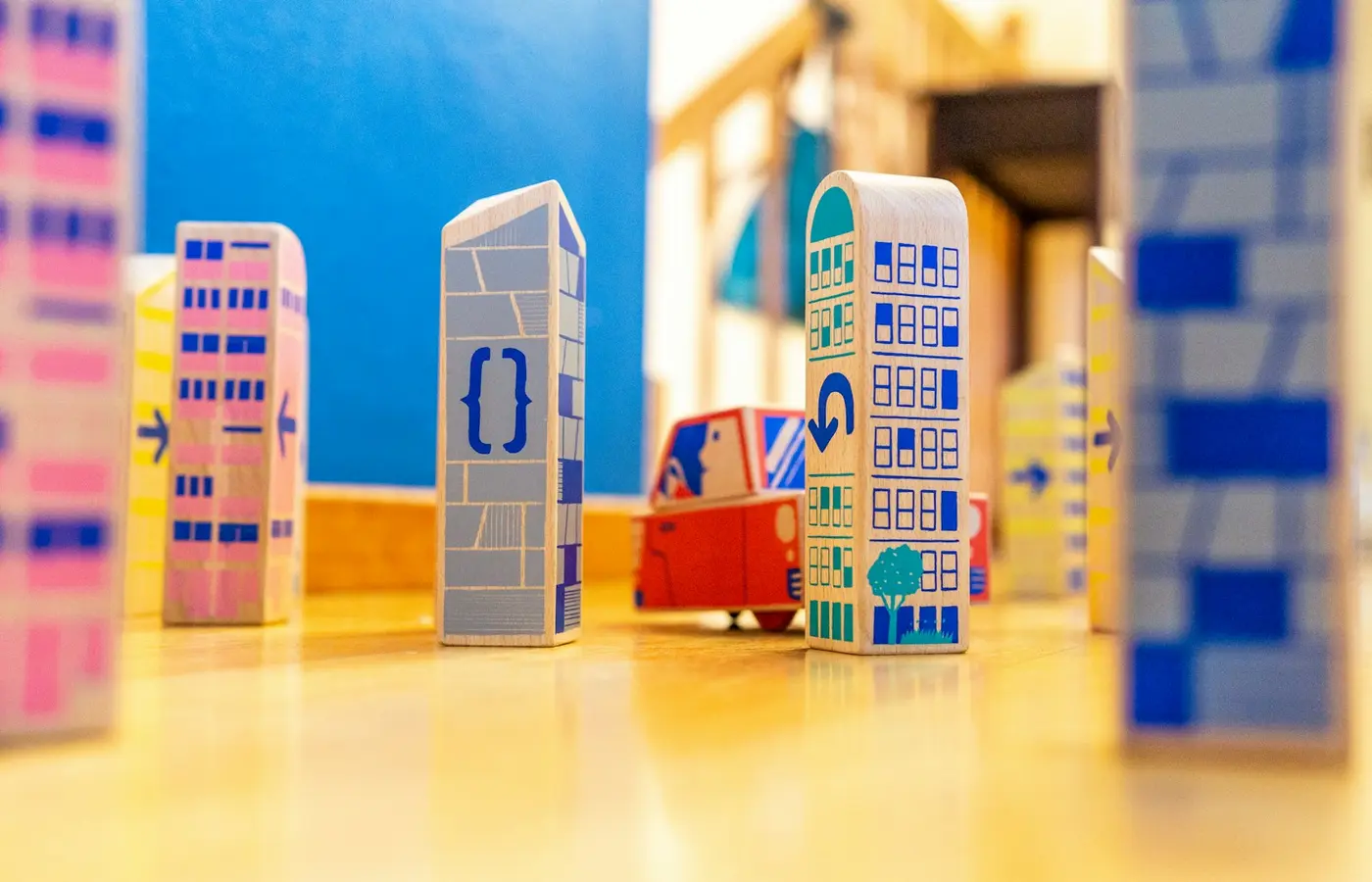
Open-ended materials can be assigned different jobs from one play session to the next. Depending on their documented age grade and safety information, these may include figures, building materials, fabric play pieces, containers, scenery, or simple accessories that can become part of many settings.
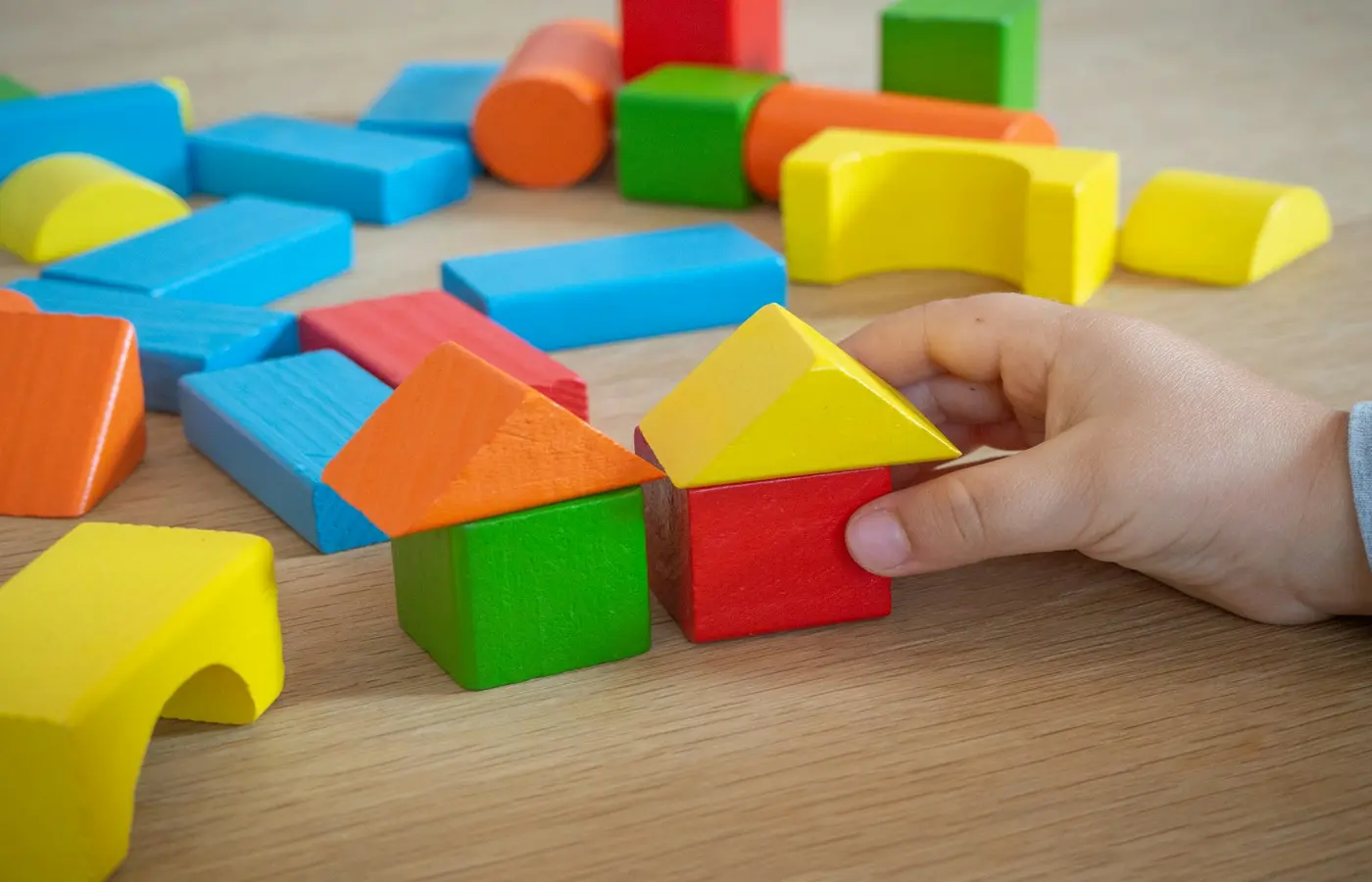
Their practical appeal is flexibility. A figure can be a customer today and an explorer tomorrow. A construction can become a house, a zoo enclosure, a spaceship, or a place that has no name yet. The child is not required to use a single story or reach a finished result.
HealthyChildren.org specifically encourages offering objects that can be used in unexpected ways within a child-led imaginary scenario. That does not mean every household item is suitable for play. If you introduce non-toy materials, use your own judgment, account for the children who may access them, and avoid assuming that an object is safe simply because it is already in the home.
Defined-role toys can provide a useful starting point
A themed playset, costume, vehicle, doll, or character-based toy can give a child a ready-made prompt: a place, a job, a familiar world, or a set of characters. This can be especially appealing when a child enjoys returning to a known story or wants help getting started.
The prompt does not have to become a script. A child may use a shop as a castle, turn a superhero into a baker, or send a familiar character on a completely unrelated mission. The material has done its job if it invites play without insisting on one “right” use.
The Child Mind Institute’s discussion of pretend play describes costumes and life-sized props as materials that can support children in taking on roles and creating fantasy scenarios. It is a practical description of possibilities, not proof that any particular prop will produce a particular outcome for every child.
A simple way to decide
Choose a more open-ended setup when your child often:
- changes the premise partway through play;
- combines unrelated toys and materials;
- builds the setting as much as they use it;
- makes up their own characters; or
- loses interest when a toy has only one obvious action.
Choose a defined prompt when your child often:
- asks to replay familiar scenes;
- enjoys recognizable jobs, characters, or places;
- wants an easy way to invite another player in; or
- seems interested in pretend play but does not know how to begin.
Many homes do well with both: one clear prompt and a small number of flexible additions. You do not need a complete themed collection to make this work.
Check age grades, warnings, condition, and access first
Pretend-play materials can include wearable pieces, accessories, furniture-like structures, small figures, construction parts, and items that need assembly. Their safety considerations vary, so safety screening needs to be specific to the item rather than the category name on a store shelf.
Before bringing a material into regular use, review the exact product’s current documentation for your market:
- Manufacturer age grade and warnings. Treat these as part of the product’s use instructions, not as a suggestion to override because an older child is interested.
- Assembly and use instructions. Check whether the material requires adult setup, periodic checks, specific placement, or limits on how it should be used.
- Parts and attachments. Look for small or detachable pieces, magnets, damaged components, loose fasteners, cords, straps, or wearable elements that may need closer supervision or storage.
- Who else can access it. A material that is manageable for one child may not be suitable if a younger sibling, visiting child, or pet can reach it.
- Current condition. Remove damaged items from play until you can follow the manufacturer’s repair or replacement guidance.
Age appropriateness affects how children use toys, but it is not a shortcut for making safety decisions. A study published in Frontiers in Psychology, Children’s Utilization of Toys is Moderated by Age-Appropriateness, Toy Category, and Child Age, found that toy use varied by child age, age-appropriateness, and toy category. The study can support the common-sense idea that fit matters; it does not establish that a child can safely use an item outside its instructions or that a category is suitable for every child.
If you are considering a particular product, check its current official documentation and applicable recall information before purchase or use. Retailer age filters and labels such as “educational,” “STEM,” or “open-ended” are not substitutes for the product’s actual warnings and instructions.
Match the setup to solo stories, shared play, and adult availability
A child does not need an adult play partner for pretend play to count. Still, the shape of the setup can make a difference to how manageable it feels in your home.
For children who like solo world-building
A contained setup can be easier to return to: a defined play surface, a shallow storage area, or a shelf where a scene can remain in progress. Consider materials that allow the child to arrange, narrate, dismantle, and rebuild without needing someone to hold a role for them.
The first action might be simple: place a few figures in a setting, build one structure, or choose what the place is called. Later, the child may add rules, maps, visitors, weather, missions, or new characters. You do not need to supply those extensions in advance.
For children who prefer shared stories
Look for a setup that can accommodate more than one role without requiring duplicates of everything. A few role markers or characters may be enough if the child can decide who is doing what.
Shared play can be lively and occasionally difficult. Children may disagree about who gets a role, where a story goes, or whether a structure can be changed. That is not a sign that the materials were a poor choice. It may simply mean the game needs fewer pieces, clearer turn-taking, more space between players, or a pause.
When an adult is invited in
You do not need to perform a polished character or direct the story. HealthyChildren.org recommends immersing yourself in the child’s scenario while letting the child lead. A low-effort way to join is to ask, “Who am I in this story?” or “What does this place need next?”
You can also offer one prop, follow the child’s rule, or narrate only what they ask you to narrate. If you are tired, busy, or not interested in acting, it is fine to say you can join for a short scene, help with setup, or listen to the story afterward.
Plan for the home, not just the playroom photo
The most appealing imaginative-play setup can become frustrating if it spreads into a walkway, makes a constant racket, or needs adult reconstruction after every session. Household fit is not a research-proven feature of a toy; it is a planning question for your family.
Consider these trade-offs before adding more materials.
Floor space and boundaries
Some play stays contained on a table, tray, shelf, or mat. Other play needs a clear floor area for building, costumes, movement, or large settings. Decide where the play can expand before it starts.
If a child regularly creates a large scene, you might allow a temporary “in progress” zone for a set period rather than expecting immediate cleanup. If that is not workable, choose materials that can be packed away without undoing the child’s whole idea.
Pieces and reset work
More accessories can offer more options, but they also increase sorting, missing-part frustration, and adult cleanup. Start with fewer compatible materials than you think you need. Observe whether your child repeatedly carries, combines, narrates, or asks for something before adding another category.
A bin, tray, or basket can provide a clear boundary. A photo of the usual setup or a simple label may help a child know where items belong, especially when several types of pieces are stored together. These are household systems, not requirements for independent cleanup.
Noise and sharing
Costumes, role-play games, and active scenarios can be noisy. Small-world stories may be quieter but still take up a surface for days. If siblings share the space, decide ahead of time whether a setup is open for everyone, belongs to one child while it is in progress, or needs adult help to share.
Permission to simplify
It is okay to rotate materials, remove a complicated accessory, limit play to one room, or put away a setup that creates more adult work than it returns. Imaginative play does not need to look elaborate to be meaningful to the child using it.
A starter-set rule that keeps choices manageable
Instead of buying a large collection, begin with three decisions:
- Choose one safe, age-appropriate story prompt. It might suggest a place, character, role, or situation your child already returns to.
- Add one or two materials that can change roles. Choose items with current manufacturer information that fit your child’s interests and your supervision, storage, and access needs.
- Give the set a defined home. A clear place to start and reset play is often more useful than more accessories.
Then watch what happens. Does your child repeatedly rebuild the setting? Carry certain characters from room to room? Ask for another role? Invite someone else in? Or use only one part of the set and ignore the rest?
Let those observations guide the next addition, if there needs to be one. The best selection rule is not “more open-ended” or “more themed.” It is: choose materials that are appropriate for the exact child and household, leave room for the child’s ideas, and remain manageable enough to use again.
Questions caregivers often ask
Are open-ended imaginative toys always better than themed playsets?
No. Open-ended materials can leave more room to change the story, while themed toys can give a child a welcome starting point. A themed playset may become very flexible in a child’s hands, and an open-ended set may not interest a child who wants a familiar character or role. Choose based on how your child actually plays, not on a label.
What should I check on an imaginative toy’s age label?
Check the exact manufacturer age grade, warnings, assembly and use instructions, included parts, and any guidance about supervision or storage. Also consider younger children who may reach the materials. Do not treat a retailer’s age filter as complete safety information.
How can I support pretend play without directing the story?
Let your child explain the setting, choose your role if they want you involved, and accept their rules where you can. Offer a question or one prop when invited, rather than deciding what should happen next. You can also simply listen to the story after the child has played.
How many imaginative play materials does a child ages 5–7 need?
There is no required number. A small, compatible set can be enough if the child returns to it. Add materials only when you have a clear reason: the child needs another role, wants to expand a recurring story, or can use a different kind of prompt within your household’s space and cleanup limits.
Sources and research note
- HealthyChildren.org: Pretend Play: Ways Children Can Exercise Their Imagination — practical pediatric guidance on child-led pretend play and flexible use of objects.
- Child Mind Institute: The Power of Pretend Play for Children — explanatory guidance on pretend play, costumes, props, and role-taking.
- Children’s Utilization of Toys is Moderated by Age-Appropriateness, Toy Category, and Child Age — peer-reviewed research on how toy use varied by age-appropriateness, toy category, and child age.
This guide does not assess individual products. For a specific toy or material, use current official manufacturer documentation, warnings, instructions, and recall information for the exact product and market before making a safety decision.