A child who pulls apart a tower as soon as it is built is not necessarily rejecting play—or doing it incorrectly. Separating, emptying, knocking down, sorting, and clearing space can be the play.
A useful first response is to pause before rebuilding it for them. Watch what they repeat. If the materials are age-appropriate, intact, and safe for the child to use, you can let the dismantling continue, offer one simple way to extend it, or decide that the activity has run its course.
The main safety distinction matters: pieces that are designed to connect and come apart are different from parts that have broken off. Stop using a toy if it starts shedding unexpected pieces, develops sharp edges, splinters, cracks, exposed filling, or loose attachments.
See dismantling as part of the play, not a build that went wrong
It can be tempting to see a knocked-down block tower or separated track as an unfinished project. Adults often know what the pieces are “supposed” to become, especially when a toy came with a picture, model, or instructions.
But a child may be more interested in the action than the finished structure. They may want to:
- pull two pieces apart and feel the resistance change
- empty every piece from a container
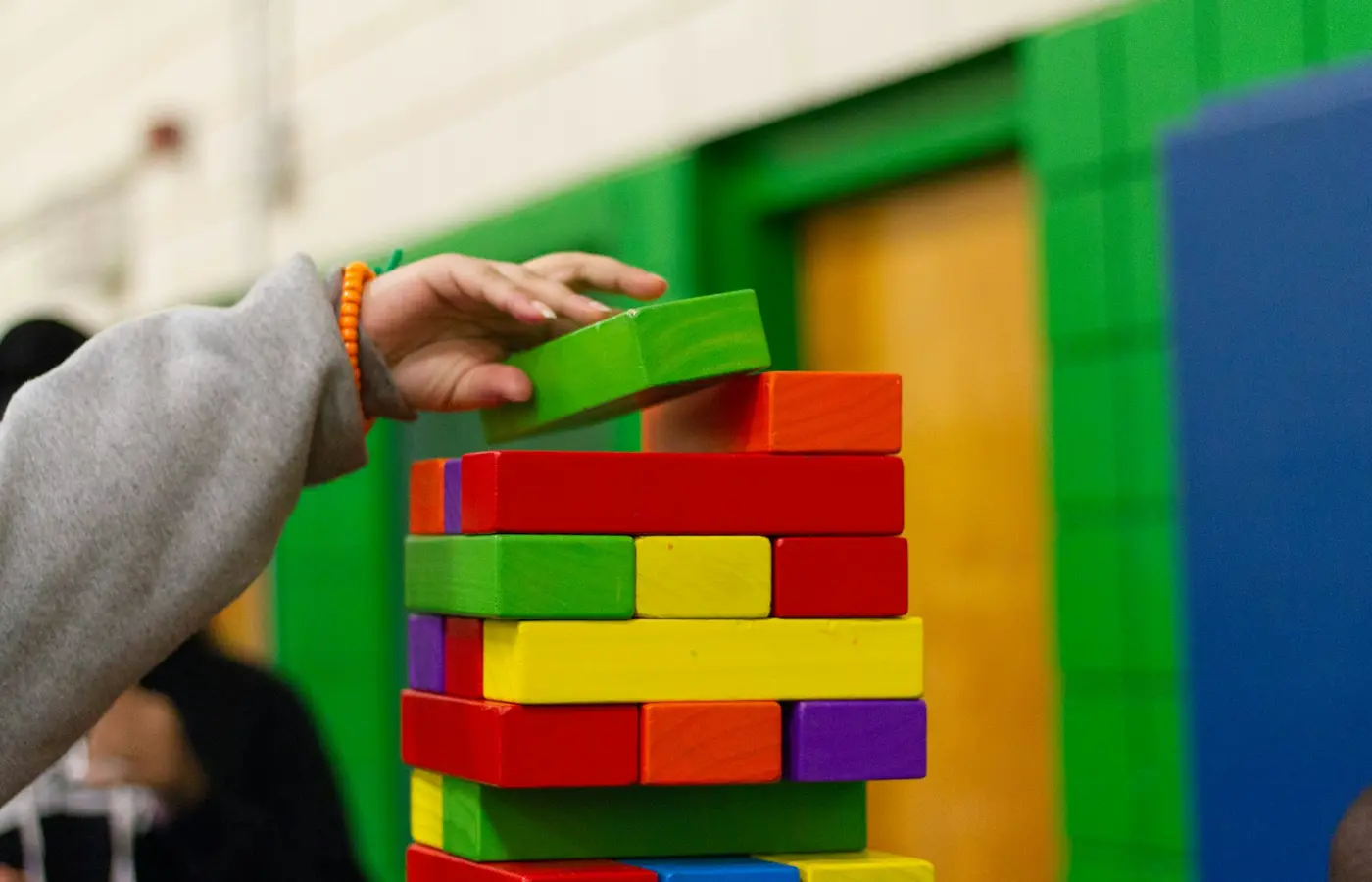
- knock down a tall stack and hear the sound it makes
- place similar pieces in groups
- carry pieces from one place to another
- clear a surface before beginning again
- connect one or two parts repeatedly rather than complete a model
Open-ended play does not require a particular product at the end. Waltham Forest Early Years Guidance describes it as time and space for children to follow their interests without adult instructions or an expected end result.
That does not mean adults have no role. It means the role can begin with observation rather than correction. Before saying, “Let’s build it again,” try giving yourself a moment to notice what the child is actually doing.
A build that comes apart may be the beginning of another idea. Or it may simply be satisfying to take apart. Either can be enough.
Start by noticing the action the child repeats
You do not need to turn play into an assessment. A few quiet observations can help you decide whether to offer something new, stay nearby, or step back.
Ask yourself what seems to hold the child’s attention:
Are they separating connected pieces?
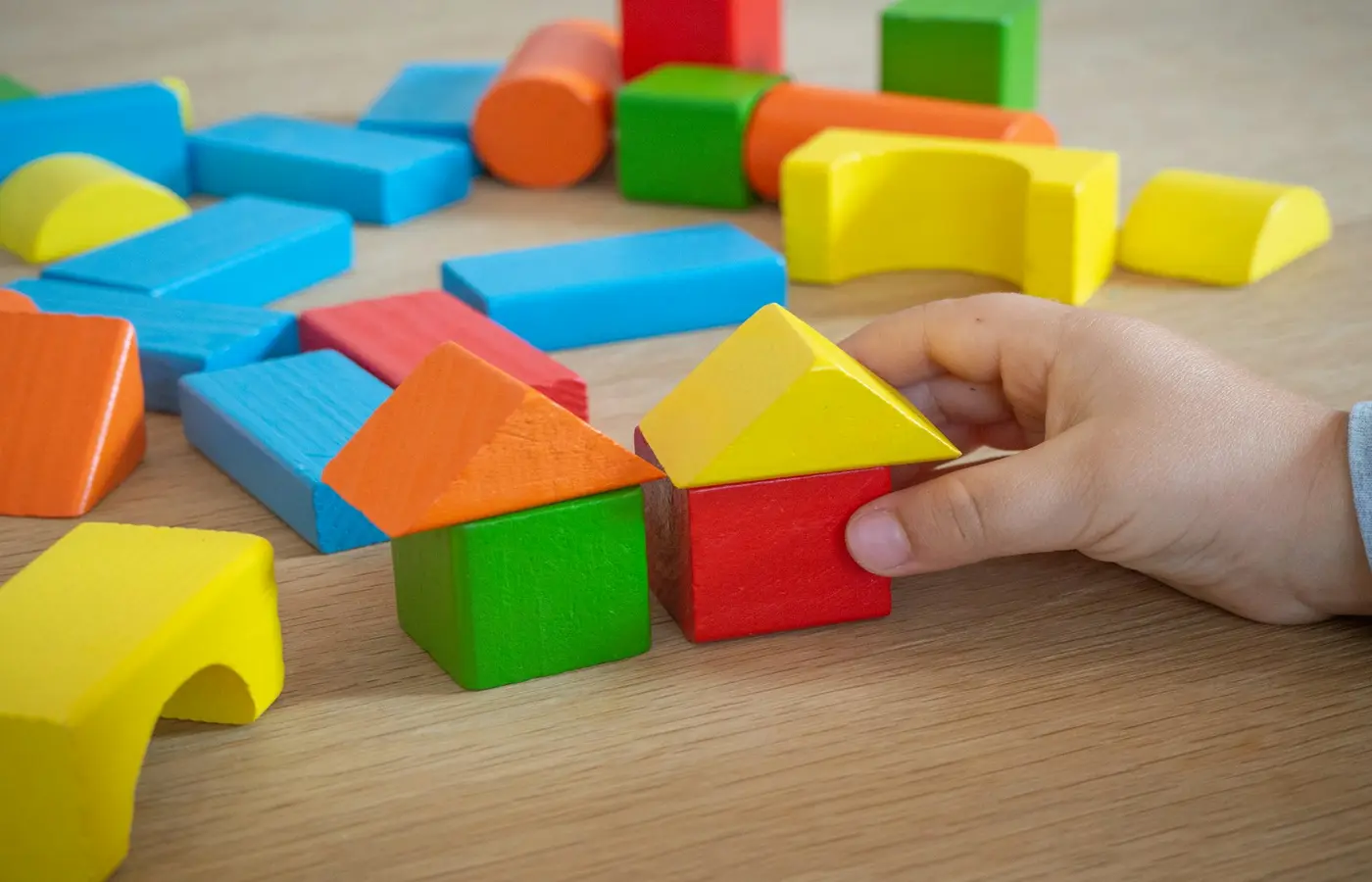
A child who repeatedly pulls connectors apart may be interested in the join itself: what comes loose easily, what needs a twist, or what makes a click. If the toy is designed for repeated assembly and disassembly, leaving a small number of pieces available may be more inviting than presenting a large set all at once.
Are they emptying and collecting?
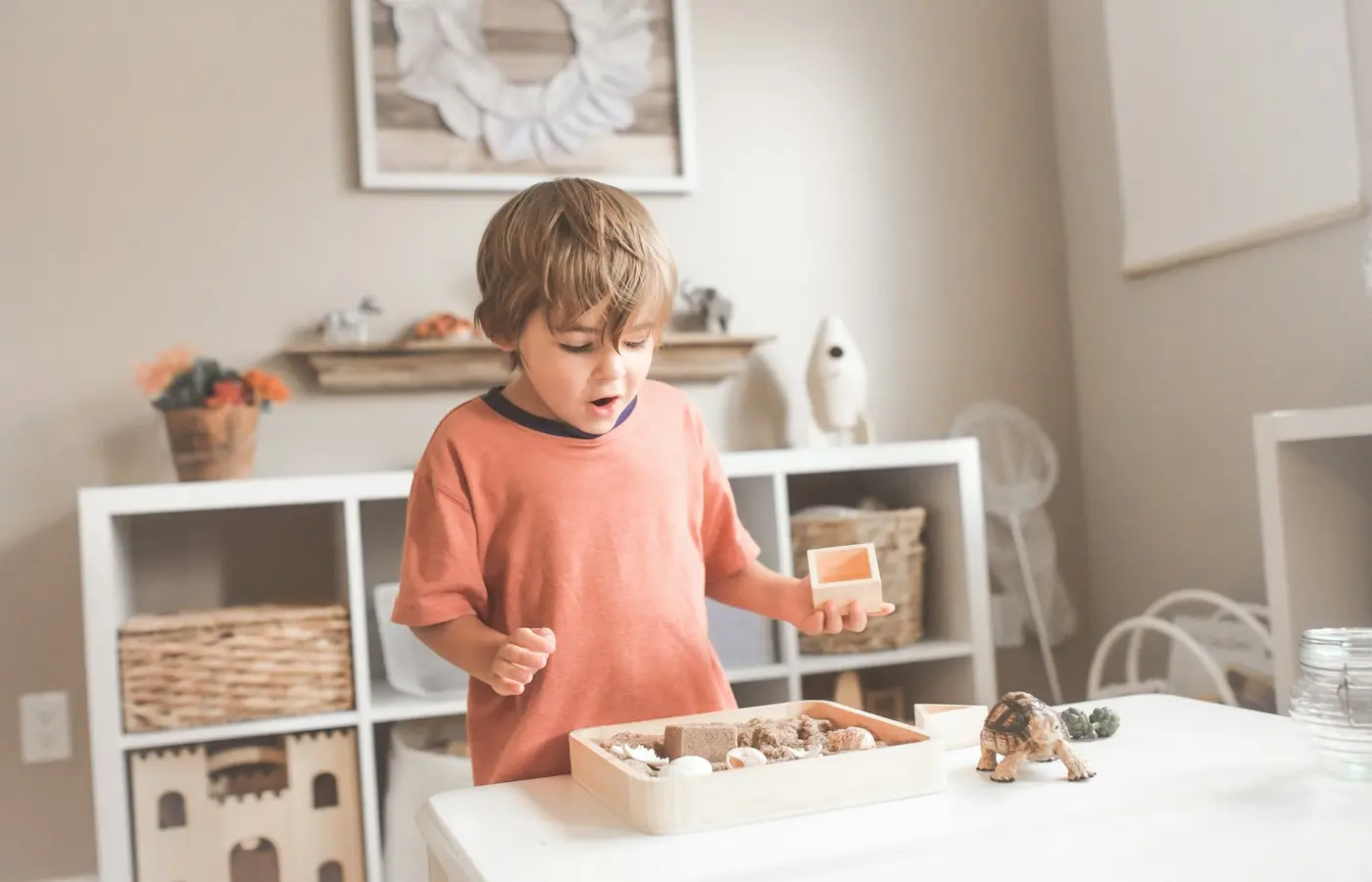
Some children are less interested in making a structure than in filling a bowl, tipping out a basket, or gathering pieces into a pile. A shallow tray, sturdy container, or basket can give that action a clear place to happen without requiring a rebuild.
Are they knocking down a stack or arrangement?
The child may want the movement, sound, or visible change of a structure falling. You can make room for that play while keeping it manageable: use a defined floor area, choose stable materials intended for the child’s age, and avoid setting up a tall structure where it could hit someone or damage something.
Are they sorting or lining up pieces?
They may be making groups by shape, color, texture, size, or their own changing rule. You do not need to identify the rule or turn it into a lesson. Simply making space for the arrangement can be enough.
Are they clearing everything away?
Sometimes dismantling is a way of ending an activity. A child may be finished, frustrated, ready to switch ideas, or making room for a new game. It is fine to help put materials away rather than trying to restart the build.
Loose-parts guidance from Penn State’s TIPS resource describes materials that can be moved, redesigned, taken apart, and put back together in many ways. The child, rather than a fixed set of directions, determines their use.
Offer a rebuilding invitation without requiring a rebuild
If a child seems open to continuing, you can make rebuilding easier without making it the goal. Think of this as adding a possibility, not steering the child back to the “right” use of the toy.
Try one small invitation at a time.
Put out a place to gather pieces
Set a tray, low-sided box, basket, or piece of cardboard nearby. The child can collect parts there, make a pile, arrange them, or ignore it completely.
This can be particularly helpful when pieces are spreading through a room. The container is not a demand to clean up; it is part of the play setup.
Add a simple surface for arranging
A broad, stable base can invite a new kind of construction without a spoken prompt. A piece of cardboard, a mat, or a cleared section of floor may be enough.
You might place two pieces next to each other and wait. Avoid completing a structure on the child’s behalf unless they ask for help. If they take your two pieces apart, that is useful information too.
Pair two compatible materials
You can offer a limited combination, such as containers alongside large construction pieces or figures near a simple block arrangement. Keep the choice small. Too many materials at once can make cleanup harder and may distract from the action the child was already enjoying.
The broader loose-parts framework supports offering materials that can be used alone or combined in different ways. It does not require a child to use them creatively, independently, or for a certain length of time.
Use a neutral question only when it fits
Questions can interrupt concentrated play, especially if the child is already deeply engaged. If they look toward you, offer you a piece, or seem to want company, a brief comment may be welcome:
- “You pulled those apart.”
- “You have a pile of the long pieces here.”
- “Would you like the tray or the floor space?”
- “Where could this one go?”
- “Do you want help holding this part?”
These comments describe or offer a choice. They do not imply that the child should rebuild, explain their thinking, or produce something recognizable.
Vary the materials, not the pressure
When a child keeps taking builds apart, it can help to vary one feature of the play materials rather than asking them to change their interest.
For example, you might offer:
- larger pieces intended to connect and separate repeatedly
- a small set of nesting or fill-and-empty containers
- broad, stable stacking items
- a basket for carrying and collecting
- a few compatible pieces instead of a full bin
- a flat surface for spreading out and sorting
Change one thing at a time where possible. If you swap every material, introduce a new game, and ask several questions, it becomes difficult to tell what the child wants to continue.
The review of research on preschool children’s loose-parts play supports the general value of providing varied play opportunities and materials. It also notes important limits in the research. It does not establish that taking apart a particular build causes a specific developmental outcome.
That boundary is worth keeping. You do not need to justify dismantling play as a hidden lesson in order to let it be worthwhile. A child can have a real interest in an action without that action needing to prove a measurable benefit.
Always follow the manufacturer’s age grade, instructions, and warnings for the materials you offer. A broad label such as “building toy” or “loose parts” does not tell you whether a particular item is suitable for a child who mouths objects, throws pieces, or is playing near a younger sibling.
Keep loose pieces manageable and separate play from breakage
Loose pieces can support flexible play, but they also create practical work. A setup that is enjoyable for one child may be stressful in a busy room, around pets, or when smaller children are nearby.
A few boundaries can protect the play without making it feel punitive.
Limit what is available at one time
You do not need to empty every construction set into one bin. Try a small selection of pieces, then rotate materials later. Fewer pieces can make it easier to see what the child is doing, find missing parts, and reset the space.
Give the pieces a defined area
A tray, rug, low table, or section of floor can mark where parts belong during play. This is especially useful for rolling pieces and for homes where someone needs to walk through the room.
Build cleanup into the setup
Keep the storage basket or container nearby from the beginning. If the child is ready to move on, you can offer a simple next step: “The pieces can go in the basket before we bring out the next thing.”
Cleanup may still need adult help. That is normal. The goal is not to make a child independently responsible for every piece; it is to make the transition more predictable.
Treat damaged toys differently
A toy made to come apart offers a repeatable, expected action. A damaged toy can introduce hazards that were not part of the original design.
The related Life With Toys guide, What Can You Offer a Child Who Keeps Taking Toys Apart?, recommends pausing when something cracks, bends, splinters, or detaches unexpectedly. Check both the item and the loose part before deciding what to do next.
Remove the toy from play while you check its instructions or decide whether it should be discarded. Do not improvise a repair unless the manufacturer provides repair or replacement guidance.
Care Learning’s loose-parts guidance similarly recommends checking materials for sharp edges, splinters, cracks, rust, dirt, and breakage. Supervision needs depend on the material, the child, and the setting.
Choose when to join, when to pause, and when to let play end
You do not have to be completely hands-off to respect child-led play. You can be available without taking over.
A simple decision rule can help:
- Join in when the child asks for help, brings you into the game, or seems to want shared attention.
- Step back when the child is absorbed in repeating an action safely.
- Add one idea when play seems to stall and the child appears receptive—not because the activity needs to become more productive.
- Pause the play when pieces become unsafe, another person needs the space, the noise is too disruptive, or materials are being used in a way that creates a clear risk.
- Let it end when the child moves away, clears the area, or shows they are finished.
Adults can prepare the environment, observe, and offer help while still allowing trial and error. That balance appears in both the Waltham Forest guidance and the Penn State resource.
You do not need to preserve a sibling’s tower forever, either. If two children want different things, name the conflict plainly and offer a practical choice: one child can build on a tray or table, while the other has a separate set of materials to separate and collect. If that arrangement does not work, it is reasonable to put the materials away and try again later.
Common questions
Why does my child build something and then immediately take it apart?
They may be more interested in separating, knocking down, emptying, sorting, or beginning again than in keeping a finished structure. There is no need to assume a problem from that pattern alone. Watch whether the materials remain safe and whether the child seems engaged or frustrated.
Should I rebuild a tower after my child knocks it down?
You can, but you do not have to. Wait for a cue that the child wants you to rebuild it, such as handing you pieces, asking for help, or watching expectantly. If they immediately knock it down again, that may be the activity they want to continue.
What can I offer a child who likes separating and sorting toy pieces?
Start with a small number of age-appropriate pieces designed for repeated use, plus a tray, basket, container, or clear surface for gathering and arranging. Add only one new material or option at a time, and follow the instructions and warnings for each item.
How do I know when loose toy parts are no longer safe to use?
Pause if a part has come loose unexpectedly or if the toy is cracked, splintered, bent, shedding filling, exposing a fastener, or developing a sharp edge. Remove it from play while you check the manufacturer’s instructions and decide whether it should be replaced or discarded.
The next time a build comes apart, try waiting before you rebuild it. If the materials are intact and appropriate for the child, offer a tray, a little more floor space, or simply your attention. The child may rebuild—or may show you that taking it apart was the plan all along.
Sources and research note
- Waltham Forest Early Years Guidance: Open-ended play
- Preschool Children’s Loose Parts Play and the Relationship to Cognitive Development: A Review of the Literature
- Penn State TIPS: Loose parts—What does this mean?
- Care Learning: What is Loose Parts Play in Early Years?
- Life With Toys: What Can You Offer a Child Who Keeps Taking Toys Apart?
These sources support open-ended and loose-parts play as a framework for offering materials, observing children, and allowing more than one use for a toy. They do not show that dismantling a build produces a particular cognitive, creative, motor, or educational outcome. Product-specific safety decisions should come from the item’s current manufacturer age grade, warnings, and instructions, along with the child’s needs and the play setting.