
When a child keeps pulling wheels off a vehicle, opening containers, separating blocks, or taking apart a build you just helped make, the useful question is not necessarily, “How do I stop this?” It is often, “What are they trying to do—and can I offer a safer version of it?”
Some children are interested in opening, removing, unscrewing, sorting, emptying, and rebuilding. Others are frustrated with a toy that will not work as expected. Either way, a toy that is shedding pieces unexpectedly is different from a material designed to connect and come apart.
A practical answer is to offer sturdy, age-appropriate materials with parts intended for repeated assembly and separation, then keep the setup small enough to supervise and clear away. Follow the manufacturer’s age grade and instructions for each item, especially if your child still mouths objects or has access to younger siblings’ play spaces.
Start by noticing what the child is trying to do
“Taking toys apart” can describe several different kinds of play. A child might be:
- pulling connected pieces apart and putting them back together;
- opening and closing lids or compartments;
- removing objects from containers, then filling them again;
- sorting pieces by shape, color, or where they belong;
- trying to see what is inside a toy;
- dismantling a build immediately after it is finished; or
- using too much force on a toy that is not meant to be opened.
Watching for the pattern can help you choose a better next material. A child who repeatedly empties a basket may be satisfied with a few larger objects and a sturdy container. A child who wants to separate connected pieces may prefer an age-appropriate construction material with parts made to attach and detach. A child focused on inaccessible screws, battery doors, or electronic compartments needs a boundary: those are not automatically safe parts of play simply because they are interesting.
There is no need to turn this interest into a diagnosis or a lesson plan. The supplied research package does not include developmental research showing that dismantling play produces particular cognitive, motor, or school-readiness outcomes. It is enough to recognize that the child is engaged with how an object works and to offer a setup that can handle that interest more safely.
A useful phrase can be: “You want to see what comes apart. Let’s find something that is made for that.” This validates the impulse without inviting a child to break household objects or toys that are becoming unsafe.
Choose materials meant to connect, separate, and be used again
For this kind of play, the most helpful materials are not necessarily the most elaborate. Look for things with a clear purpose: parts are meant to join, nest, stack, open, close, or be sorted and used again.
General toy-safety guidance recommends choosing sturdy, well-made items with secure parts, checking that the material suits the child’s stage, and regularly inspecting toys for wear or damage. Healthy Kid Play and Boost Your Baby both emphasize age appropriateness, loose-part checks, and supervision for younger children.
Materials that can suit dismantling-minded play
Depending on the manufacturer’s age grade, instructions, and your child’s current behavior, consider materials such as:
- Large interlocking pieces designed to be pressed together and pulled apart.
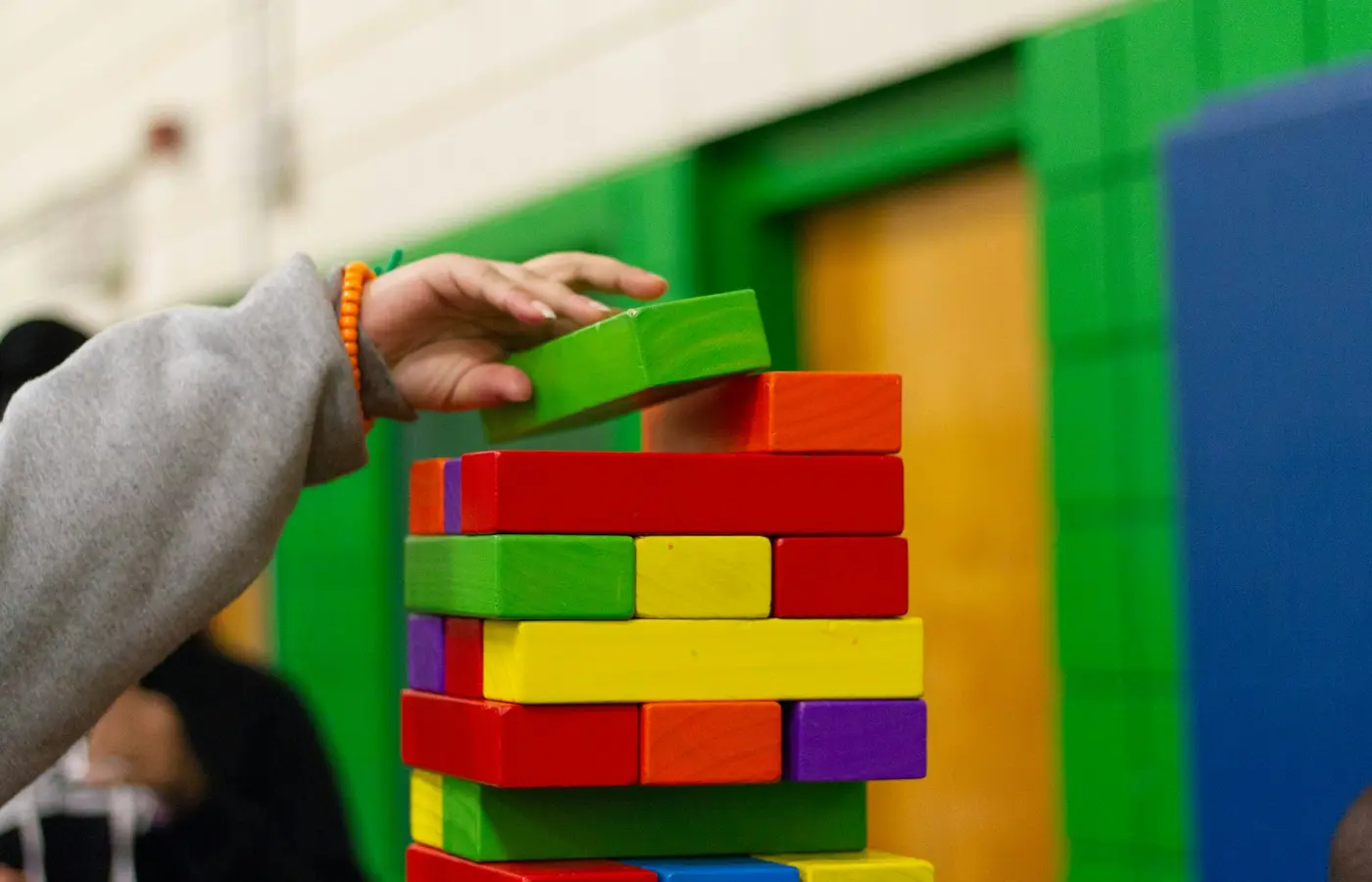
- Nesting or stacking pieces that can be separated, arranged, knocked down, and gathered.
- Sturdy containers with simple lids that a child can open, close, fill, and empty.
- Construction sets intended for assembly and disassembly, used only as directed for the child’s age.
- Large loose parts from an age-appropriate set, offered in a small number rather than all at once.
- A small selection of household containers that are clean, unbroken, and appropriate for the child’s mouthing and supervision needs.
The same category can fit one child and not another. A preschooler who reliably keeps pieces out of their mouth may use materials that would not work around a younger child who mouths everything. A child who can separate pieces calmly may need a different setup from one who throws, bites, or bends materials until they snap.
Age labels are an important starting point, not a complete safety assessment. Check the specific package or manufacturer instructions, then consider how your child actually plays. Keep smaller siblings and their toys in mind, too. A material that is manageable at a table with one child may become a hazard when scattered across a shared floor.
Do not assume a material is safe because it is wood or simple
A wooden toy is not automatically safer because it is made from wood. Its condition and construction still matter: look for a smooth finish, sturdy joins, and no splintering or loose components. DadCarved’s general guidance similarly notes that age appropriateness, proportions, finish, and construction all matter.
This is also a reason to be cautious with secondhand or heavily used toys. A toy may have been suitable when new but no longer be in safe condition if it has cracked, splintered, loosened, or lost a component.
Keep dismantling play separate from breakage hazards
A toy made to come apart gives the child a repeatable action: connect, separate, and try again. A damaged toy may create an unexpected small piece, sharp edge, exposed filling, splinter, or loose attachment. Those are not interchangeable.
Use a quick stop-and-check routine when something changes:
- Pause the play if a part cracks, bends, splinters, or comes loose unexpectedly.
- Look at the remaining toy and the detached piece. Is there a sharp edge, exposed material, loose fastener, or new piece that could be mouthed or swallowed?
- Remove the item from the play area while you check its instructions or decide whether it should be discarded.
- Do not improvise a repair unless the manufacturer provides repair or replacement guidance for that product.
For babies, toddlers, and any child who mouths objects, small detachable parts deserve particular caution. The research package includes a discussion of the U.S. small-parts regulation on Kolatoy, but that page is not an official regulator source. It is better not to rely on home shortcuts, such as comparing an item with a toilet-paper tube, as an official choking-hazard test.
Instead, use the product’s age grade and instructions, inspect its current condition, and remove pieces that your child could mouth or that are not intended to be detached. If you are uncertain whether a part is appropriate, choose a larger, simpler alternative.
Keep certain items out of the dismantling bin
Do not add adult tools, batteries, magnets, electronic devices, appliances, or household items with inaccessible compartments just to satisfy an interest in taking things apart. These objects need product-specific safety information and supervision considerations that are not covered by general toy guidance.
The same applies to toy components that are not intended to be removed, including battery doors, wheels, decorative eyes, small fasteners, and embedded magnets. Curiosity is understandable; access is a separate safety decision.
If a child keeps targeting those features, offer a clear replacement activity rather than a vague “don’t.” Put out a material that is specifically designed to be separated, and put the unsafe or fragile item away.
Match the setup and supervision to the child and the parts
A simple setup can make dismantling play more manageable without turning it into a test of tidiness.
Try a tray, shallow bin, or mat with a limited number of pieces. The boundary helps you see what is available, makes it easier to notice a missing piece, and reduces the chance that parts spread into another child’s play area. A low-sided bin can be especially useful for a child who likes to dump, gather, and start again.
Set the material up where you can stay nearby when the activity includes pieces that might be scattered, pinched, broken, or inserted into ears, noses, or other openings. General guidance for babies and toddlers recommends close supervision and regular condition checks, particularly where small parts or wear may be an issue. See Boost Your Baby.
Supervision does not have to mean directing every move. You might sit nearby while the child connects and separates pieces, narrate only when it is useful, or simply be available to intervene if the material is being used in a way the setup cannot safely support.
It is also fine to end the activity. If a child is snapping pieces with enough force to damage them, throwing components into inaccessible places, or repeatedly mouthing parts, the material may not be a good fit right now. Put it away without treating it as a failure. You can return to a larger, sturdier, simpler option.
Make cleanup and reassembly part of the play, not a test
Children do not need to rebuild every structure they dismantle. The taking-apart stage may be the whole point. Still, a few low-pressure routines can make the activity easier to live with.
You could:
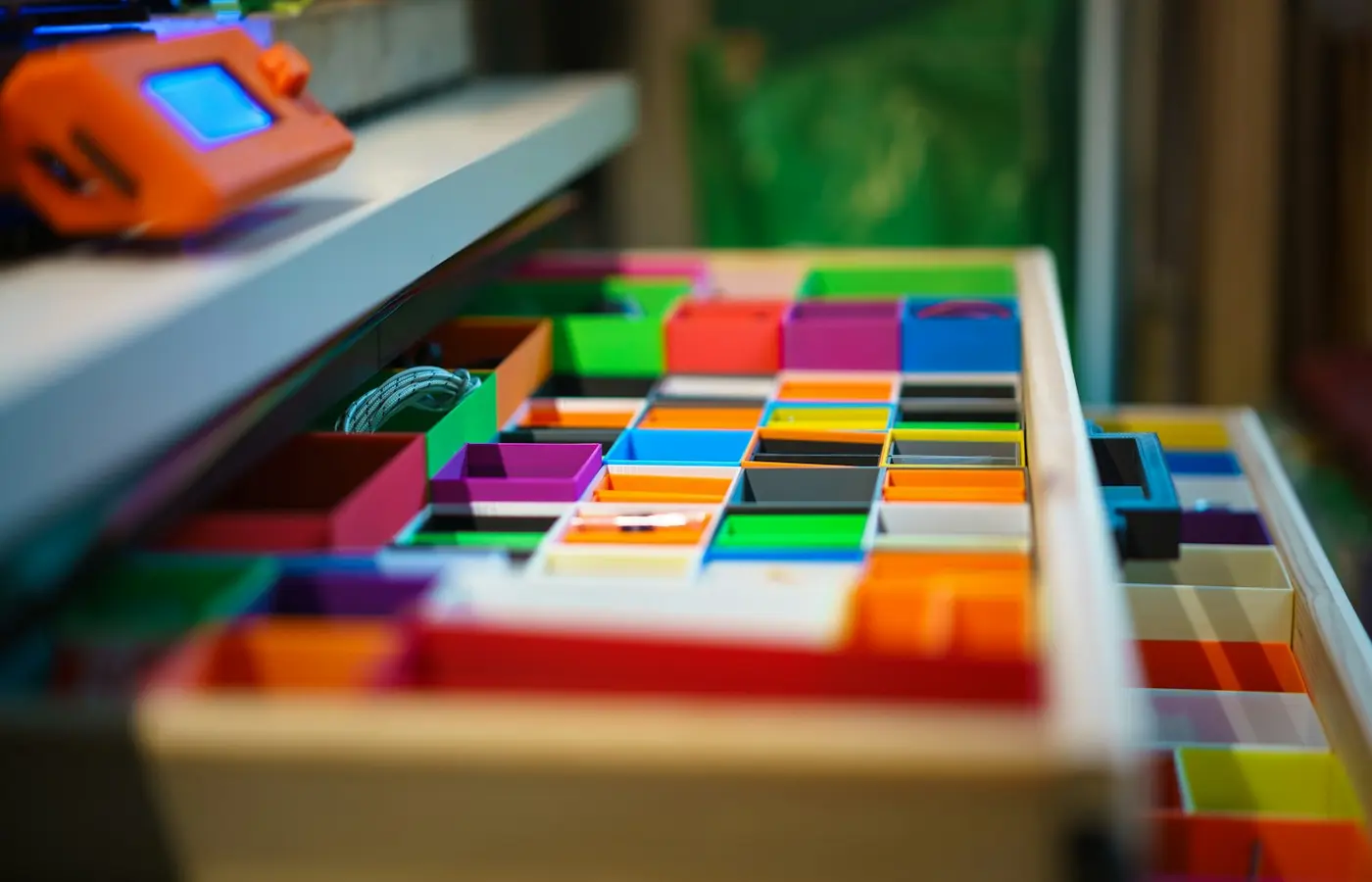
- place matching pieces in separate cups or small containers;
- take a photo of a build before it is dismantled if the child wants to remember it;
- keep a partly assembled project on a tray that can move out of the way;
- offer one basket for pieces that are still in use and another for pieces ready to put away;
- ask, “Which pieces should stay out next time?” rather than requiring every item to be sorted; or
- do a quick floor check together before another child comes into the room.
These are household strategies, not developmental exercises. They may help with lost pieces, shared space, and transitions, but there is no need to insist on a particular cleanup method. Some families will prefer a lidded box on a high shelf; others may only bring out the materials during one supervised window of the day.
For a child who becomes upset when a build is taken apart, consider saving one small project on a tray and keeping the remaining pieces available for dismantling. This gives the child a choice rather than requiring them to preserve or destroy everything.
When to retire, repair, or replace a toy
Keep a material in circulation only while it remains consistent with its instructions and age grade. Regular checks matter because wear can change the risk of a familiar toy.
Remove a toy from play if it has:
- loose parts that were previously secure;
- cracks, sharp edges, splinters, or exposed stuffing or filling;
- broken connections that produce unexpected pieces;
- damaged lids, doors, or compartments;
- missing parts that affect safe use; or
- changes you cannot confidently assess using the manufacturer’s documentation.
Do not assume tape, glue, or a home modification restores a toy to its original condition. If the manufacturer offers specific replacement parts or repair instructions, follow those directions. If it does not, replacement or retirement may be the simpler choice.
If a safety concern arises around a particular product, check the manufacturer’s current documentation and appropriate official recall information before continuing to use it. The sources available for this article do not include an official recall database or product-specific instructions, so this is a point where checking the exact item matters more than relying on general advice.
A simple selection rule for toys for taking apart
Before bringing a material into the play space, ask three questions:
- Is it designed to connect, open, separate, or be rebuilt?
- Does its age grade, instructions, condition, and size fit this child’s current play and mouthing behavior?
- Can I set it up, supervise it, and clear it away in a way that works in our home?
If the answer to any of these is no, you do not need to make it work. Choose fewer, larger, sturdier materials—or skip the activity for now. The goal is not to preserve every toy or turn dismantling into a skill lesson. It is to give the child a workable way to explore while keeping breakage, loose parts, and household stress in view.
Sources and research note
The research package for this article contains general toy-safety webpages, not primary research on dismantling play or official manufacturer documentation for particular products. For that reason, this guide focuses on practical observation, age grading, condition checks, and supervision rather than claims about developmental benefits.