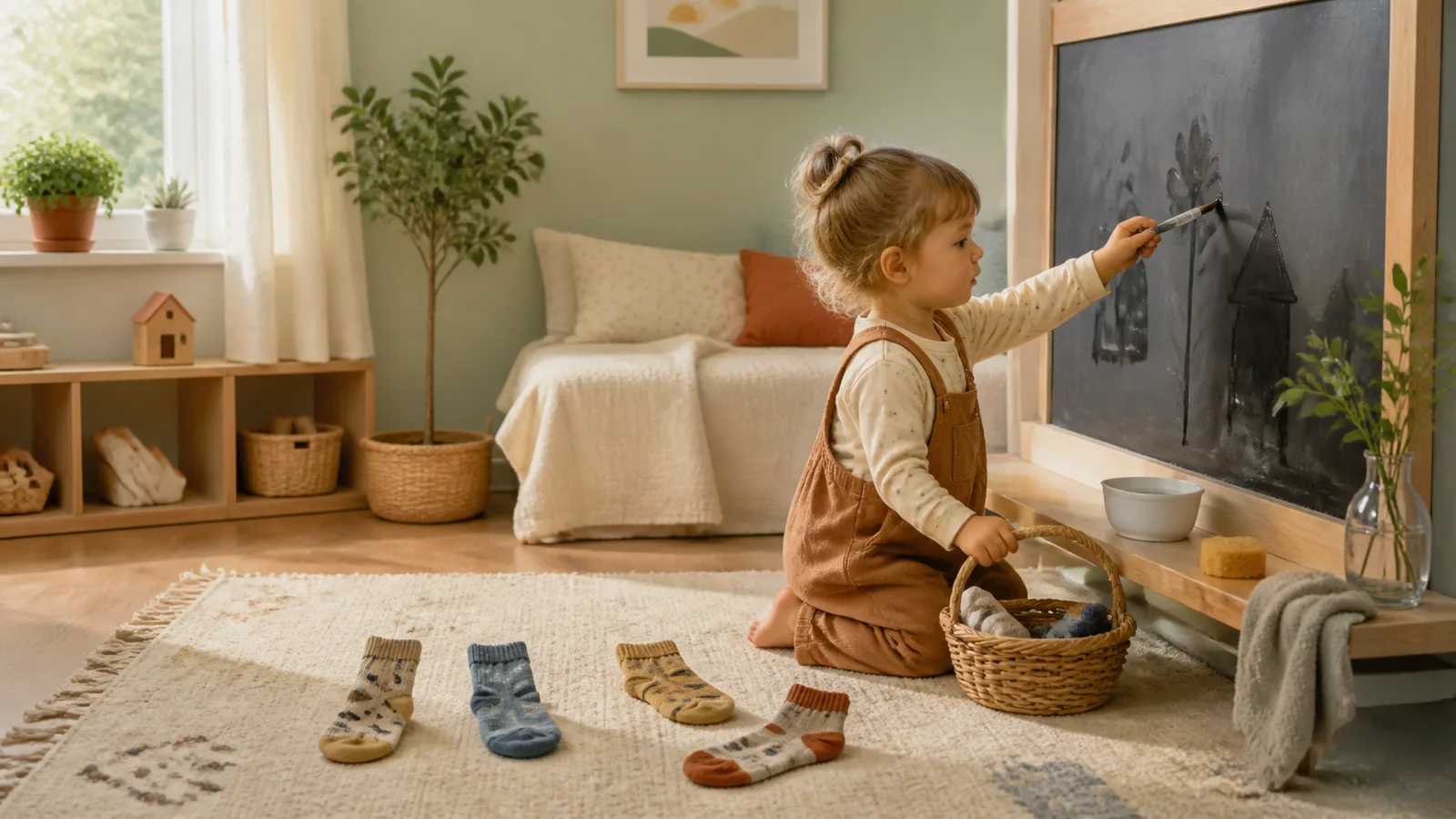
No toddler activity is literally mess-free. These ideas keep materials dry, pieces large and the reset visible—useful on low-energy days or while caring for another child.
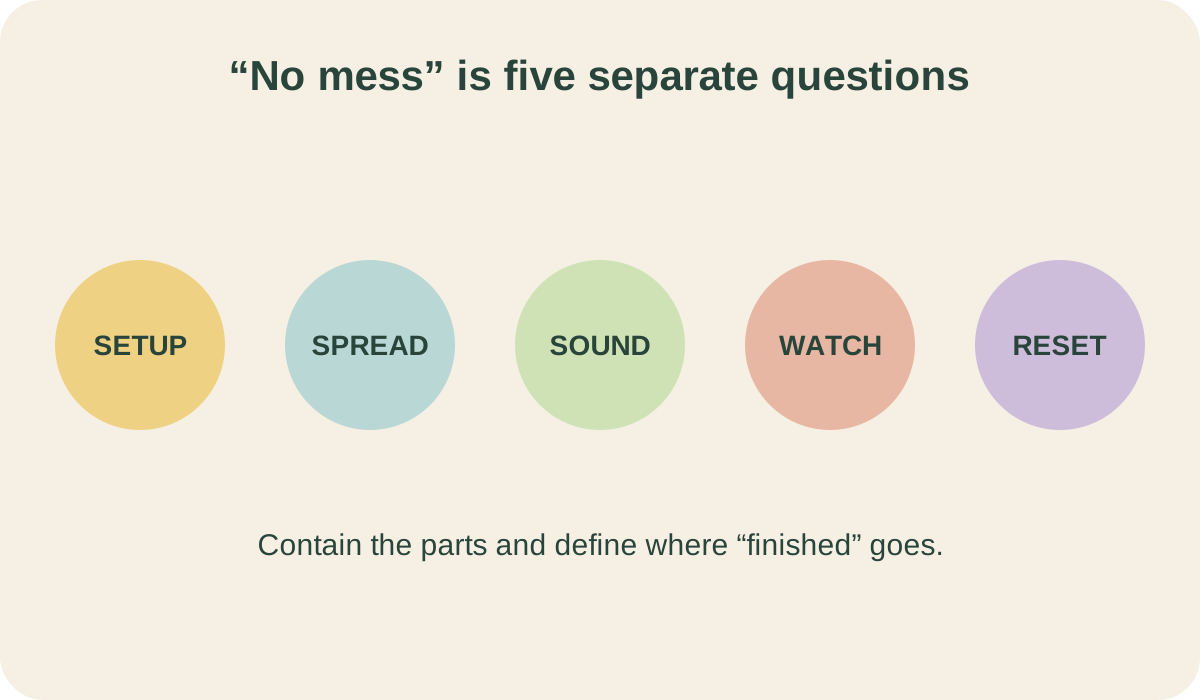
Quick comparison
| Activity | Setup | Spread | Sound | Adult proximity | Reset |
|---|---|---|---|---|---|
| Sock match | 1 min | Low | Low | Nearby | Basket |
| Book delivery | None | Low | Low | Nearby | Shelf |
| Painter’s-tape road | 2 min | Fixed | Medium | Nearby | Peel tape |
| Water brush board | 1 min | Very low | Low | Close | Wipe |
| Cushion animal homes | 1 min | Medium | Medium | Nearby | Stack |
| Laundry basket delivery | None | Low | Medium | Close | One basket |
Twelve ideas
1. Sock pairs
Offer four pairs of clean, visibly different adult socks. Match, roll, carry or feed them to a basket. Skip tiny baby socks if a younger child mouths objects.
2. Book delivery
Ask the child to carry one board book from shelf to couch, read it together, then return it. The routine matters more than quantity.
3. Water drawing
Use a brush barely damp with plain water on a dark chalkboard, paving stone outside or manufacturer-designed water mat. Stay close to the water container and wipe drips immediately.
4. Painter’s-tape road
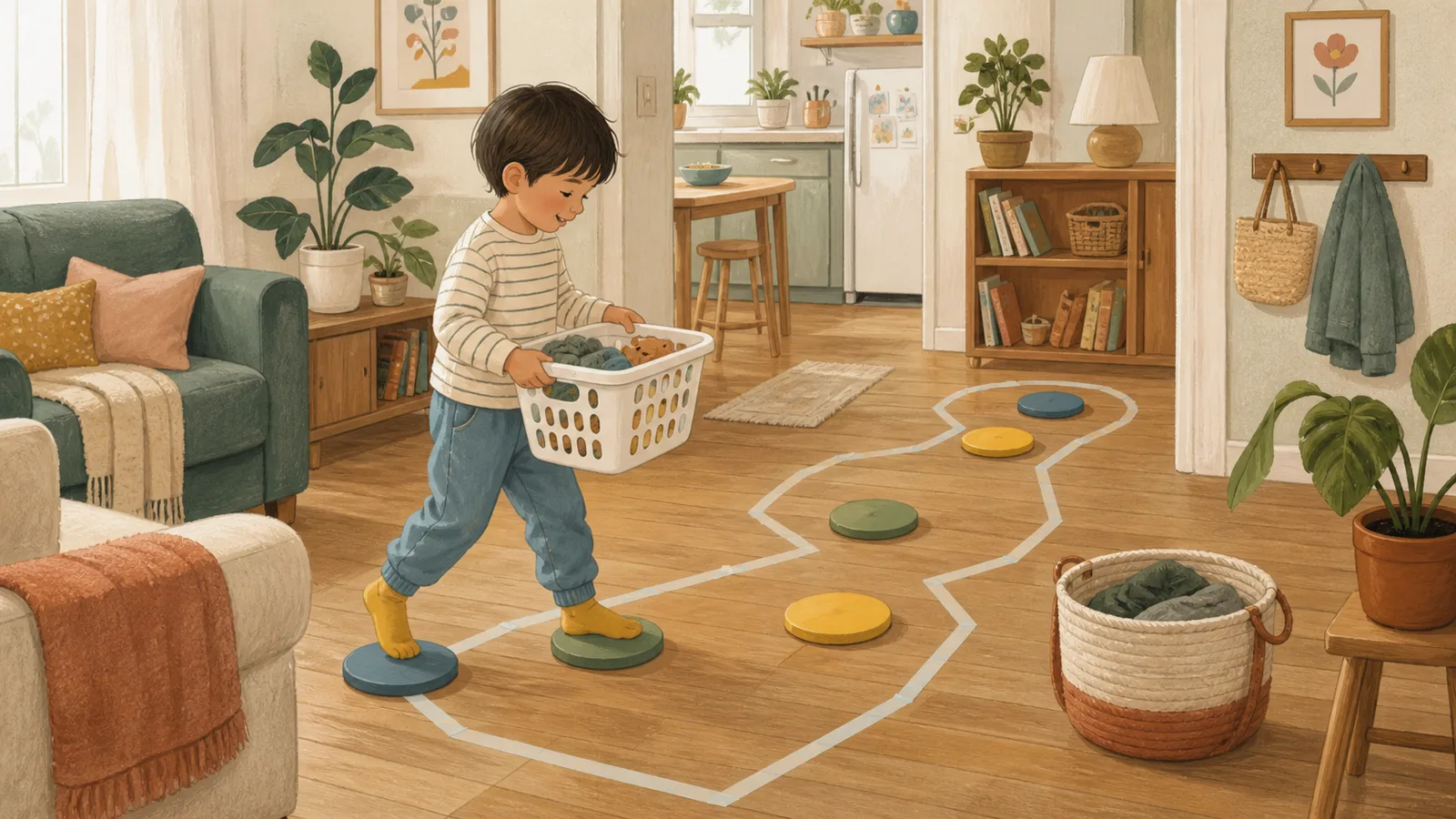
Confirm the tape is safe for the floor finish. Make one line for a large vehicle or animal to follow. Remove after play; never wrap tape around the child or leave loose sticky pieces accessible.
5. Find two
Ask for two soft things, two round things or two items from a known toy basket. Do not turn the home into an unrestricted hunt near drawers, chemicals or stairs.
6. Cushion homes
Put two floor cushions down as homes for three stuffed animals. This is contained pretend play, not indoor climbing equipment.
7. Large-block copy
Build a two-block bridge and invite any response. Keep the full collection stored; six pieces reduce spread. Try more toddler block prompts when capacity is higher.
8. Cloth fold and carry
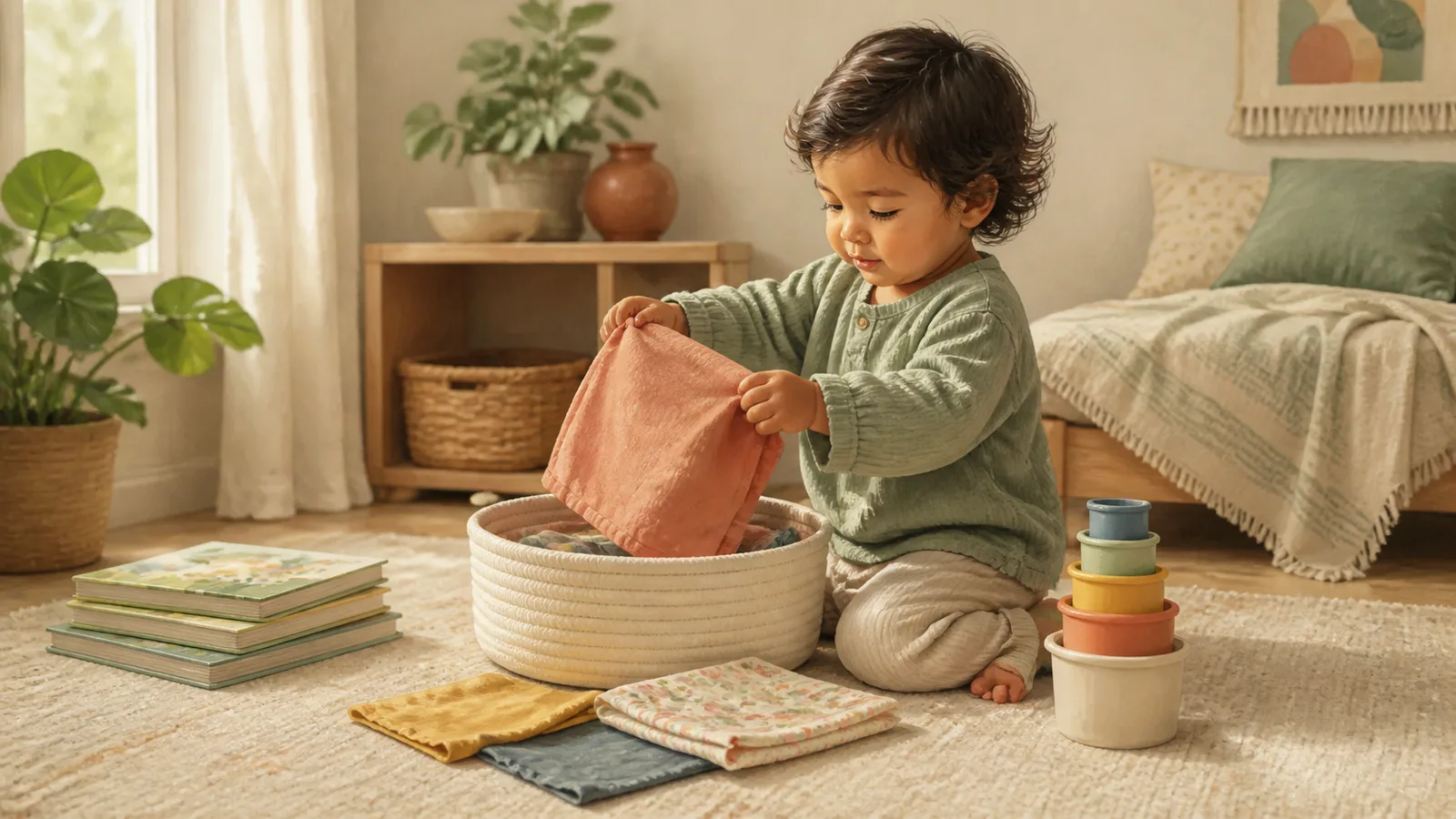
Offer two washcloths. Fold, place in a basket, deliver, repeat. No expectation of a correct fold.
9. Family-photo pointing
Use a sturdy protected photo book. Name, point, invent a hello or find a pet. Inspect loose plastic sleeves.
10. Window watch
Sit at a secure window without climbable furniture or accessible blind cords. Find one moving thing and one sound.
11. Laundry-basket delivery
Move three large soft toys from one marked spot to a basket. Keep the route clear and do not let children ride in a basket not designed for it.
12. Stuffed-animal checkup
Use one cloth and a spoon as pretend tools. Skip a giant doctor kit. Our doctor-and-vet play guide offers richer versions.
Why sensory bins are not on this list
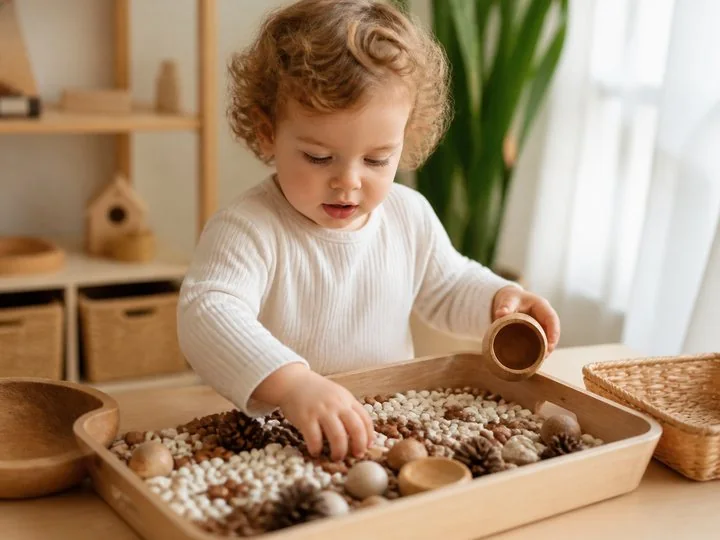
Dry rice, beans, pasta, water beads and small loose fillers spread easily and can create ingestion, allergy, choking or cleanup concerns. Sensory play can be valuable without a bin; use the safety distinctions in our sensory-play guide.
Make any activity lower-mess
Reduce the piece count, use a tray or rug boundary, set the finished basket beside the child, and choose a surface you can actually clean. Photograph a setup only if useful; it does not need to look editorial.
For one-year-olds, use the larger-material options in quiet activities for young toddlers. For high energy in an apartment, switch to the contained lanes in small-space active play.
Sources and research note
The activity approach uses NHS baby and toddler play ideas, AAP toy buying guidance, NAEYC developmentally appropriate practice, and CPSC guidance for toy safety and small parts. Duration examples are practical expectations, not developmental standards.