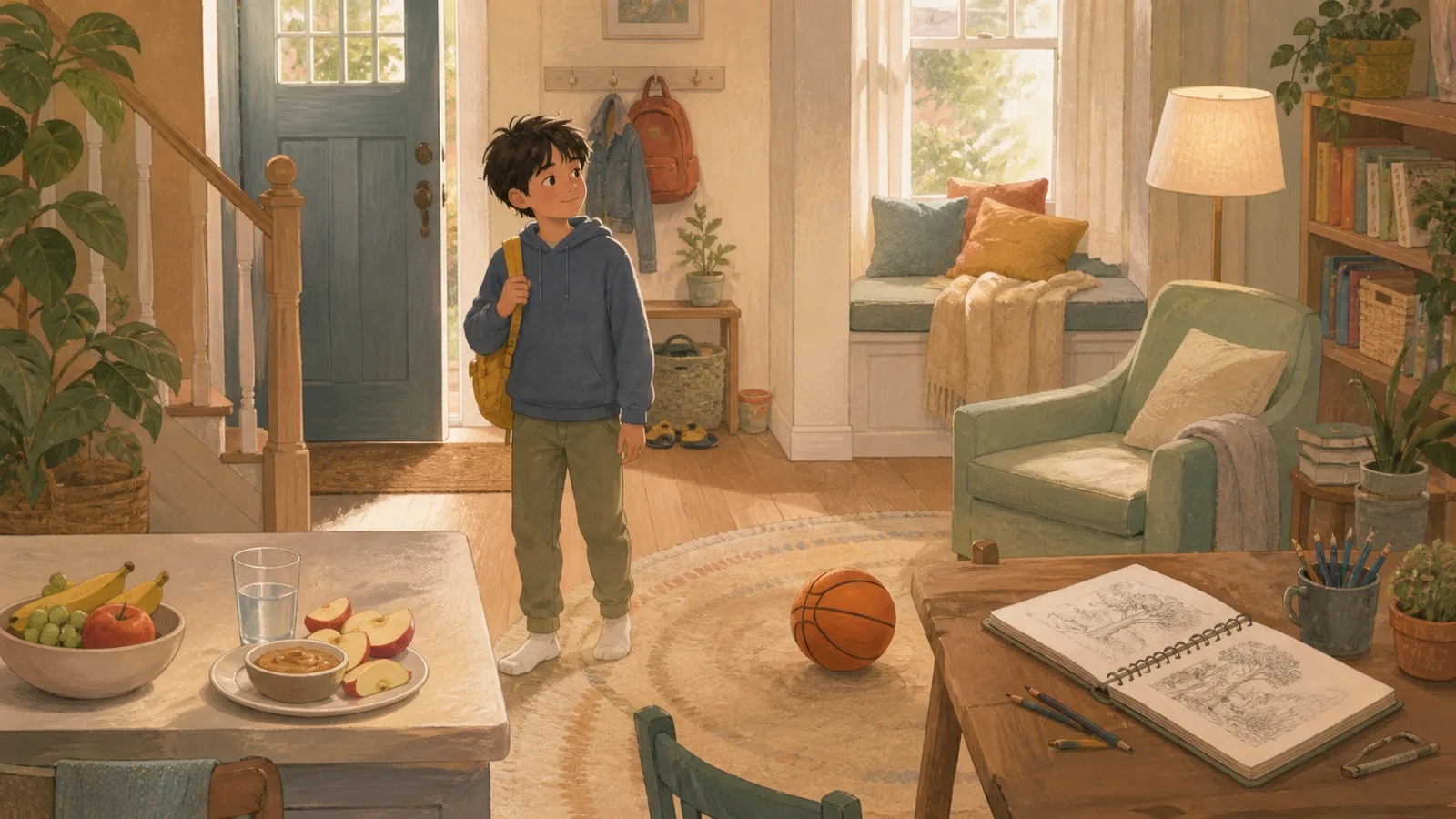
Some children come home talking. Some need food, motion, a closed door or ten minutes with their hands busy. Start by reducing demands, then learn which transition helps this child on this kind of day.
Do not make one label explain everything
“After-school restraint collapse” is a popular description for children releasing emotion at home after meeting school expectations. It can feel recognizable, but it is not a diagnosis and should not replace attention to hunger, sleep, bullying, learning needs, disability, anxiety, pain, transport stress or an overloaded schedule.
Observe patterns: which days, classes, travel conditions and sleep nights precede the behavior? What happens after food or solitude? Bring specific observations—not a social-media label—to educators or health professionals when concerns persist.
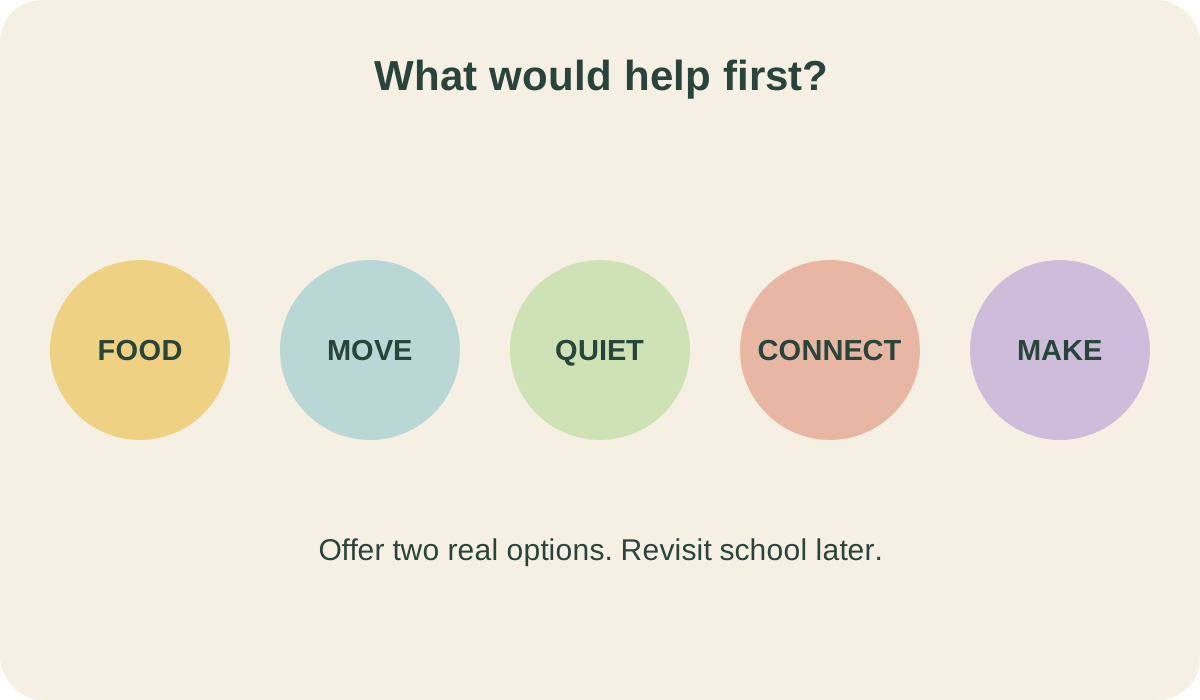
Offer a first-needs menu
Food and drink
Make a familiar snack and water available according to the child’s health and family routine. Avoid using food as a reward for talking about school. A hungry child may not be ready to choose a project.
Movement
Walk, shoot baskets, ride on a safe rehearsed route, stretch, dance or carry groceries. Ask whether company is wanted. Movement can be vigorous or steady; it need not become another coached practice.
For children with established neighborhood freedom, check the route plan in our outdoor-independence guide.
Quiet
Offer a reading chair, audiobook, bath, pet time or simply a room with lower sound. Quiet is not a punishment. If sleep follows every day, review bedtime and health rather than treating the nap as defiance.
Connection
Some children want parallel presence instead of questions. Make tea, fold laundry or draw beside them. Try “I’m glad you’re home” before “How was school?”
Making
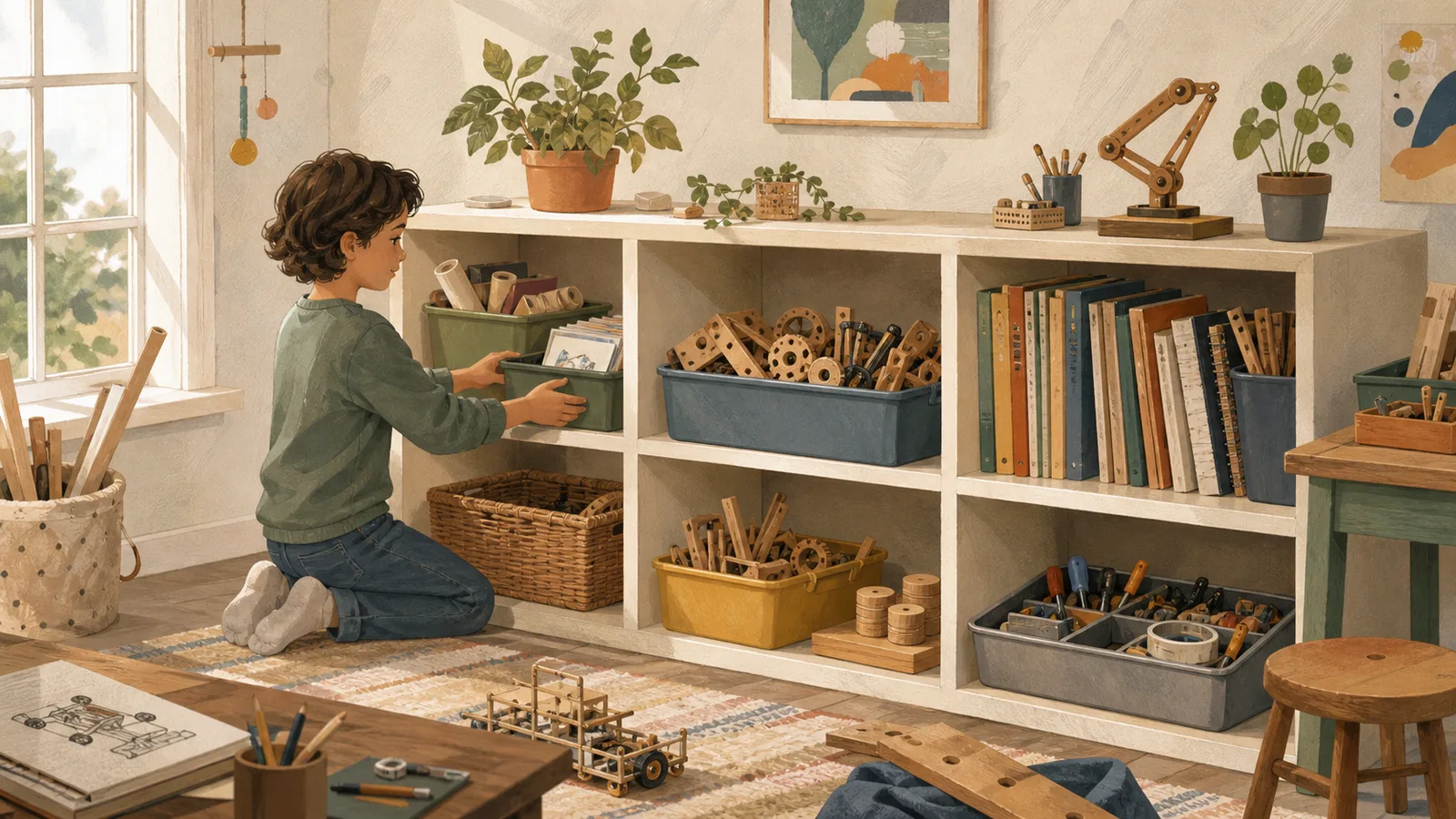
Keep an ongoing project visible: comic page, model, knitting, cardboard mechanism, music loop or repair. An older child’s play may look like work to adults. The older-kid role-play guide includes design and world-building formats.
A 30-minute transition example
This is a menu, not a required schedule:
- arrival and essentials with minimal questions;
- choose snack plus quiet or snack plus movement;
- ten to twenty minutes without homework prompts where feasible;
- reconnect about the evening plan;
- revisit school only if needed and the child is available.
Families with care schedules, medication timing, transport or homework constraints may need a different sequence. Reliability matters more than an ideal duration.
What research can and cannot tell us
Research on after-school programs suggests that supportive relationships, autonomy and program quality matter. Studies of free and unstructured play report potential wellbeing benefits, but interventions and definitions vary. This evidence does not establish a universal “decompression protocol” or prove that one activity treats emotional distress.
The useful inference is to preserve some choice and recovery time where possible, then evaluate the individual response.
Screens after school
A screen may be social, creative, restful or dysregulating depending on content, context and child. Decide household boundaries in advance rather than during conflict. A screen-free first step can make food, body cues and conversation easier to notice, but do not turn one difficult afternoon into a moral test.
If every non-screen option is dismissed, use the diagnostic approach in What to Do When Every Toy Is Boring rather than buying new entertainment.
When to seek more help
Contact appropriate professionals when after-school changes are severe, persistent or impair daily life, or when there are safety concerns, school refusal, sustained sleep/appetite change, repeated physical symptoms, signs of bullying, self-harm talk or loss of interest across settings. Emergency concerns need immediate local help.
Sources and research note
Context comes from CDC out-of-school-time resources, a systematic review of unstructured play interventions, research on after-school program quality and children’s social behavior, and a study of schoolchildren’s wellbeing and after-school activities. The menu is editorial synthesis, not a clinical protocol.