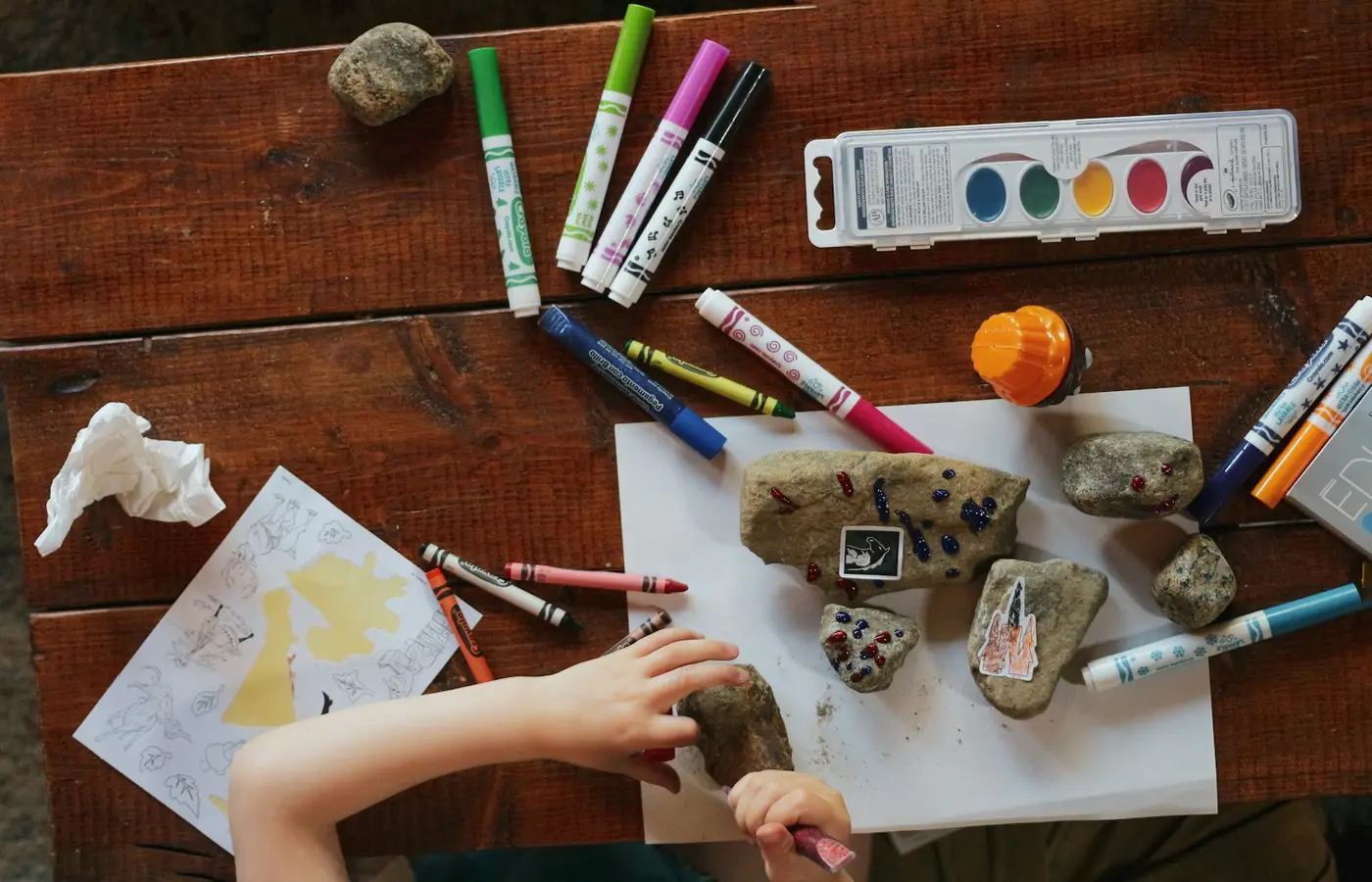
A child who wants to spread paint with both hands needs a different setup from one who wants to load a brush, dab a sponge, or swirl water across paper. The best paint for kids crafts is usually the one that matches the child’s first move—and the version of cleanup you can realistically handle afterward.
As a quick guide: choose finger paint for direct hand-led marks, washable tempera for thicker brush and tool painting, and watercolor for lighter, water-led marks. These are material differences, not a ranking of what is more creative, advanced, or educational.
Before choosing any paint, check the exact package for its age grade, warnings, intended use, and cleaning instructions. Paint labeled washable, water-based, or non-toxic is not automatically safe to eat or suitable for every surface. Young children may put art materials in their mouths, so supervision and label directions matter as much as the paint type.
A quick way to choose: hands, brushes, or water-led marks
You do not need a large art cart or a full set of supplies to start painting. Notice what your child is already trying to do with materials.
- Choose finger paint if they want to press, smear, pat, drag, or make prints directly with their hands.
- Choose washable tempera if they are interested in brushes, rollers, sponges, stampers, or more solid-looking areas of color.
- Choose watercolor if they enjoy dipping a brush in water, making light marks, and watching color move across paper.
Tempera is generally described as thick, while watercolor is thin, watery, and transparent. Both can be used on paper, according to this general material comparison from TinkerLab. Finger paint is less about a developmental stage than an invitation to work without a tool between hand and paint.
The right choice can also be the least demanding one for this particular day. If you have ten minutes before dinner, a small watercolor tray and one sheet of paper may be manageable. If you can protect a table, set out a washcloth, and stay nearby, finger paint may fit. If a child wants to cover cardboard with color using a brush, tempera may be a better match.
None of these materials needs to produce a recognizable picture. A page of dots, one long brushstroke, mixed colors, or paint that never reaches the paper can still be the activity.
Finger paint for spreading, stamping, and full-hand marks
Finger paint can suit children who want close, direct contact with the material. The first action may be a single fingertip mark. It may grow into palm prints, handprints, lines pulled through paint, or paint transferred from hands to paper.
This kind of painting is often easiest when you reduce the choices. Put a small amount of one or two colors onto a tray, sturdy paper, or another surface the specific product instructions allow. A large sheet of paper can give a child room to spread without needing to aim for a small target.
Plan for close supervision
Direct hand use means paint is likely to travel to sleeves, faces, furniture, and mouths. Health Canada notes that young children are especially likely to put materials in their mouths and advises caregivers to read labels and warnings carefully and follow instructions.
The American Academy of Pediatrics’ parent site, HealthyChildren.org, also advises avoiding ingestion, including licking paintbrushes. This applies even when a product is described as water-based or non-toxic. Keep paint portions small, stay close enough to intervene, and stop the activity if a child is repeatedly trying to eat or mouth the paint.
A practical setup can include:
- A protected, easy-to-clean work surface.
- Clothing you are comfortable getting paint on, or a cover-up used according to its instructions.
- A damp cloth for quick hand and face cleanup.
- Soap and water ready for handwashing after the activity.
- A drying spot where wet paper will not be bumped, folded, or carried through the house.
If direct hand painting is too much for the moment, you can adapt rather than abandon it. Offer a sponge, a wide brush, or a piece of cardboard as a paint-moving tool. The child still gets to make broad marks, with less paint on skin.
Washable tempera for thicker brush, sponge, and tool painting
Tempera, sometimes called poster paint, is generally thicker than watercolor. That thicker texture can make it a practical choice for children who want to dab, brush, roll, stamp, or cover an area of paper with color. A child may use just one brushstroke at first; later they may try sponges, toy-car tracks, cardboard-edge printing, or simple homemade stamps.
“Washable” can be useful information, but it is not a promise that paint will come out of every fabric, upholstered surface, wall, or dried-on spill. It is a product-specific claim. Check the bottle or package for the surfaces covered, the cleaning steps, and any limits on laundering or stain removal. Follow those directions rather than assuming one washable tempera behaves like another.
Keep the tool setup simple
Tempera can create an elaborate activity, but it does not need one. For a first session, try:
- Put a small amount of paint in a shallow container or palette.
- Offer one brush or one sponge and one piece of paper.
- Add another color or tool only if the child seems interested.
- Move finished work to a planned drying location before opening more materials.
This approach can reduce accidental color mixing, overloaded brushes, and the number of objects needing cleanup. It also makes it easier to notice what the child actually prefers: dabbing, long lines, repeated circles, filling a space, or washing the brush in water.
Water containers deserve attention. A small amount of water in a stable, hard-to-tip container may be easier to manage than a large open cup. For a child who is likely to drink from the cup or tip it immediately, skip the water-based brush routine and offer a damp sponge, a brush with only a small amount of paint, or another activity that day.
For U.S. art materials, the Consumer Product Safety Commission’s Art and Craft Safety Guide recommends choosing products labeled “Conforms to ASTM D-4236” and without cautionary warnings on the label. This is U.S.-specific guidance, not a universal safety guarantee. Any warning or instruction on the particular product still applies.
Watercolor for lighter marks and smaller water setups
Watercolor is thin, watery, and transparent. It can fit a child who is interested in dipping, brushing, rinsing, and watching color move across paper. The paint is usually activated or carried with water, so the setup is as much about managing water as it is about managing pigment.
Watercolor can be a lower-volume paint setup because a palette or pan set may use less paint at a time than open bottles. That does not necessarily mean less mess. Water can drip from brushes, cups can tip, and wet paper needs a place to dry. A child who enjoys pouring and splashing may find the water more compelling than the painting—and that is useful information, not a failure of the activity.
Set up for water, not precision
Watercolor often goes more smoothly when the adult sets the limits of the water rather than asking the child to be careful with a full cup. You might use a small amount of water in a stable container, place it on a tray, and offer one brush and absorbent paper nearby.
For children who are new to the routine, an adult can demonstrate a simple sequence: wet brush, touch color, make a mark, rinse brush. This is an invitation, not a test. Some children will follow the sequence; others will mix every color, paint with the brush handle, or decide the water cup is the main project.
Avoid normalizing brush licking as part of watercolor use. HealthyChildren.org specifically advises preventing ingestion such as licking paintbrushes. Check the individual watercolor set’s age grade, warnings, and intended-use instructions before offering it.
If the water setup is frustrating, pause or simplify. A damp brush prepared by an adult, one color at a time, or watercolor used during a closely supervised short session may be a better fit than pushing for independent use.
Safety and label checks before any paint activity
Paint categories do not replace product instructions. Before opening finger paint, tempera, or watercolor, take a minute to check the exact label.
A practical paint-label checklist
Look for:
- The manufacturer’s age grade and any warnings.
- Directions for intended surfaces and use.
- Cleanup or laundering instructions, if washability is claimed.
- Whether the product has cautionary labeling.
- U.S. labeling such as “Conforms to ASTM D-4236,” where applicable.
- Instructions about ventilation, storage, or adult supervision.
The CPSC guide identifies paint sets as art materials and offers U.S. guidance on labeling. Health Canada’s arts and crafts safety guidance advises reading labels, following instructions, and learning about the hazards of materials and techniques before use.
“Non-toxic” is not the same as edible, and “washable” is not the same as safe for unrestricted use. The same is true of water-based paint. HealthyChildren.org says water-based supplies are generally preferable to supplies containing chemical solvents, but also notes potential concerns with some water-based materials and emphasizes avoiding ingestion.
Keep paints in their original containers so warnings and instructions stay with them. Close containers after use, store them out of reach when not in use, and wash hands and the work area when the activity ends.
If a child has skin irritation, repeatedly mouths materials, or cannot use the paint without a level of adult intervention that is not workable today, it is reasonable to stop and choose another kind of play. Painting can wait.
Make cleanup part of the paint choice
The easiest paint is often the one you can reset without resentment. Before setting out supplies, decide where paint will go, where wet work will dry, and what happens when the child is done before you are.
| Paint type | Likely first action | Main setup consideration | Cleanup question to answer first |
|---|---|---|---|
| Finger paint | Smearing, pressing, stamping | Protecting hands, sleeves, and nearby surfaces | Where can hands be washed immediately? |
| Washable tempera | Brushing, dabbing, rolling, stamping | Paint portions, tools, and possible water cup | What does this product mean by washable? |
| Watercolor | Dipping, brushing, rinsing | Water control, drips, and wet paper | Where will the water container and drying paper go? |
A few low-effort habits can make painting easier to repeat:
- Portion sparingly. You can always add more paint; returning unused paint to a container may not be recommended by the manufacturer.
- Protect the right area. A tray, mat, or covered table can be more useful than trying to protect the whole room.
- Choose a clothing plan before starting. Use paint clothes, a cover-up, or an activity time when a mark on clothing is not a crisis.
- Set up a drying station first. A countertop, shelf, or out-of-reach surface can prevent wet paintings from becoming floor paintings.
- Use the product’s instructions for cleaning. General statements that some tempera and watercolor paints are water-soluble do not tell you how a particular paint will behave on fabric, wood, walls, or upholstery.
- End before everyone is overwhelmed. A short, calm paint session can be more repeatable than a large setup that leaves the adult with a long cleanup.
You do not need all three types of paint. Start with the material that matches the child’s preferred way of making marks and your available setup. Choose finger paint for hands, tempera for thicker tool-led color, or watercolor for water-and-brush exploration—then use the exact product label as the final word on age guidance, supervision, and cleanup.
Sources and research note
This comparison uses general material descriptions alongside safety guidance. The sources below do not establish that every paint in a category has the same ingredients, age grade, washability, or cleanup performance. Check the packaging and manufacturer instructions for the specific product in your home.
- U.S. Consumer Product Safety Commission, Art and Craft Safety Guide — U.S. guidance on art-material labeling, including ASTM D-4236.
- Health Canada, Arts and crafts safety — Canadian guidance on reading warnings, following instructions, and reducing exposure to art-material hazards.
- American Academy of Pediatrics / HealthyChildren.org, Choosing Safe Art & Craft Supplies for Children — parent guidance on selecting supplies and avoiding ingestion.
- TinkerLab, Watercolors vs. Tempera Paint: What’s the Best Paint for Kids? — general comparison of tempera and watercolor material properties.