Two children can use one building set at the same time when each can get enough usable pieces, begin a worthwhile idea without waiting, and leave an unfinished build somewhere safe. The number on the box matters less than the mix of pieces and the kind of building the set asks children to do.
Before buying, check the exact set’s age grade, small-parts warnings, instructions, and intended build. A set that is suitable for an older child may include pieces that must be kept away from a younger sibling. If that is the situation at home, shared play may still be possible, but only with the supervision and storage the manufacturer specifies.
Start with the kind of shared play you mean
“Can they share it?” can mean several different things. Naming the version you hope for makes it easier to judge whether one set is likely to work.
Building side by side
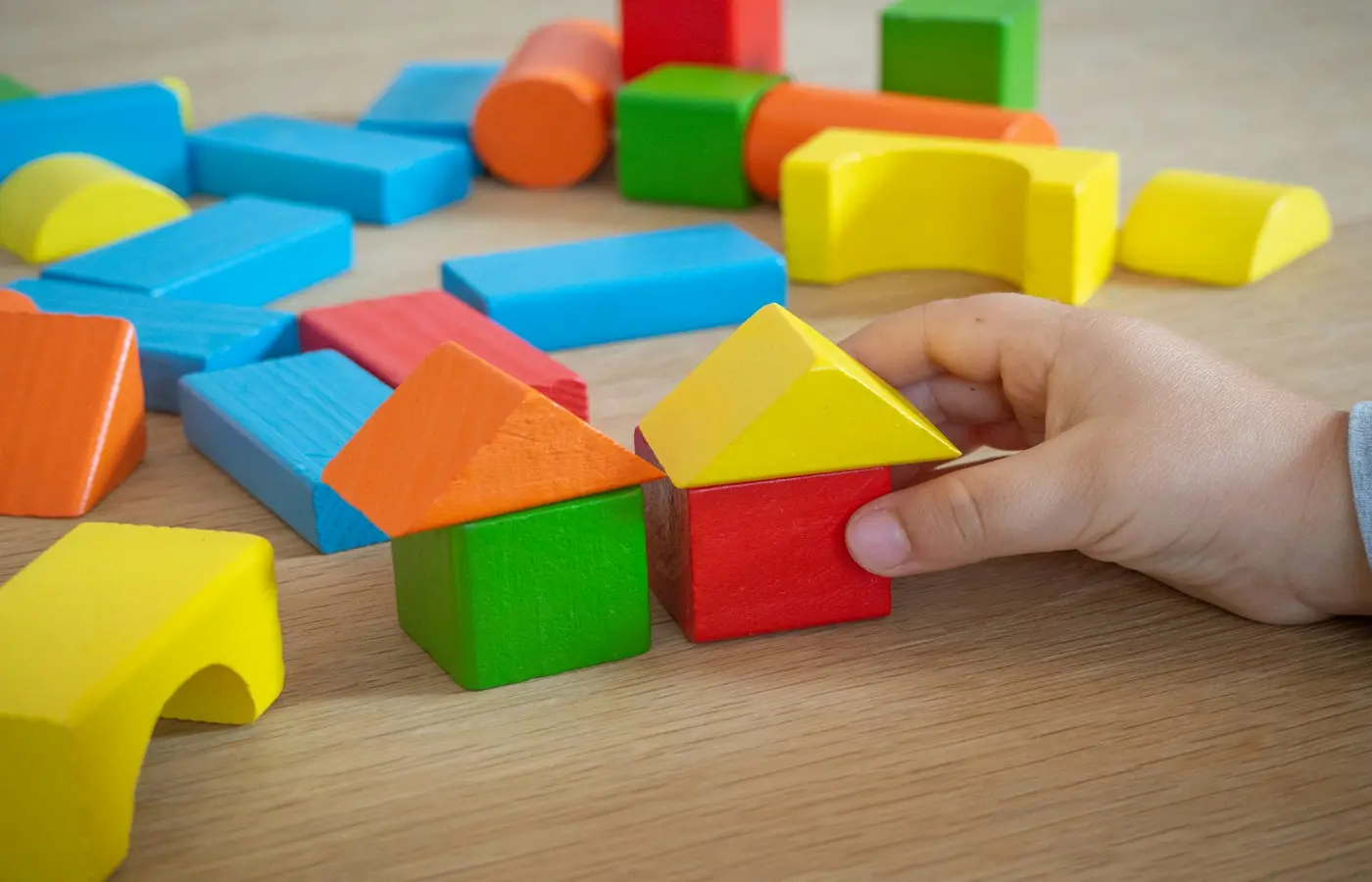
Each child uses the same collection but makes something separate: a garage beside a castle, a row of small animals, or two towers competing for height. This format usually needs a broad spread of basic pieces rather than one carefully rationed collection of specialty parts.
It can work well when children enjoy choosing their own direction. It can be harder when both are drawn to the same wheels, large panels, characters, or unusual colors.
Making separate creations that connect later
Children might each build one section of a town, track, landscape, or creature and decide later whether the parts join together. This gives each child a meaningful starting point while leaving room for collaboration.
A useful question is: can each child make a satisfying piece of the project with the materials available, or does one child have to wait for the other to finish first?
Building one model together
A detailed model can be a shared project, but it is not automatically a two-child activity. A single, linear instruction sequence may place one child in charge of the next step while the other searches for parts, watches, or waits.
That may suit children who genuinely want to work together, especially with an adult nearby. It may be less successful when both children want equal control over the model, or when one child prefers to follow instructions and the other prefers to experiment.
There is no requirement to build the pictured model. If the children are more interested in inventing than completing steps, a set can become more shareable when the instructions are put aside.
Look beyond the total piece count
A large piece count can be useful, but it does not tell you whether two children will have equal access to the pieces they want. One set with many small, similar building elements may give two children many ways in. Another set with a similar count may be organized around one vehicle, one character, or a handful of rare structural parts.
Before buying, look at the product images, inventory information, and instructions for the exact version where those are available. Imagine two builds underway at once.
Ask these questions:
- Are there enough basic pieces for two foundations, walls, or structures?
- Are the most appealing pieces repeated, or is there only one of each?
- Does the set rely on a few large base pieces, wheels, figures, connectors, or decorative elements that both children will want?
- Can one child build something complete with the plainer pieces while another uses more specialized parts?
- Are there loose materials left after the pictured model is built?
Two children do not need identical pieces or identical projects. They do need a fair route into play. A child building a small bridge with basic elements may be perfectly content while another creates a more elaborate vehicle—provided that the division feels chosen rather than imposed.
This is why a universal “right” piece count is not very useful. One commercial guide suggests numerical thresholds for shared construction play, but those figures are not independent evidence and cannot account for the particular children, pieces, or play style in your home. Use a count as a starting detail to inspect, not a promise that the box will serve two builders well. Block & Beaker’s piece-count guide is best read as shopping context rather than a rule.
Choose a build format with more than one entry point
The easiest sets to share usually offer more than one meaningful thing to do at the start.
Open-ended materials can offer that naturally. Children can sort, stack, connect, line up, balance, take apart, and rebuild without needing to preserve a single sequence of steps. That does not make them conflict-free: a scarce favorite piece can still become important. But the materials may be less dependent on one child finishing a particular stage before the other can continue.
Model-focused sets can also work when the build breaks into separate sections. Look for features such as:
- distinct structures or vehicles that can be built independently
- clearly separable subassemblies
- more than one instruction booklet
- a model that can be divided into roles, such as base, landscape, vehicle, and details
- enough leftover pieces for free building alongside the main project
A single build with one long sequence is not a poor choice. It may simply be better framed as a cooperative project rather than two children independently building at once. An adult can help by reading ahead and identifying a few jobs that are genuinely useful: finding pieces, building a separate section, making scenery, or deciding where a finished module goes.
Avoid assigning one child only the role of handing over pieces while the other makes every meaningful decision. Sorting can be enjoyable for some children, but it should not become the default job for the younger child simply because the build is too complex for them.
Some reporting has described group-building features and app-supported collaborative modes in certain LEGO products, but the available research package does not include current official LEGO documentation for exact sets or markets. Treat any group-build label, app feature, or instruction format as something to verify on the manufacturer’s current product page and instructions before relying on it.
Match the materials to both children without turning one into the helper
Children of different ages can share a building collection, especially when they can work at different levels. One child may want to connect a few pieces, arrange figures, or make a simple enclosure. Another may be interested in symmetry, mechanisms, a particular model, or a long story around the build.
The goal is not to make their play look the same. It is to give both children a real role and protect the younger child’s safety needs.
A few low-pressure ways to adapt one collection include:
- Give each child a small tray of starter pieces, then leave a shared pile in the middle.
- Let one child make the ground, road, habitat, or base while the other makes a structure that sits on it.
- Invite separate builds first, then ask whether the children want to connect them later.
- Keep delicate or very small components aside when the exact set’s warnings require it.
- Offer a second activity nearby if one child is not interested in the main build that day.
A manufacturer article from Plus-Plus presents its larger-format pieces as an option for siblings working at different levels. That is a brand perspective, not independent evidence that any one material will suit all age gaps or prevent disagreements. Still, its central practical point is sound as a question for caregivers: can each child use the material in a way that feels worthwhile? See Plus-Plus’s article on siblings of different ages.
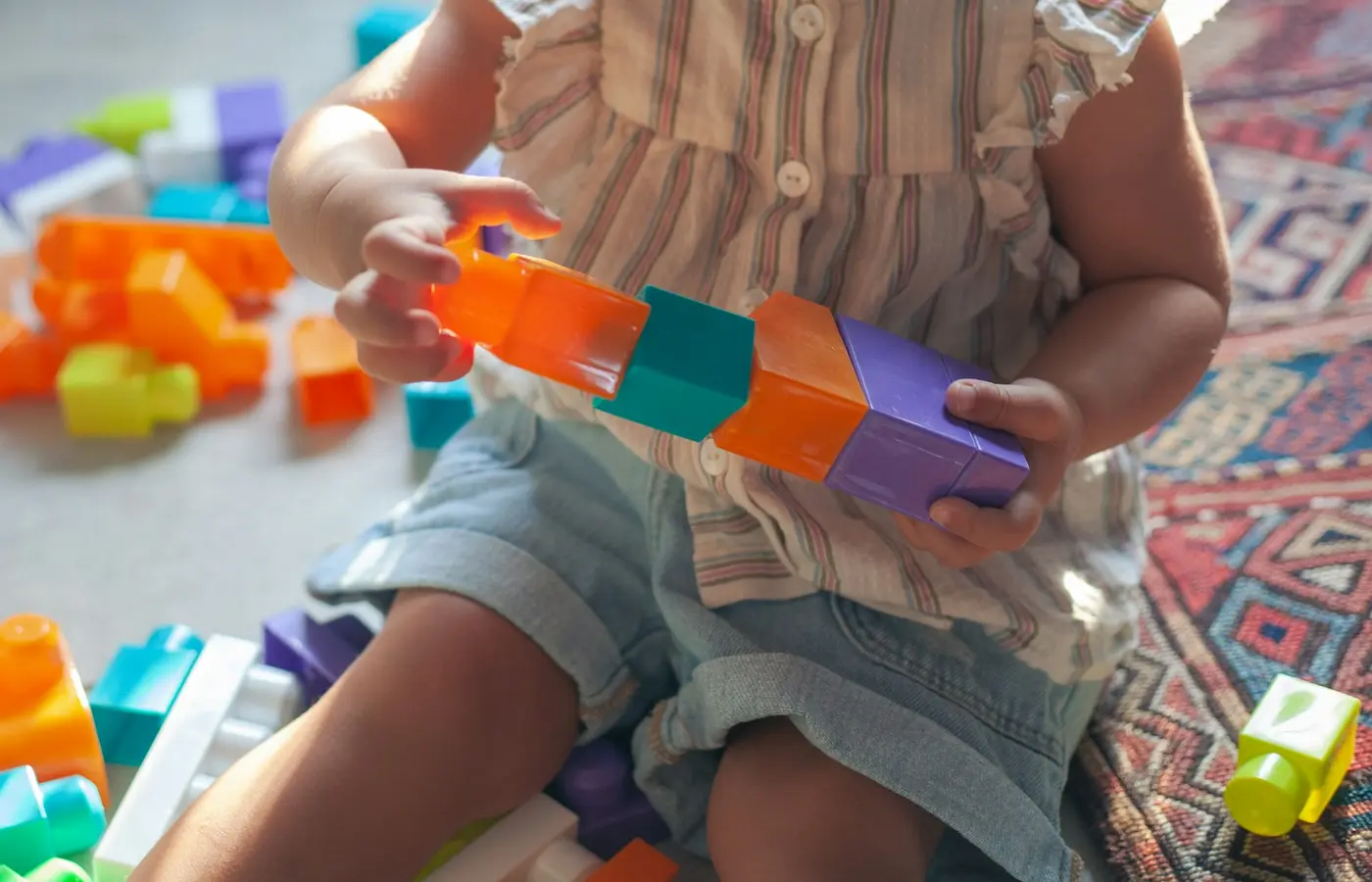
Pay particular attention to the youngest child who may have access to the set, not only the intended builder. Small components, magnets, batteries, sharp broken pieces, and loose packaging can change how and where a set needs to be used. Follow the exact manufacturer’s warnings and keep materials stored out of reach when required.
Plan for the friction that is likely to happen
A building set does not need to eliminate conflict to be worth having. Children may both want the same piece, disagree about a shared design, or dismantle something that another child hoped to keep. The useful question is whether the setup gives your family manageable ways to recover.
Make the pieces easier to see
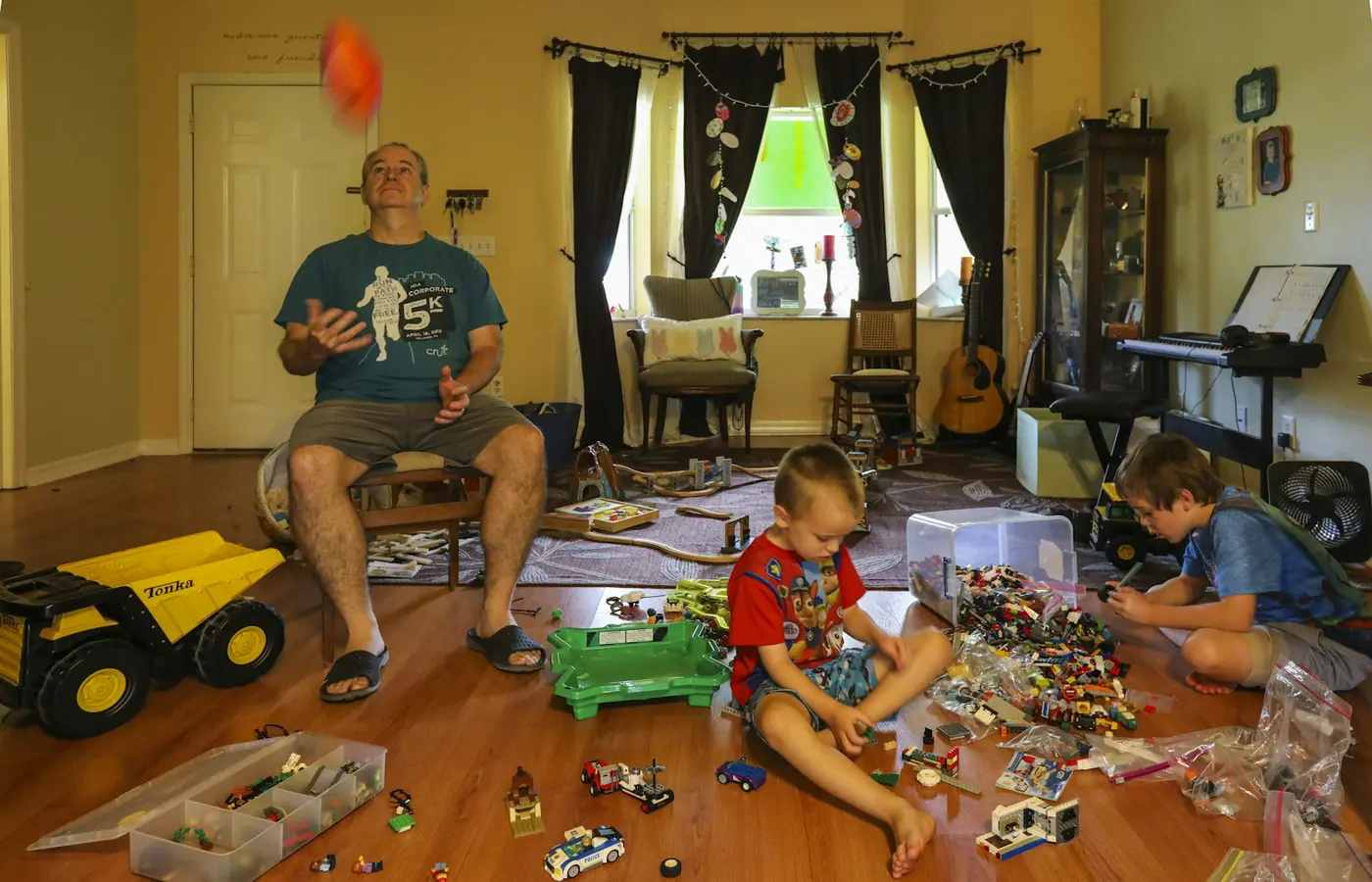
A deep toy bin can turn a shared set into a long search. A shallow tray, low-sided container, or divided organizer can make common pieces visible to both children. You do not need to sort every part by type. Even a simple split between large structural pieces, small connectors, and figures or accessories can make starting easier.
If a child likes to keep a personal selection close by, temporary build zones can help: one tray or placemat for each child, plus a shared center pile. The aim is not strict ownership. It is to reduce the feeling that every piece is disappearing into someone else’s project.
Protect builds that are not ready to come apart
A model that must be dismantled at cleanup can create extra tension, especially after a long build. Consider where unfinished work can rest:
- a tray that can slide onto a shelf
- a board that can move from floor to table
- a designated corner of a table
- a high surface, only when it is safe and appropriate for the children who use the set
Taking a photo before a build comes apart can be enough for some children. Others may prefer to keep one creation intact for a day or two. Neither approach is more creative; it is simply useful to know which one makes cleanup easier in your home.
Notice when a model is too specific to divide
Some builds depend on a small number of distinctive parts in exact places. If every step uses the next rare piece, the project may create more waiting than making. That does not mean you should not buy it. It may be a good choice for one child, for an adult-and-child project, or for a household that plans to add compatible materials later.
For two children building independently, favor a set where both can start before either needs the other to stop.
Make sharing possible in the room, not just on the box
A generous collection can still be frustrating if two children have only a small patch of floor or one crowded coffee table. Before buying, picture where the pieces will go during play and what happens when play pauses.
Consider these everyday limits:
| Home question | What to check |
|---|---|
| Where will they build? | Make sure both children can reach the materials without leaning across or knocking over the other’s work. |
| Where will the pieces land? | Hard pieces can spread quickly on carpet, tile, and under furniture. A tray, mat, or table boundary can simplify pickup. |
| Can unfinished work stay out? | Choose a set with a manageable footprint if it must be cleared after every session. |
| What will cleanup require? | A container with a wide opening is often easier for children to use than a small box with a precise sorting system. |
| Who else uses the space? | Store small or restricted components according to the exact warnings if younger children may enter the area. |
| How much sound is manageable? | Hard plastic pieces, large bins, and builds dropped on a table can be noisy even when the play itself is calm. |
Storage is part of whether a set works for two. If returning all the pieces takes an adult ten minutes of sorting every time, the set may be harder to use than its play value suggests. A simple labeled bin, a zip pouch for specialty parts, and a separate place for instructions may be enough.
Answers to common questions
How many building pieces do two children need?
There is no reliable universal number. Look at the kinds of pieces, how many high-demand elements are duplicated, whether each child can begin a project, and whether the set is intended for one specific model. A smaller collection of similar, flexible pieces may be easier to divide than a larger set built around a single detailed model.
Can children of different ages share one building set?
They can, when the exact product’s age grade and warnings work for the youngest child who can access it, and when both children have a meaningful way to participate. Different ages do not require identical tasks. They do require attention to safety, interest, supervision, and control over the materials.
Are open-ended building sets easier to share than model kits?
Often, they can be easier to divide because children can pursue separate ideas. But this depends on the collection. An open-ended set with very few pieces or one prized component can still create competition. A model kit with separable modules can sometimes be easier to share than expected.
How can I keep two children from fighting over the same pieces?
You may not be able to prevent every disagreement, and a building set should not be sold as a solution to sibling conflict. You can make conflict easier to manage by setting out shared and personal trays, sorting before building, choosing separate starting jobs, protecting unfinished work, and pausing the project when the setup is no longer working. If one specific part repeatedly matters to both children, adding another compatible source of that type of piece may be more useful than insisting they take turns.
The simplest buying rule is this: choose one set for two children only when both can begin something they care about before either child needs the other to give up a piece, a space, or the next step.
Sources and research note
This guide is based on the limited research package supplied for this article. It does not make set-specific safety, compatibility, instruction, or group-build claims because current official documentation for individual product versions was not included. Before purchasing a particular set, check its exact manufacturer age grade, warnings, instructions, contents, dimensions, and storage requirements.
- Block & Beaker: STEM Gifts Two Children Can Actually Share — commercial shopping context used only to identify common caregiver questions about shared construction play; not used as independent safety or developmental evidence.
- Block & Beaker: How Many Building Pieces Do You Actually Need? — commercial context on piece-count shopping advice; its suggested thresholds are not treated here as universal recommendations.
- Plus-Plus: The Perfect Toy for Siblings of Different Ages to Play Together — manufacturer perspective on its own products, cited as brand context rather than independent evidence.
- Wirecutter: Lego Group Builds Are the New Puzzles — journalistic context about collaborative LEGO-building features. Current official product documentation should be checked for any exact feature or set before purchase.